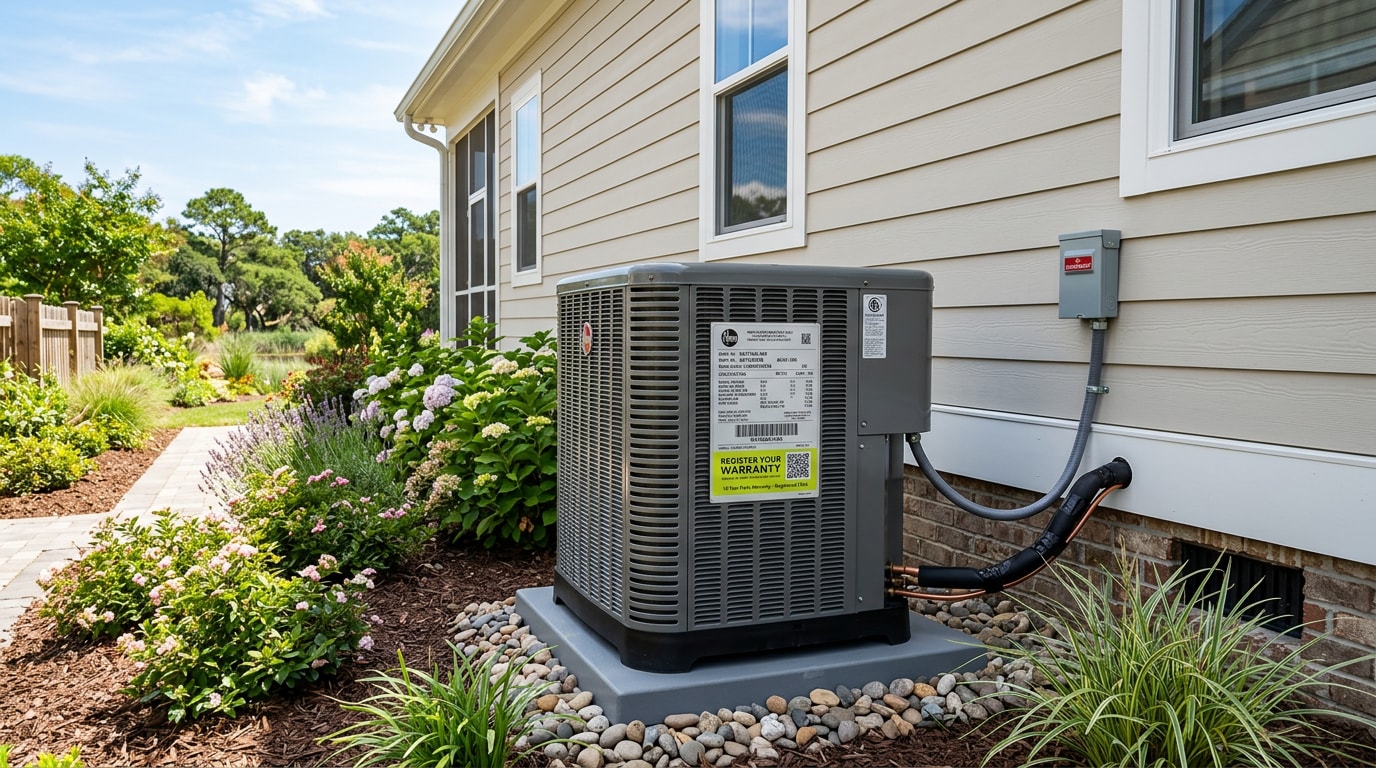
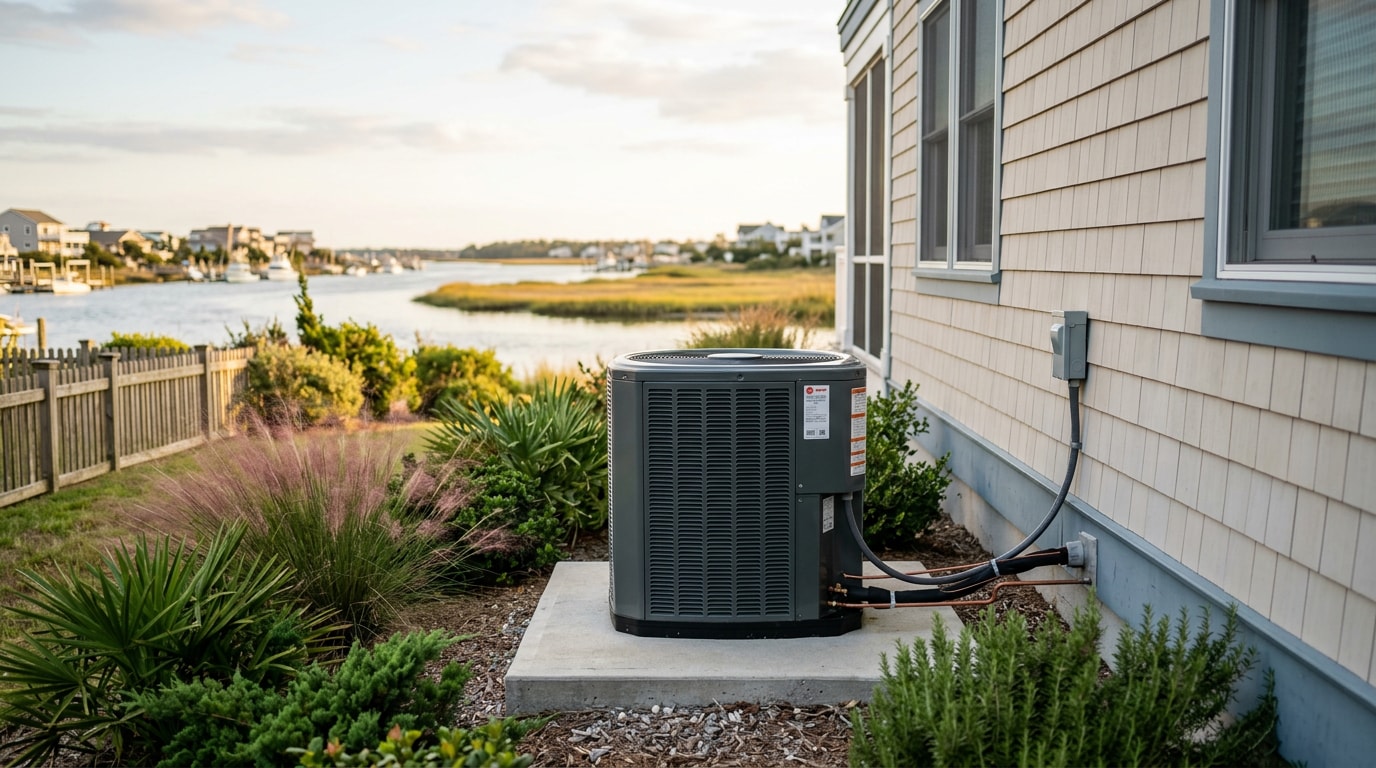
If you're shopping for an air conditioning cover in Beaufort, NC, the short answer surprises most homeowners: your outdoor unit almost certainly doesn't need one. Modern condensers are built to sit outside year-round, rain or shine. The real threat to AC equipment on the Crystal Coast isn't winter weather, it's salt air, and no plastic cover fixes that.
The finishes, cabinets, and electrical components manufacturers use today are designed for constant outdoor exposure. That said, the right answer still depends on your property, the trees nearby, and the salt-laden air rolling in off Taylor's Creek and the Atlantic. On service calls across Beaufort and the rest of Carteret County, our technicians at Carolina Service Works see far more units damaged by trapped moisture under a cover than by an uncovered winter.
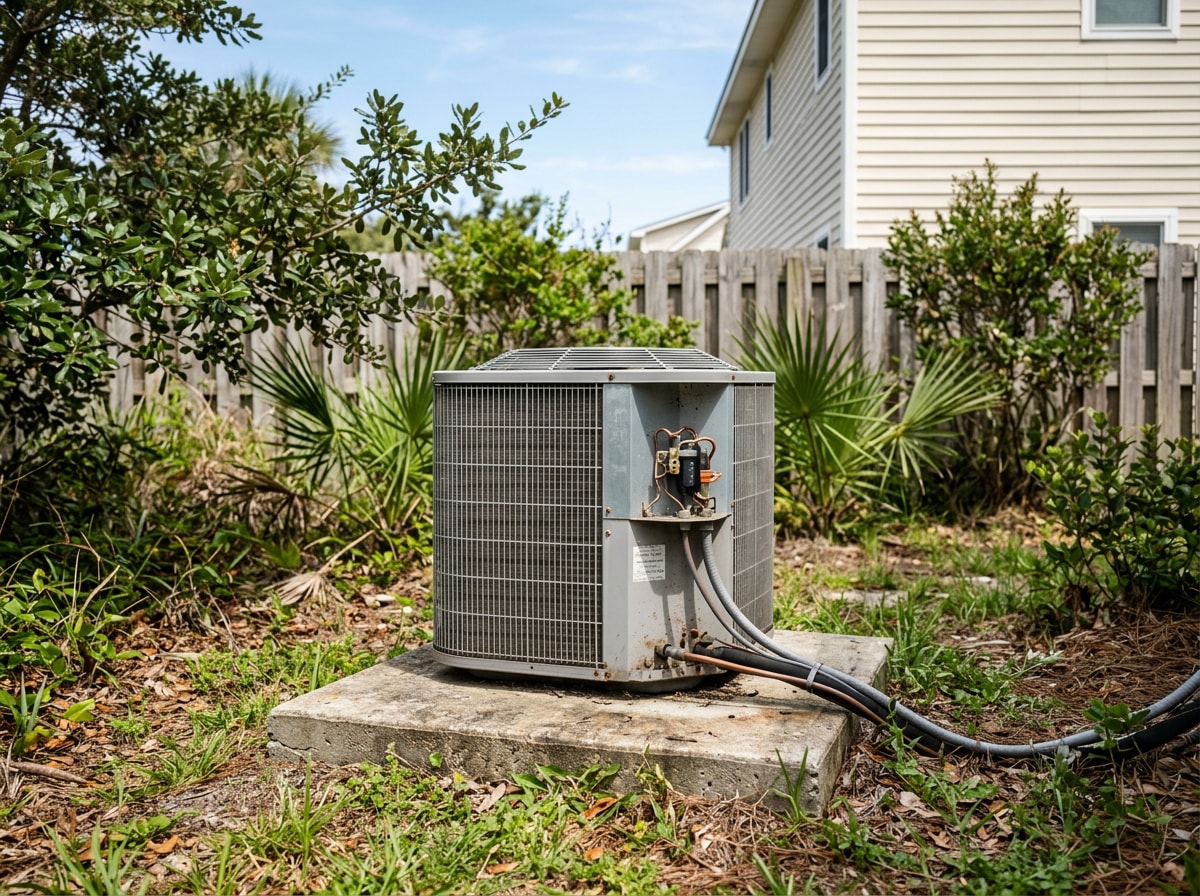
Why AC Covers Can Do More Harm Than Good
Wrapping a unit in plastic or vinyl sounds protective, but most HVAC manufacturers actively discourage it. These materials block airflow the system needs even when it's shut off. Trapped moisture underneath a full cover often causes more damage than the weather it was meant to prevent.
AC Covers Attract Critters
A snug cover creates a warm, sheltered spot that mice and other small rodents find hard to resist in cold months. Once inside, they often chew through wiring and insulation. A simple cover can turn into an expensive repair call by spring.
Trapped Moisture Means Trapped Problems
A sealed cover traps condensation underneath it, and that moisture has nowhere to evaporate. Beaufort's humidity makes this worse. Trapped dampness combined with salt in the air speeds up mold and mildew growth on coils and housing. According to the EPA, the key to mold control is moisture control , which is exactly what a sealed AC cover works against. The result is restricted airflow and lower cooling efficiency right when you need the system at full capacity for summer.
When Should You Actually Cover Your AC Unit?
There are a few legitimate reasons to add partial protection:
- Heavy tree debris. If your unit sits under a tree that drops branches, pine straw, or berries, falling debris can clog the coil.
- Regular ice buildup. If ice forms on top of the unit during winter storms, a rigid top cover prevents damage without sealing the sides.
- No overhang or awning. A simple roof extension or awning can do the same job as a cover, without the risk.
The rule in every case: never restrict airflow around the sides or back of the unit. A breathable top cover or a plywood square, weighted so it won't blow off, is the only configuration most manufacturers tolerate. For routine upkeep beyond a cover, our HVAC maintenance services page covers what a seasonal checkup includes.
How to Make Your AC Unit Last Longer in a Salty Environment
Beaufort's bigger threat isn't snow, it's salt. Research on marine atmospheric corrosion confirms that steel and aluminum corrode much faster at coastal sites with higher airborne sea salt than they do further inland . Combined with Beaufort's year-round humidity, that makes coastal AC maintenance a different conversation than the generic "should I cover it" debate most articles focus on.
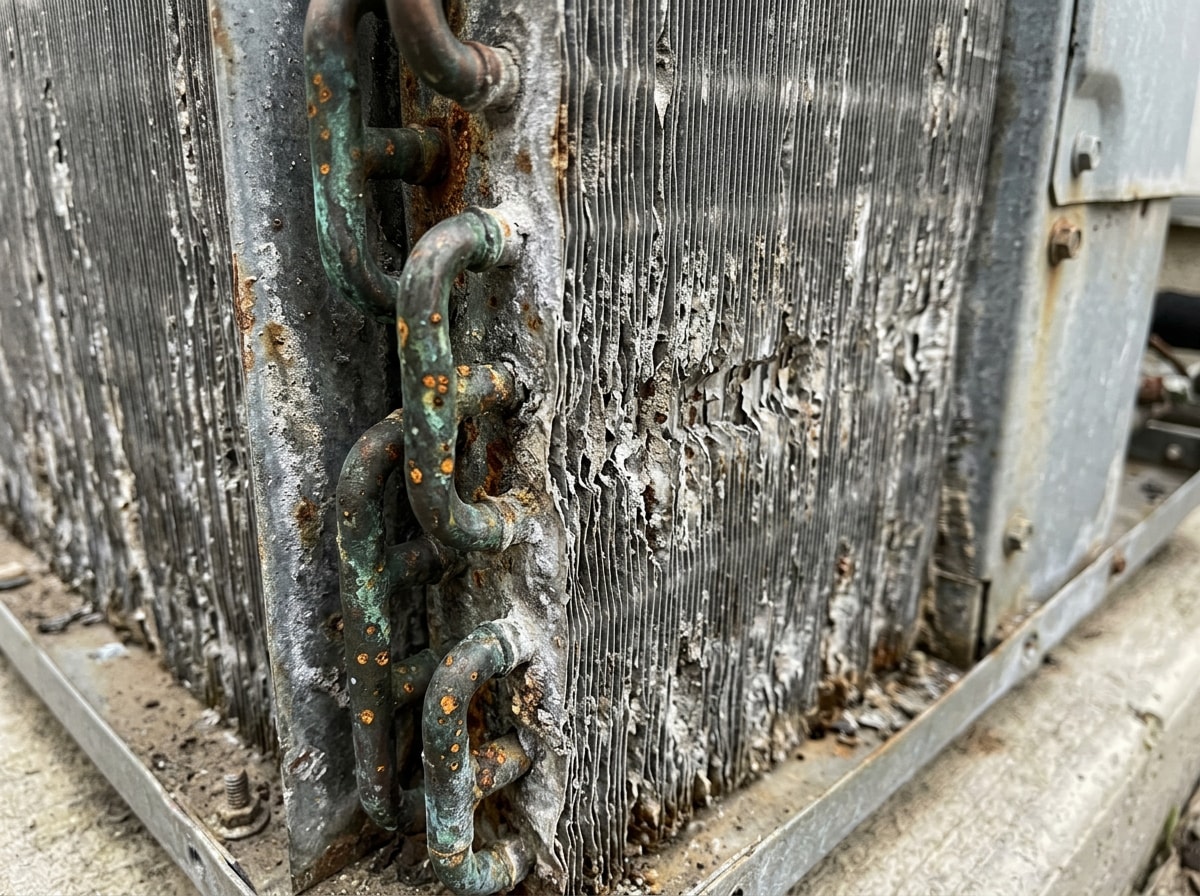
Methods to Protect Your AC Unit from Salt Air
Protecting an outdoor unit near the water comes down to a few proven habits, each with different cost and effort tradeoffs for Carteret County's waterfront exposure.
| Method | Cost | Effort | Effectiveness (Beaufort coastal) |
|---|---|---|---|
| Monthly fresh-water rinse | Low | Low | High, removes salt before it pits metal |
| Rust-resistant coating | Moderate | One-time/occasional | High, long-term corrosion barrier |
| Mist barrier/enclosure | Moderate | Low | Medium, reduces direct salt exposure |
| Breathable top cover only | Low | Low | Low, debris only, no corrosion help |
Rinsing the outdoor condenser with fresh water at least once a month, more often if you're close to the water, removes accumulated salt before it attacks the coils. A professional rust-resistant coating adds another layer of long-term defense. If your coils already show pitting or reduced airflow, our air conditioning repair team can inspect the damage before it costs you a full system.
Seasonal Air Conditioner Care
As temperatures drop each fall, many homeowners start wondering whether to cover their outdoor unit. Covering isn't always necessary. Done wrong, it can do more harm than leaving the unit exposed.
A professional fall and spring tune-up protects your system better than any cover does. ENERGY STAR's own maintenance guidance recommends getting annual pre-season check-ups and hiring a professional contractor to perform routine maintenance rather than relying on seasonal covers. If you'd rather schedule that than guess at cover timing, get a free estimate and we'll handle the seasonal prep.
If your household also runs a boiler for heat alongside central air, our guide to boiler installation and maintenance in Atlantic Beach, NC covers the heating side of seasonal upkeep.
When to Remove the Cover
If you do use a partial top cover, remove it once nighttime lows along the Beaufort coast reliably stay above freezing. Leaving it on longer traps heat and humidity, and in a salt-air environment that combination accelerates rust once the system restarts for the season.
FAQ
Is It OK to Cover Just the Top of My AC Unit?
Yes. A breathable top cover or plywood square blocks falling ice or debris without sealing in moisture. Avoid any cover that wraps the sides, since that traps humidity and invites pests.
What Should I Do to Protect My AC for Winter Instead?
Schedule a professional fall tune-up. It clears debris, checks electrical connections, and confirms the unit is ready for both winter and the summer restart. See our HVAC maintenance page for what's included.
Should I Cover My AC Unit If It's Directly Under Trees?
Yes, a partial top cover makes sense here. It blocks falling branches and leaves without restricting the side airflow your unit needs to run safely.
Is It a Good Idea to Cover Your Outside AC Unit?
Mostly no. Full covers trap moisture and attract pests. A breathable top-only cover is fine in specific situations, like heavy tree debris or ice buildup.
Do Snow and Cold Actually Damage an AC Unit?
No. Outdoor units are built with weatherproof housings and components rated to handle freezing temperatures, rain, and snow without a cover.
Should I Turn Off the Power Before Covering My AC Unit?
Yes, if you decide to use any cover, shut off power at the service disconnect first. This prevents the unit from cycling on while covered, which can damage the compressor.
How Often Should I Rinse Salt Off My Outdoor Unit in Beaufort?
Rinse the coils and cabinet with fresh water at least once a month. Homes closer to the water or exposed to storm-driven spray should rinse more often, especially after a nor'easter.
The Bottom Line
You don't need to fully cover your air conditioner for a Beaufort winter, but a partial, breathable top cover can help where debris or ice is a real concern. What matters more here is seasonal maintenance and, for coastal homes, regular rinsing to fight salt air corrosion. Visit our Beaufort, NC service area page or get a free estimate to schedule a checkup before the next season turns. You can also learn more about our full range of services at Carolina Service Works.