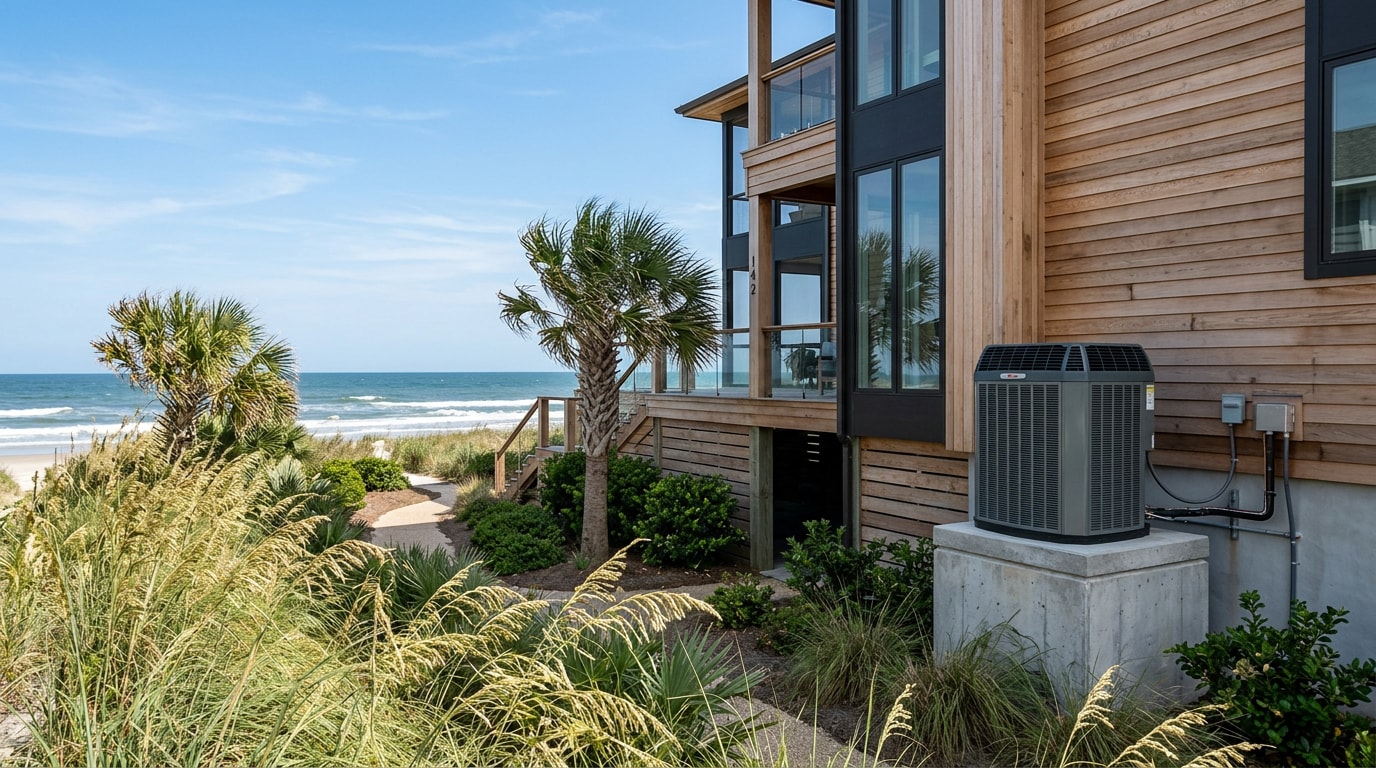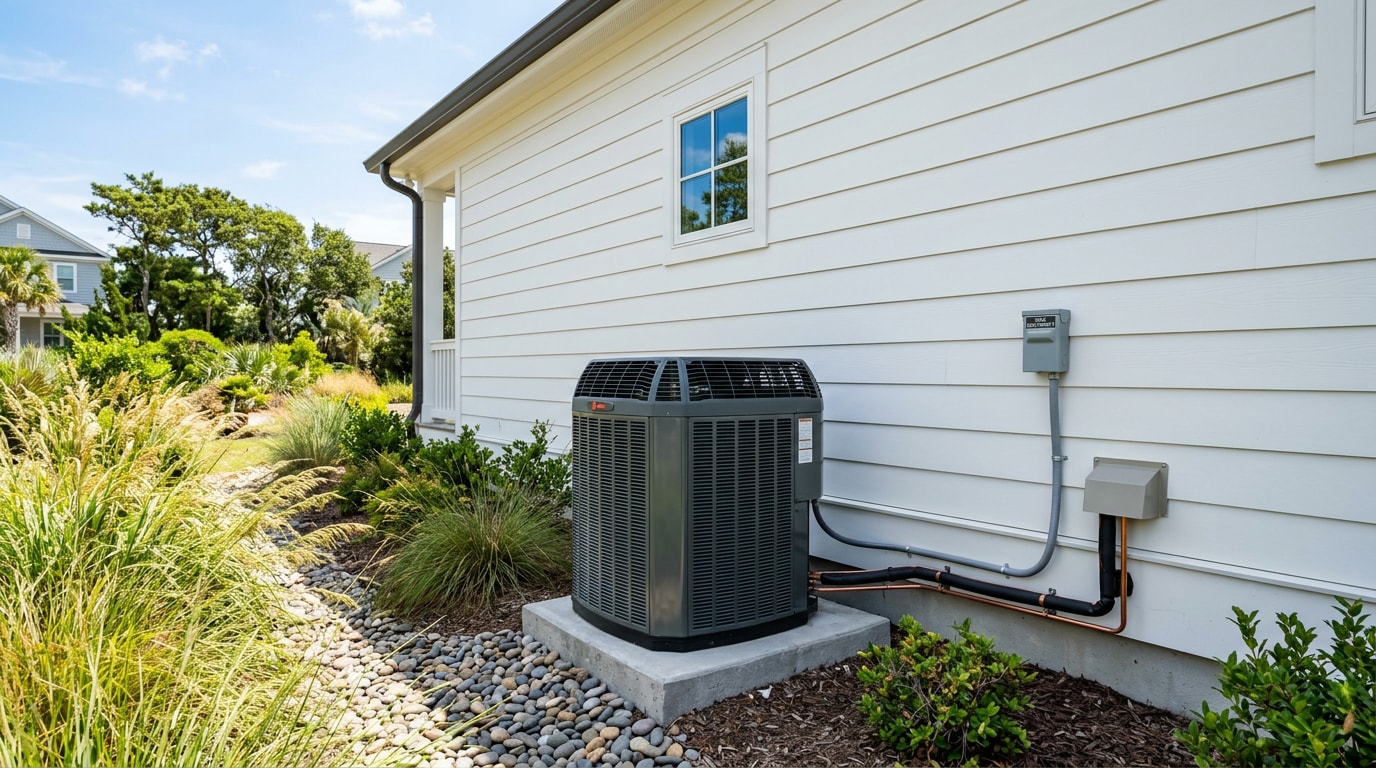
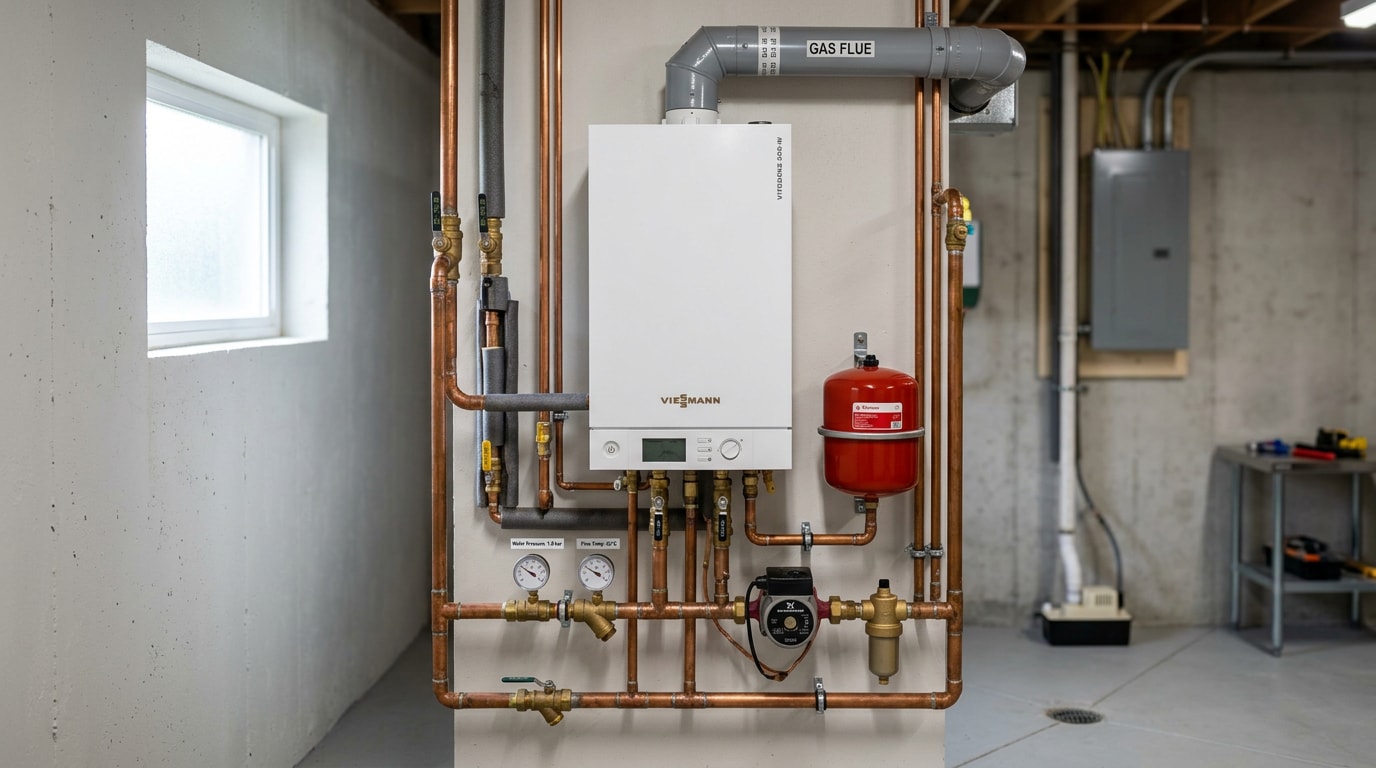
A gas fired boiler in Swansboro, NC keeps hydronic heat moving through older homes near the White Oak River, but salt air and age make these units prone to leaks, kettling, and ignition failures faster than boilers installed further inland. This guide walks through installation, repair triggers, and maintenance schedules, plus how a gas boiler stacks up against a furnace or heat pump. We'll also flag the licensing and code details worth confirming before you hire anyone.
Gas Fired Boiler Installation in Swansboro, NC
A full gas boiler installation in a Swansboro home usually follows the same basic sequence regardless of who performs it. The old unit gets disconnected and removed. The replacement is sized to the home's actual heat load. Gas and venting connections are made or updated. The system gets tested under load before the crew leaves.
Done right, this is boiler replacement work a general handyman shouldn't attempt. It requires a heating contractor familiar with both gas piping and hydronic distribution, and in North Carolina that work falls under a specific heating-group license classification issued by the state licensing board. Before you commit to a gas boiler installation, a reputable installer should walk you through boiler sizing based on square footage, insulation, and window exposure, not just swap in a same-size replacement.
One detail worth asking about specifically in this area: coastal humidity and salt air corrode standard aluminum vent terminations faster than they do fifty miles inland, so stainless-steel venting is usually the better long-term choice on a Swansboro install even when it costs a bit more upfront. Equipment selection should also factor in your actual gas line capacity. Always confirm you're working with a licensed installer, since gas-fired equipment installed incorrectly creates real safety risk. You can get a free estimate to get a sizing assessment started.
Some installers, including crews working mixed systems in this area, also fabricate and install sheet-metal ductwork when a property combines a boiler with a forced-air zone. That's worth asking about if your home has both radiators and a few duct-fed rooms. If a full boiler install isn't the right fit yet, our HVAC system replacement page covers how we scope that decision.
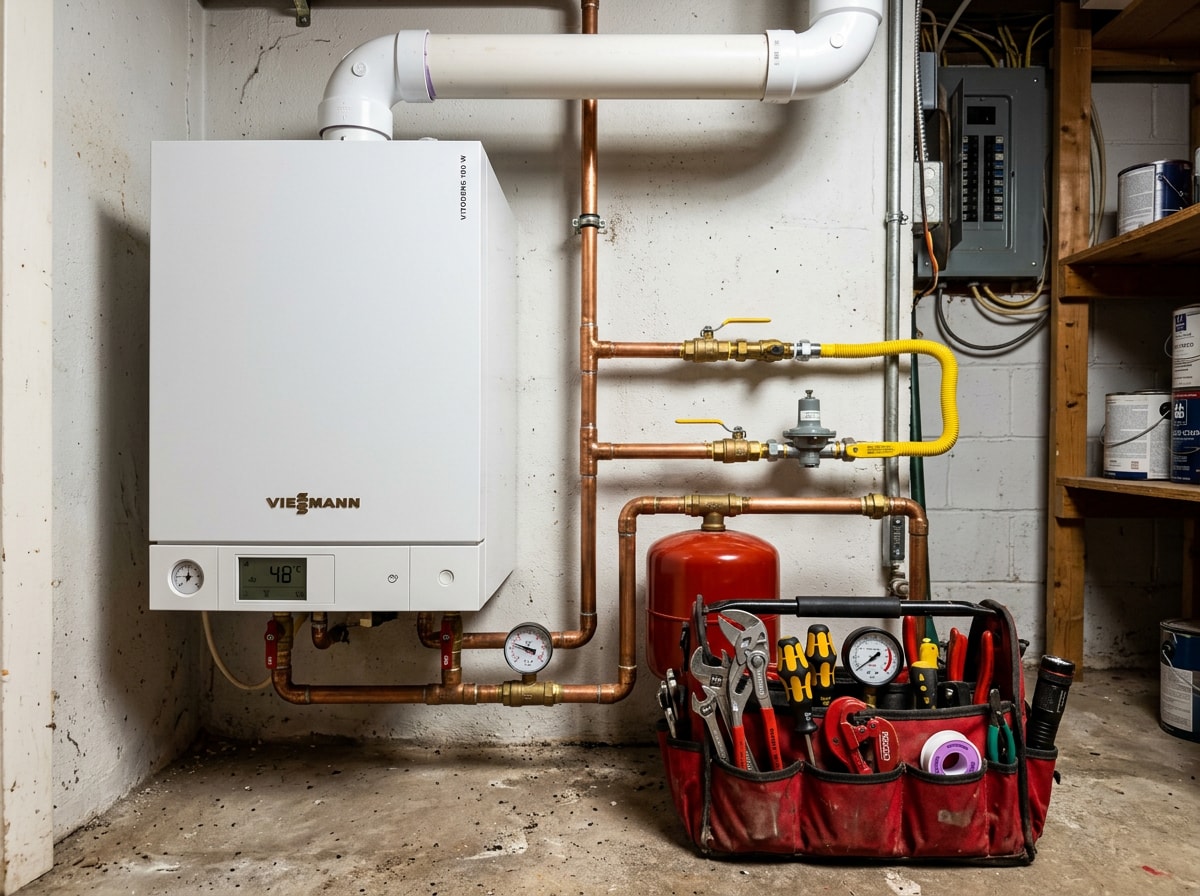
Gas Fired Boiler Repair: Common Triggers
Common triggers for a gas boiler repair call include:
- A boiler not working at all
- Visible water leaks around fittings
- Pilot light or ignition failures
- Unusual banging or kettling noises from the tank
- Uneven heat between rooms or a sudden jump in gas bills
Any of these warrants a same-week service call rather than a wait-and-see approach, since ignition and leak issues can worsen quickly. In our service calls across Swansboro and Onslow County, kettling in older cast-iron boilers is almost always sediment buildup restricting water flow around the heat exchanger, not a failing unit. That's a flush-and-inspect fix most of the time, not a replacement. If your system is acting up, our heating system repair page has more on how we diagnose these calls.
Gas Fired Boiler Maintenance & Combustion Safety
Boiler maintenance for a gas-fired unit should happen at least once a year, and an annual boiler tune-up should include more than a filter check. It needs a combustion analysis, flue inspection, and gas pressure check. Combustion safety matters here in a way it doesn't for electric systems, since improper combustion can produce carbon monoxide.
Heating contractors doing this work in North Carolina must hold the correct classification through the <a href="https://nclicensing.org/wp-content/uploads/2024/01/Boiler-Book-2024.pdf">state licensing board</a>, which governs who's legally allowed to touch gas piping and pressure equipment. Annual service also protects efficiency over time. ENERGY STAR certified boilers have annual fuel utilization efficiency (AFUE) ratings of 87% or greater for oil boilers and 90% or greater for gas boilers , and that number only holds if combustion stays properly tuned. For a maintenance plan that covers your whole system rather than just the boiler, see our HVAC maintenance page.
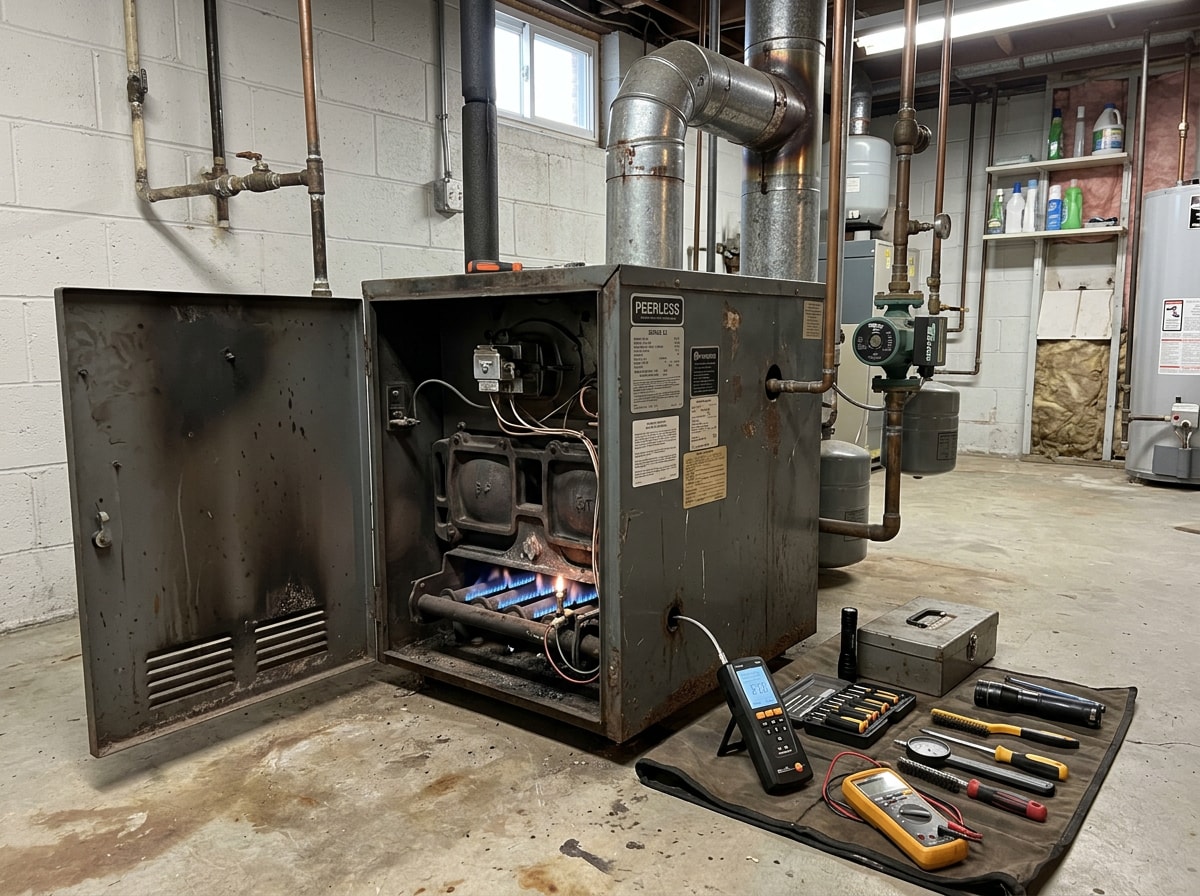
Gas Boiler vs. Furnace vs. Heat Pump
Most Swansboro homeowners have one of three heating setups. Knowing which one you have is the first step before any installation or repair conversation.
| System | How It Heats | Best Fit |
|---|---|---|
| Gas furnace | Heats air directly, pushes it through ductwork (forced air) | Newer construction with existing ductwork |
| Gas fired boiler | Heats water, circulates it through radiators, baseboard, or in-floor loops (hydronic) | Older homes built with radiator or baseboard piping |
| Heat pump | Moves heat using electricity (electric heating) | Homes with ductwork, or paired with a boiler in a dual-fuel setup |
A natural gas boiler installed today typically carries an AFUE efficiency rating between roughly 82% and 97%, with condensing models landing at the high end. For context on how these ratings are certified, ENERGY STAR certified gas boilers have annual fuel utilization efficiency (AFUE) ratings of 90% , which is meaningfully above the federal minimum for standard-efficiency equipment.
Fuel source matters for long-term cost. A hot water boiler running on natural gas is generally cheaper to operate than an oil-fired equivalent, though actual savings depend on local utility rates and how well-insulated the home is. That's worth confirming with a contractor rather than assuming. A heat pump isn't usually a direct substitute for a home with existing hydronic piping, since it needs ductwork or dedicated air handlers, but some homeowners pair one with their existing boiler for shoulder-season efficiency. If radiators are part of your system, our radiator repair guide for Swansboro homes covers symptoms and costs in more depth.
More Heating Services We Offer
If a full boiler replacement isn't what you need right now, we also handle:
- Heating repair for furnaces and boilers alike
- Routine heating maintenance plans
- Heat pump services for dual-fuel or all-electric homes
Our heating system repair and HVAC maintenance pages cover scheduling for all three. We're a licensed HVAC contractor with plumbing and electrical crews under the same roof, which matters when a boiler issue turns out to be a gas line or electrical problem instead.
Serving Swansboro and the Surrounding Area
Gas boiler installation and repair service in this region typically extends well beyond Swansboro itself, covering most of Onslow County and parts of Carteret County. Nearby communities we commonly serve include Cape Carteret, Emerald Isle, Morehead City, Atlantic Beach, Beaufort, and Pine Knoll Shores. Check our Swansboro service area page to confirm coverage for your address, or visit our homepage for a full list of what we handle.
Ready to get a boiler looked at, repaired, or replaced? Get a free estimate and we'll schedule an in-home assessment.
About the Author
This guide was reviewed by the licensed heating team at Carolina Service Works, an HVAC, plumbing, electrical, and generator contractor serving Swansboro and the surrounding coastal Carolina counties. Our technicians hold current North Carolina heating-group licensing and service gas-fired boilers, furnaces, and hydronic systems throughout Onslow and Carteret County. Questions about a specific system? Contact us directly.
FAQ
Can I install a gas boiler myself?
No. Gas boiler installation involves gas line connections and combustion safety work that goes beyond typical DIY skill, and most manufacturer warranties require a licensed gas contractor for installation anyway. A DIY install also risks running afoul of local permitting and code requirements, which can create problems when you sell the home later.
How long does gas boiler installation take?
A straightforward swap often fits into a single day. If gas lines need rerouting or venting has to be modified to meet current code, plan on the job stretching into a second day.
How often should a gas boiler be serviced?
Most manufacturers and technicians recommend annual service. Gas-fired combustion equipment benefits from this schedule more than electric systems do, since combustion components drift out of calibration over time. A yearly maintenance visit catches small issues before they become no-heat emergencies.
How long do gas fired boilers last?
A gas boiler typically runs 15 to 20 years with consistent annual maintenance, though well-maintained units can last longer and neglected ones can fail well before the 15-year mark. Several diagnostic and maintenance procedures are important to maintain efficient boiler operation, and these should be integrated into maintenance plans to increase boiler efficiency and extend the useful life of the boiler. Water quality and sizing accuracy both affect where your system lands in that range.
What are signs my boiler needs repair?
Watch for strange banging or whistling noises, uneven heat between rooms, a sudden jump in gas bills, visible leaks near the tank or piping, and water that won't heat to the usual temperature. A pilot light that won't stay lit is also a common early symptom worth calling in promptly.
How much does a gas boiler installation cost?
Cost depends on boiler size, whether venting needs to change, and how much of the existing piping can be reused, so there's no single number that applies everywhere. The only reliable way to get an accurate figure for your home is an in-home assessment, which you can request here.
Is a gas boiler better than a furnace?
Neither is universally "better." It depends on what's already in the house. A home built with radiators or baseboard piping is cheaper to heat with a boiler than to convert to ductwork for a furnace, while a home with existing ductwork usually stays with forced air. The right call comes down to what distribution system you already have.