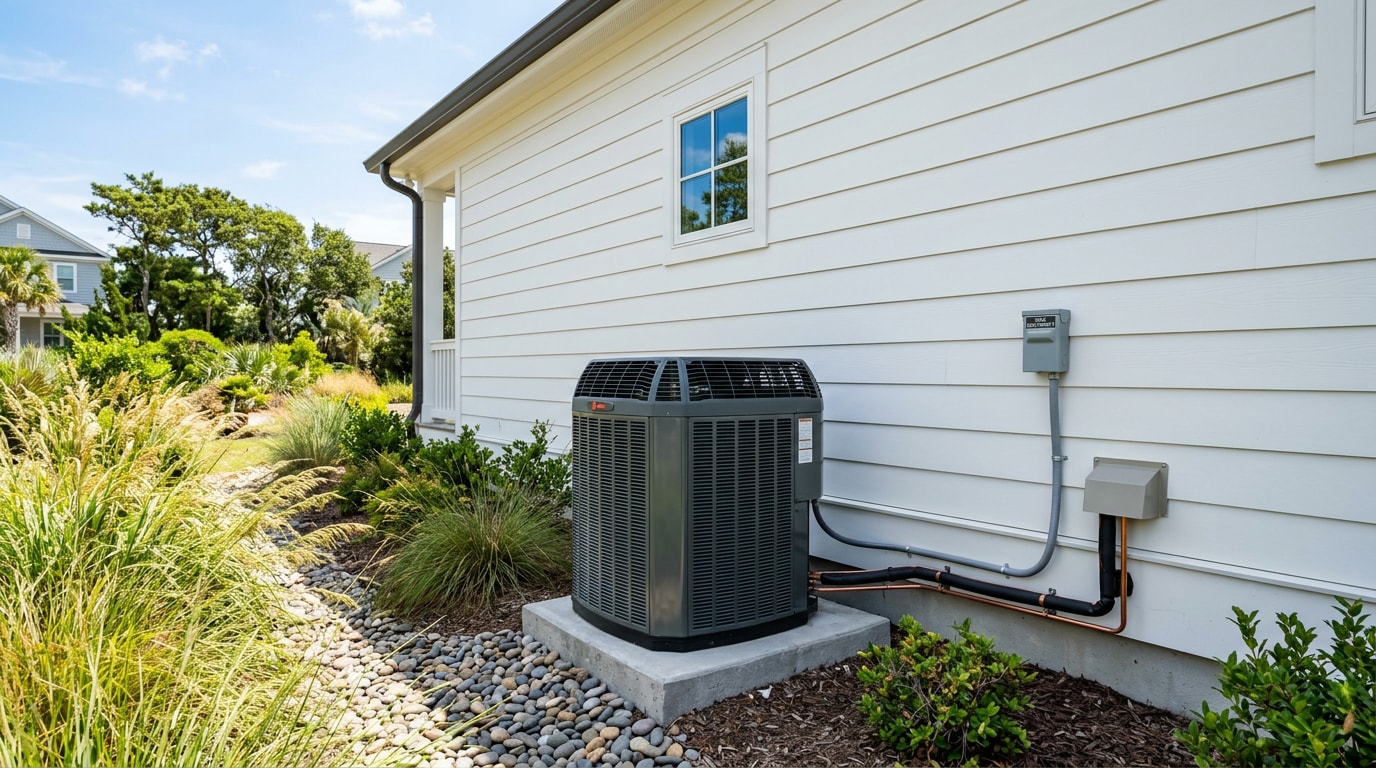
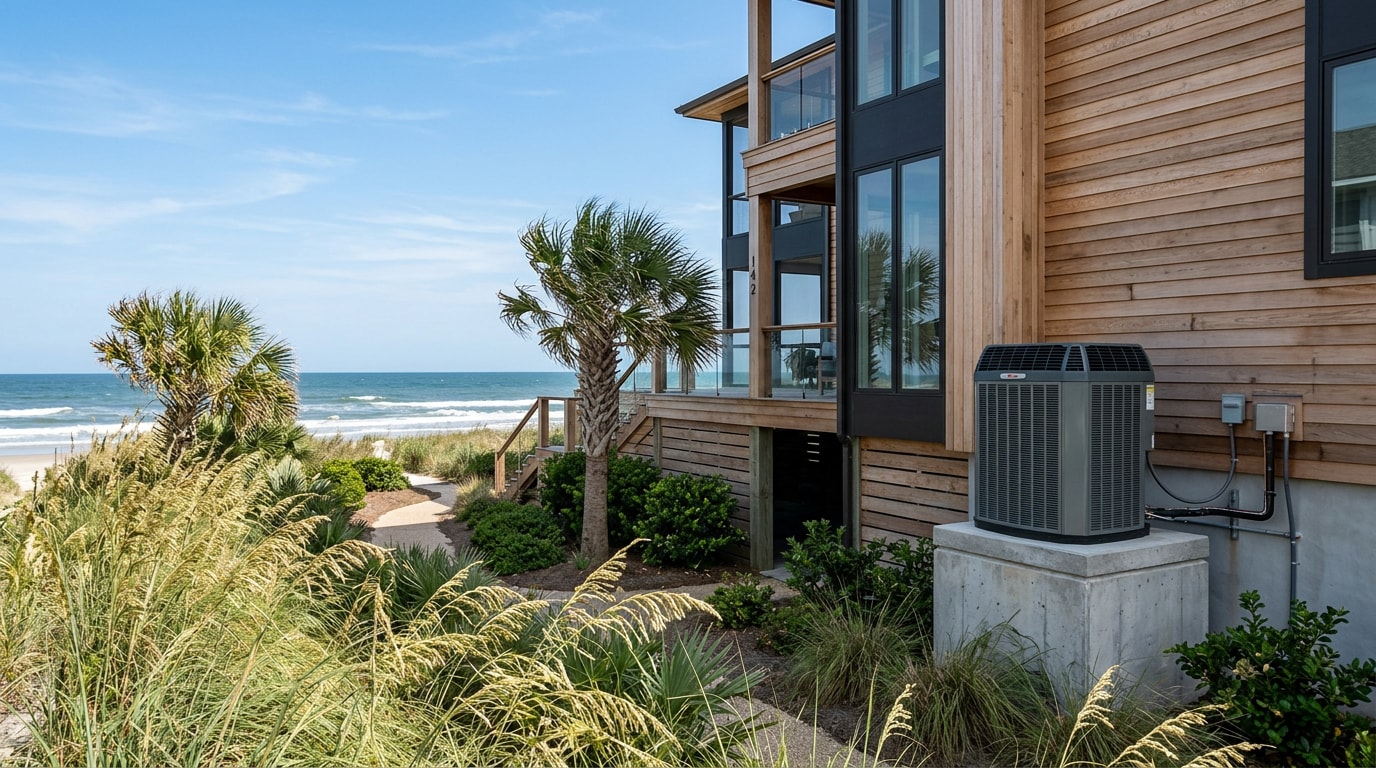
AC central Atlantic Beach, NC homeowners install has to survive something most inland systems never face: salt air blowing off the Atlantic every single day. We've serviced units on Bogue Banks that corroded in half the time of a comparable system twenty miles inland, simply because the original installer skipped coastal-grade parts. Here's what actually protects your investment, what drives the cost, and when it's time to call for help.
Why Atlantic Beach Homes Need Coastal-Rated AC Central Systems
Atlantic Beach sits in a different climate category than most of North Carolina. The months with the highest humidity are July and August, with an average relative humidity of 78%. That moisture load, combined with constant salt-laden wind, pushes standard air conditioning equipment harder than anything built for an inland yard.
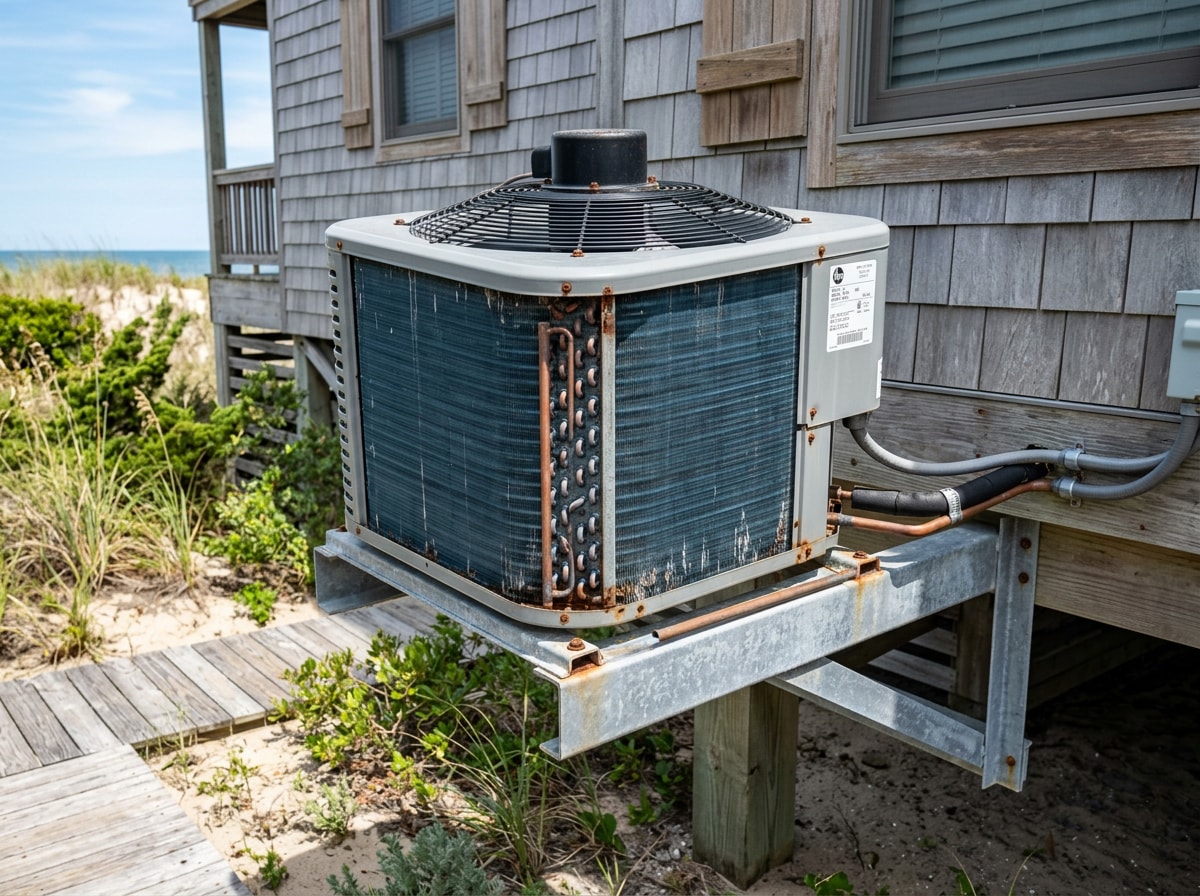
Salt air isn't a cosmetic problem. Salt in the air is highly corrosive, and when salt particles settle on metal components, they speed up the oxidation process, which over time leads to rust, corrosion, and weakened parts. Manufacturers have responded with purpose-built coastal lines: coastal HVAC units are specialized heating and cooling systems engineered with advanced anti-corrosion coatings and durable materials to withstand the salt air, high humidity, and intense weather conditions common in marine environments. The stakes are real: without coastal-grade protection, a standard HVAC unit in a marine environment may fail in as little as three to five years.
Efficiency standards matter too. Older federal guidance already required that ENERGY STAR qualified central air conditioners must have a SEER of at least 14 , and today's SEER2 testing sets the bar even higher for new installs. Proper sizing still comes first, though. Any qualified installer should run an Air Conditioning Contractors of America (ACCA) Manual J load calculation before quoting equipment, not just eyeball your square footage.
Working with a contractor who understands Atlantic Beach's specific load calculations and material requirements helps a new system perform as designed from day one. Our central AC installation page breaks down what a proper coastal install looks like from permit to startup.
How to Choose an AC Installation Contractor in Atlantic Beach, NC
Not every crew that installs air conditioners inland has the training or materials experience to handle salt-air exposure correctly. Finding the right contractor on the coast takes more scrutiny than picking a name off a results page.
Before signing a contract, verify the company carries active HVAC licensing and liability insurance for North Carolina. Ask specifically how many installs they've completed on Bogue Banks, and whether corrosion-resistant coil coatings are standard practice rather than an upcharge.
Use this checklist when comparing quotes:
| Question to Ask | Why It Matters |
|---|---|
| Are you licensed and insured in NC? | Confirms legal compliance and liability coverage |
| How many coastal installs have you completed? | Signals real salt-air experience, not just general HVAC work |
| Do you use corrosion-resistant coils as standard? | Protects your investment from premature failure |
| What's covered under your workmanship warranty? | Separates confident contractors from short-term fixes |
| Did you run a Manual J load calculation? | Prevents an oversized or undersized system |
See how we approach every job in Atlantic Beach, or get a free estimate directly.
Central Air vs. Ductless Mini-Splits for Atlantic Beach Homes
Every Atlantic Beach homeowner eventually faces the same decision: stick with ducted central air or switch to a ductless system. The right answer depends on your home's age, layout, and existing ductwork.
Central Air
Central air conditioning remains the standard choice for traditional single-family homes that already have ductwork in place. It delivers even whole-home cooling through one system, which keeps temperature management simple across multiple rooms.
The tradeoff is the ductwork itself. Ducts can leak, gather dust, or lose efficiency over time, especially in humid coastal crawlspaces.
Ductless Mini-Splits
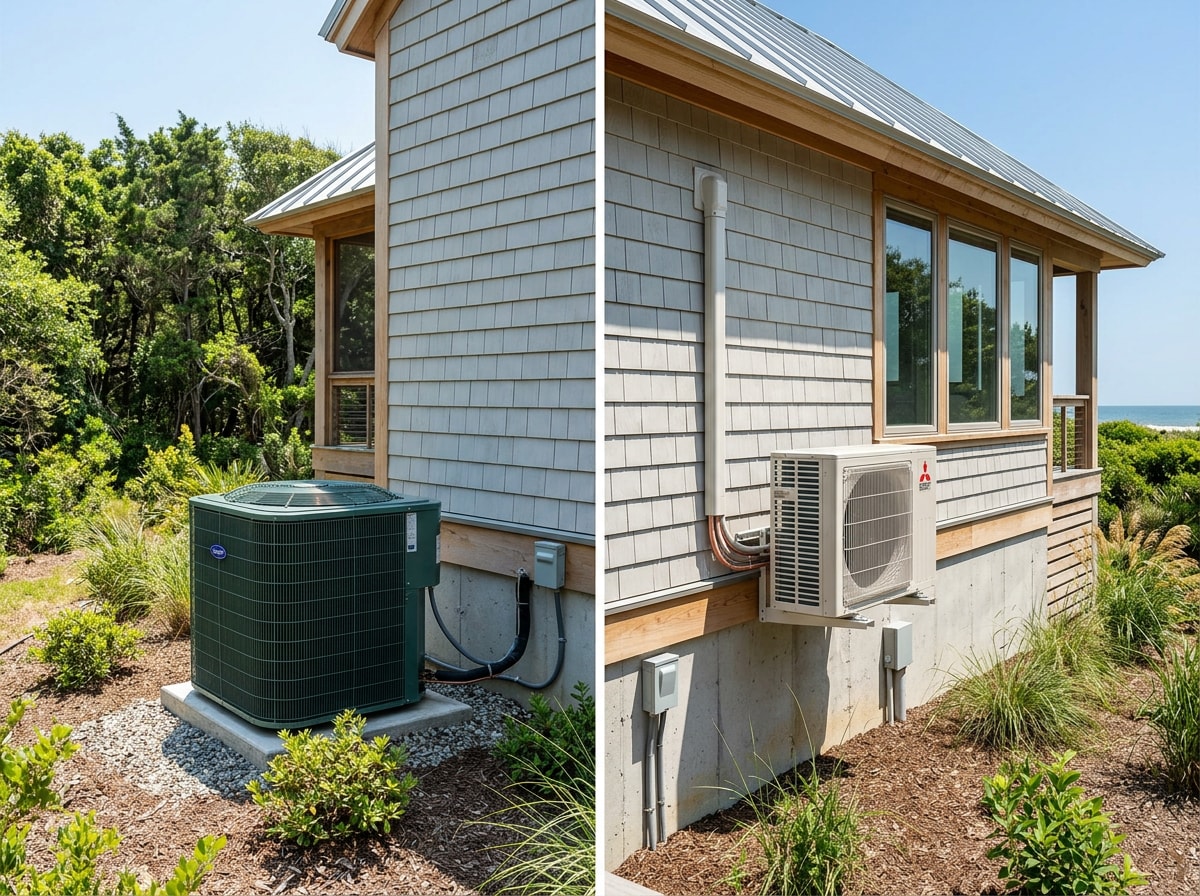
A ductless mini-split uses individual wall-mounted units tied to one outdoor compressor, giving you zoned cooling without running new ductwork. That's a strong match for additions, converted spaces, and older beach cottages.
Ductless systems also sidestep a problem central air can't avoid. Central systems lose 20% to 30% of their energy due to leaks, holes, and poorly connected ducts , while a mini-split delivers air directly into the room. The Department of Energy's guide to ductless mini-split heat pumps outlines how these systems work and what to check before buying. Heat pump-style mini-splits carry an added bonus for year-round residents: today's heat pumps can reduce electricity use for heating by up to 75% compared to electric resistance heating such as furnaces and baseboard heaters.
The main downside is higher upfront cost per zone compared to a single central system covering the same square footage.
Signs Your Central AC Needs Replacement, Not Repair
Age alone isn't the deciding factor, but it changes how much weight other symptoms carry. A central AC unit generally needs replacement, not another repair, when it's past the 10-12 year mark and showing two or more of these at once:
- Rising energy bills with no change in usage habits
- Frequent repair calls, especially more than once a season
- Uneven cooling between rooms
- Visible pitting or corrosion on the outdoor unit
- Refrigerant leaks or a system that runs constantly without reaching set temperature
A five-year-old system with one minor repair is usually worth fixing. A twelve-year-old unit with the same issue, combined with climbing utility bills, is often more expensive to keep patching than to replace. Salt exposure accelerates this timeline on Bogue Banks specifically, which is why we check coil condition first on every service call out here.
If your system is approaching the end of its expected lifespan, get a replacement estimate on our HVAC system replacement page before the next repair bill arrives. Homeowners dealing with heating-side failures on the same timeline may also find our furnace replacement guide for Atlantic Beach useful for planning both projects together.
AC & HVAC Services Available in Atlantic Beach, NC
Beyond new installations, most Atlantic Beach homeowners need ongoing support to keep systems running through salty, humid summers.
A complete service lineup should cover diagnostic repair calls, seasonal tune-ups, and planned maintenance to catch small issues before they become expensive failures. Hiring a professional contractor for routine maintenance in spring, before the cooling season ramps up, is the standard recommendation , and coastal homes often benefit from a second check midsummer given the added salt exposure.
If your system is struggling to keep up, don't wait for a full breakdown. Explore our air conditioning repair services or enroll in a seasonal HVAC maintenance plan to extend the life of your current equipment. Homeowners dealing with musty odors or excess humidity between services should also look at indoor air quality upgrades, which pair well with any new coastal install.
For the full range of heating, cooling, and system design work we handle across the Crystal Coast, visit the Carolina Serviceworks homepage.
FAQ
How does salt air affect my new AC system?
Salt air accelerates corrosion on outdoor coils, fins, and electrical connections, often shortening equipment life if the unit lacks protective coatings. Most coastal-rated systems use corrosion-resistant coil materials specifically to slow this process. Ask your installer whether that protection is standard or an add-on before you sign.
How long does a typical AC installation take?
A standard residential central AC installation typically takes one to two days, depending on ductwork condition, system size, and whether existing equipment needs removal first.
What size AC unit do I need for an Atlantic Beach home?
Size should come from a proper load calculation, not square footage alone. A qualified contractor uses an ACCA Manual J calculation that accounts for window orientation, insulation, and ceiling height, since an oversized unit short-cycles and an undersized one never catches up with coastal humidity.
How much does it cost to install central air conditioning in Atlantic Beach, NC?
Cost depends on home size, existing ductwork condition, and whether you choose a standard or coastal-rated system. The most reliable way to get an exact number is a free, no-obligation estimate based on your specific home.
What brands of AC and heat pump systems do you install?
Most licensed HVAC contractors in the area work with several major AC and heat pump brands and often hold authorized dealer status with at least one manufacturer. Ask which brands a contractor is authorized to install and service before committing to a system.
How often should my central air conditioner be serviced?
Most manufacturers and energy agencies recommend an annual tune-up, ideally in spring before peak cooling season. The ENERGY STAR maintenance checklist covers what a qualified technician should inspect at every visit. Homes in high-salt coastal environments like Atlantic Beach often benefit from a second check midsummer to catch early corrosion.