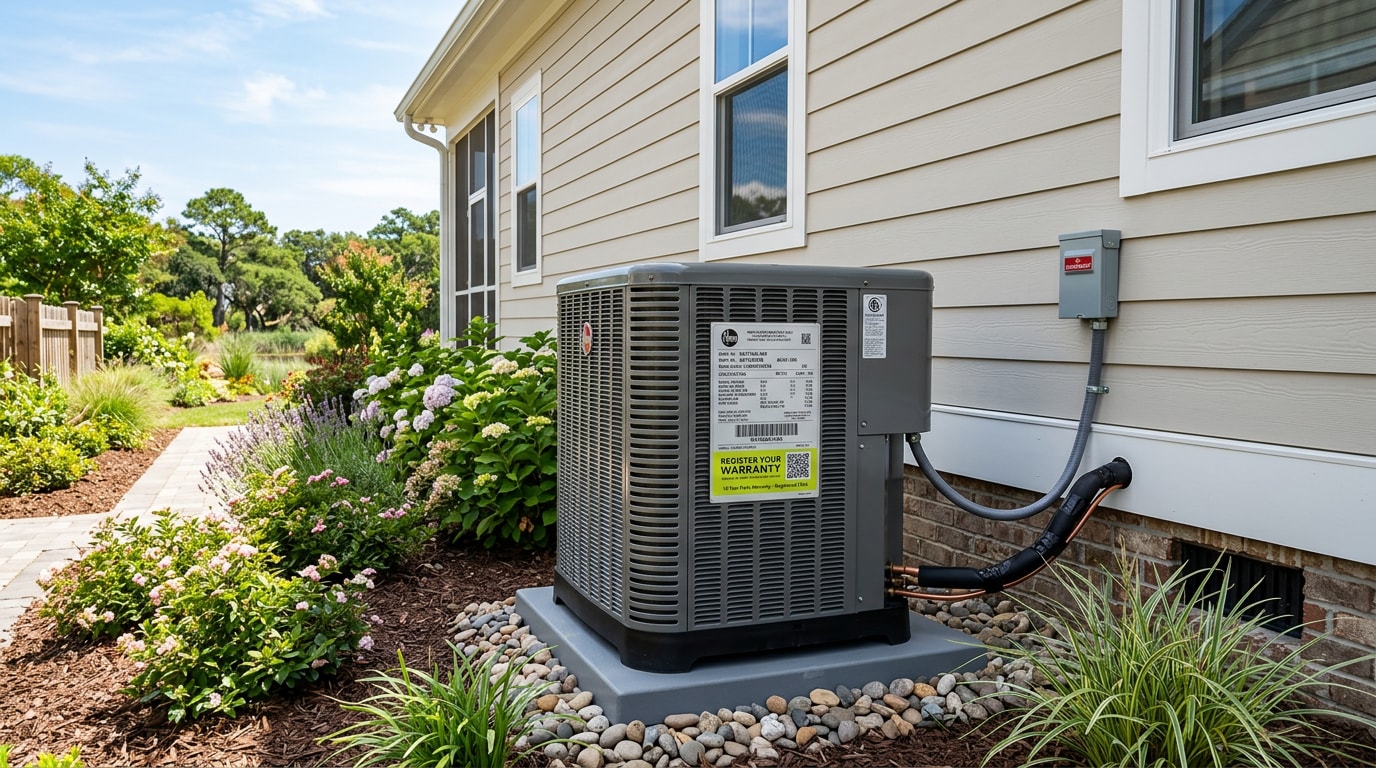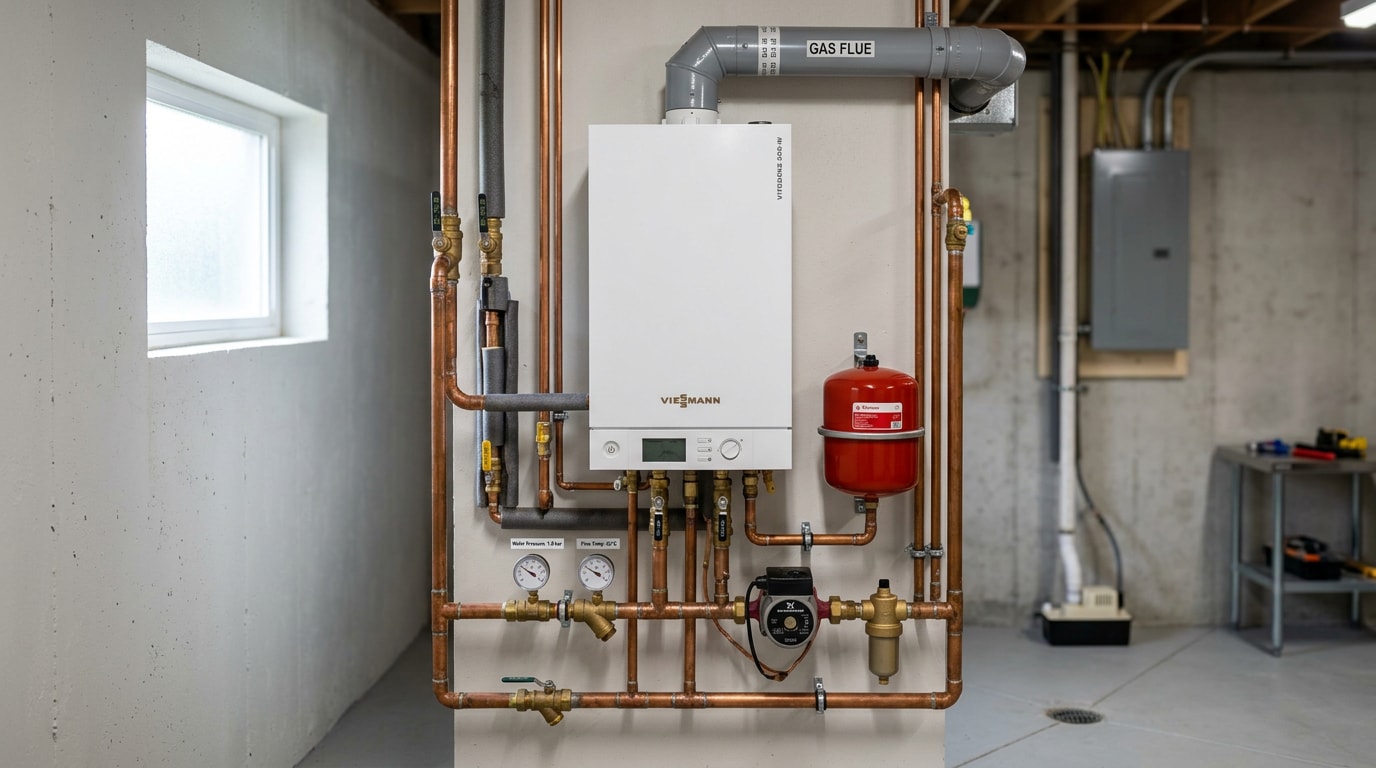
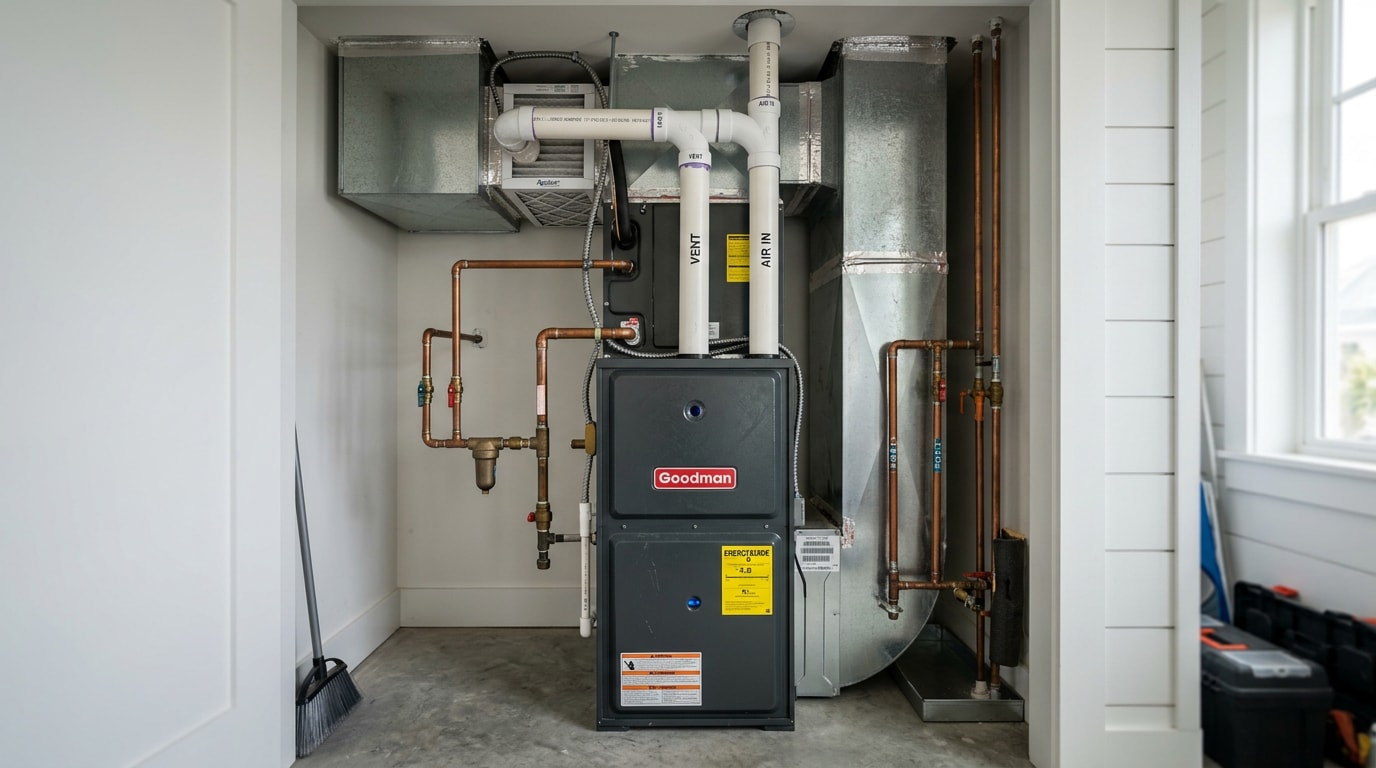
Furnace replacement in Atlantic Beach, NC usually isn't a snap decision. Salt air, coastal humidity, and the normal wear of an aging heating system all push the timeline forward faster than it would inland. This guide covers the warning signs, the real costs, the permit rule most homeowners don't know about, and when repair stops making sense.
Signs Your Furnace Is Nearing Replacement
A furnace rarely fails without warning. Most systems give off a handful of signals in the year or two before they quit for good.
Four Red Flags Worth Watching
A furnace nearing the end of its life typically shows four signs: frequent repairs, strange grinding or banging noises, uneven heating between rooms, and energy bills that climb without an obvious cause. Any one of these alone may not mean much. Two or more together usually point to a bigger problem.
Frequent repairs are often the clearest signal. If you've called for service more than once or twice in a single heating season, those costs are quietly adding up toward the price of a new system.
Uneven heating, where one room feels fine and another stays cold, often points to a failing blower motor, ductwork issues, or a furnace that's undersized or worn out for the home it's heating. Our technicians see this constantly in older Atlantic Beach homes where the original furnace was sized for a smaller footprint before an addition went in.
Rising energy bills matter too. A furnace loses efficiency as components age, so it works harder to produce the same amount of heat. If usage hasn't changed but the bill has, a heating system repair technician can confirm whether the issue is fixable or a sign of something bigger. (Note: replace the placeholder domain reference below with the token link.)
If your usage hasn't changed but your bills have, a heating system repair visit can confirm whether the problem is fixable or a sign the unit is done.
Airflow and Dust: An Overlooked Warning Sign
Airflow problems and dustier-than-usual air often share the same root cause as heating inefficiency. A furnace with a cracked heat exchanger, a clogged filter, or a failing blower pushes less air through the ducts, leaving rooms stuffy or unevenly heated.
Over time, a weaker system circulates dust and allergens instead of filtering them out. If vents and furniture are collecting more dust than normal, it's worth pairing a furnace evaluation with an indoor air quality upgrade assessment before the next cold snap.
AFUE, the measure of how efficiently a furnace converts fuel into heat, drops as equipment ages. A technician can test this directly during a service call rather than guessing from symptoms alone.
Why Coastal Air Shortens Furnace Lifespan in Atlantic Beach
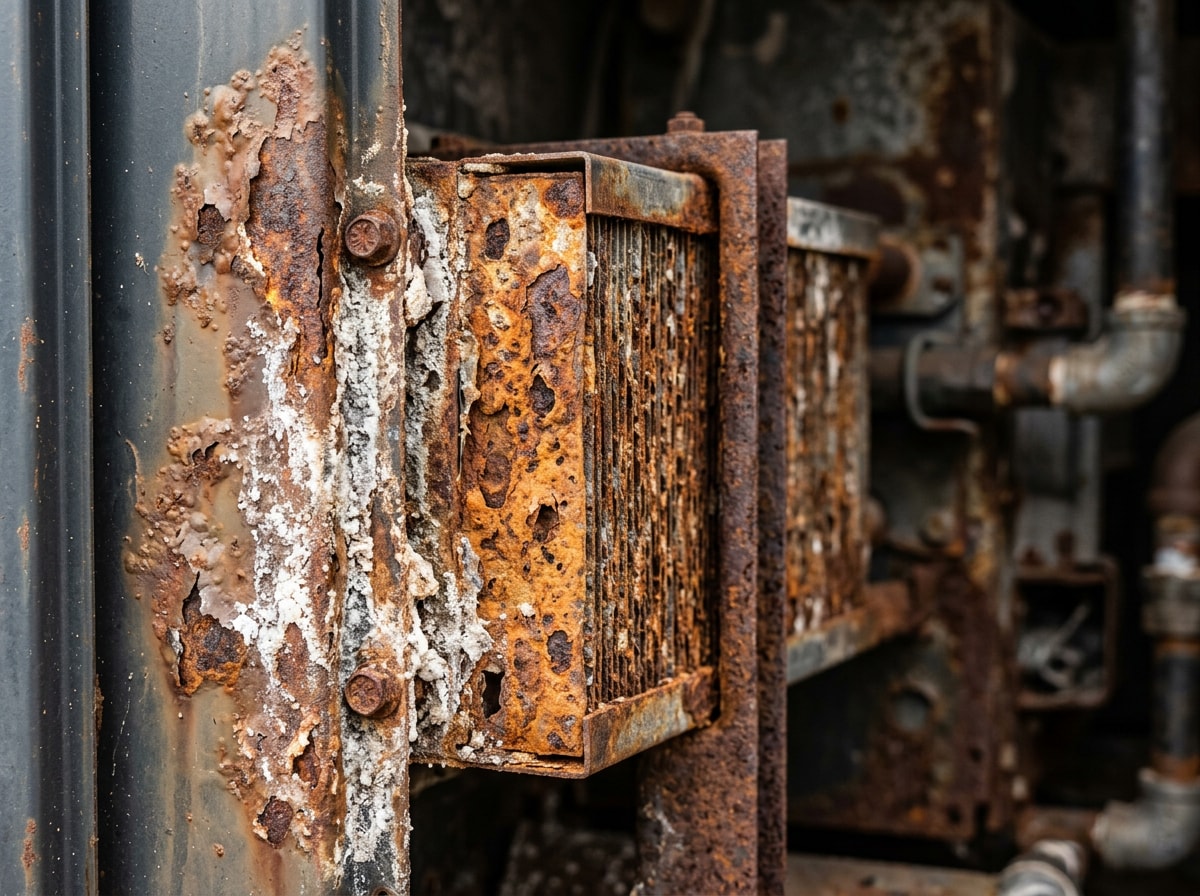
Living near the water changes the math on furnace lifespan. Salt air carries fine particles that settle on metal surfaces, and combined with local humidity, that speeds up corrosion on heat exchangers, cabinets, and electrical connections. Research on marine atmospheric corrosion confirms what coastal contractors see firsthand: steel and other common HVAC metals degrade measurably faster in salt-laden, humid air than in inland environments, and the effect is well documented in long-term exposure studies on steel exposed in highly polluted atmospheres where corrosion is much more severe than in clean rural environments .
A furnace that might run 18 to 20 years inland could show meaningful wear closer to 12 to 15 years in a coastal setting like Atlantic Beach, though actual lifespan still depends heavily on maintenance history and installation quality.
Not all equipment handles salt air equally well:
- Sealed-combustion furnaces draw outside air through a dedicated intake instead of pulling air from inside the home, which limits how much salt-laden air reaches internal components.
- Corrosion-resistant cabinets and coated heat exchangers hold up noticeably better than standard residential units in these conditions.
- Equipment placed in a garage or interior closet (rather than near an exterior wall facing the water) tends to see less direct salt exposure over time.
If you're comparing notes with neighbors in nearby Pine Knoll Shores or Emerald Isle, the pattern holds across the Crystal Coast. Salt exposure is a regional issue, not a one-house problem.
Repair or Replace? How to Decide
Once you've spotted warning signs, the next question is practical: fix it again, or replace it now? Furnace age and repair cost together give a clearer answer than either factor alone.
Age Benchmarks: 10, 15, and 20+ Years
| Furnace Age | Typical Recommendation |
|---|---|
| Under 10 years | Repair, unless the repair involves a cracked heat exchanger |
| 10–12 years | Usually still worth repairing for minor issues |
| 13–18 years | Compare repair and replacement costs directly |
| 15+ years in a coastal home | Replacement is often the better long-term value |
| 20+ years | Replace; parts availability and efficiency both work against repair |
The widely used 50% rule offers a simple gut check: if a repair quote comes in above half the cost of a full replacement, replacing the unit typically makes more financial sense.
Efficiency also degrades with age, meaning an older unit can cost more to run even while it's technically still working. The U.S. Department of Energy notes that although older fossil fuel furnace and boiler systems have efficiencies in the range of 56% to 70%, modern conventional heating systems can achieve efficiencies as high as 98.5% , which is a meaningful gap on a monthly heating bill. Our HVAC system replacement page outlines what to expect once replacement is the right call.
Furnace Replacement Cost in Atlantic Beach, NC
Furnace replacement cost depends on fuel type, home size, and existing ductwork condition. These are general planning ranges, not a quote, since every home and every ductwork situation is different.
| Fuel Type | Typical Installed Range | Notes |
|---|---|---|
| Electric | Lower upfront cost | Simpler install, higher monthly operating cost in cold stretches |
| Natural gas | Mid to upper range | Most common choice; lower operating cost per BTU |
| Oil | Higher end | Tank, venting, and chimney-lining needs can add to the total |
Ductwork condition matters more than many homeowners expect. If existing ducts are undersized, leaky, or poorly sealed, that adds to the overall installation price regardless of fuel type.
High-efficiency equipment can also qualify for a federal tax credit. ENERGY STAR notes that ENERGY STAR certified gas furnaces with AFUE ≥ 97% are eligible for a credit worth up to 30% of project cost, capped at $600. That's worth asking about before you finalize equipment selection.
One Thing Most Homeowners Don't Know: Permits Are Required
North Carolina law is specific on this point. State statute confirms that no one may proceed with the addition, replacement, or change in the design of heating, air‑conditioning, or electrical wiring, devices, appliances, or equipment without securing the required permit first. A licensed contractor pulls this permit as part of the job, but if you're getting quotes from unlicensed labor to save money, confirm this step isn't being skipped. Skipping it can complicate insurance claims and home sales down the road.
What to Expect During a Furnace Replacement
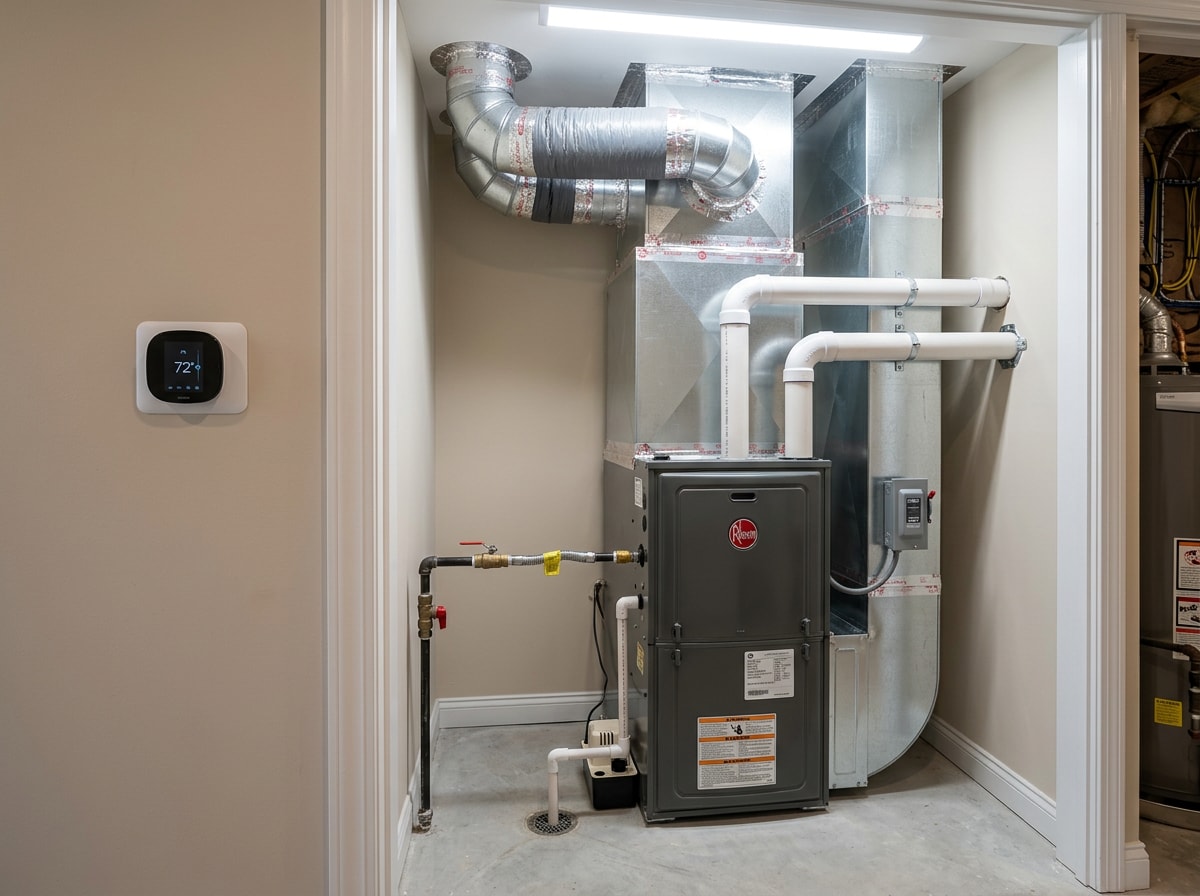
A straightforward swap, same fuel type and similar capacity, usually runs one day. Jobs that involve a fuel-type change, ductwork rework, or a tricky coastal crawlspace can take longer.
- Load calculation. A technician sizes the new unit to your home rather than just matching the old one's capacity.
- Equipment removal. The old furnace, and any corroded venting or flue components, comes out.
- New unit installation. This includes connecting gas or electrical lines, ductwork, and the venting system.
- Permit inspection. A local inspector signs off on the mechanical permit referenced above.
- Startup and testing. The technician checks airflow, combustion safety, and thermostat function before calling the job done.
Homes with boilers instead of forced-air furnaces face a related but different decision process. If that's your setup, our guide on boilers in Atlantic Beach, NC covers installation, repair, and maintenance specifics for that equipment type.
A properly sized, well-maintained system also holds up better against coastal wear. Scheduling seasonal HVAC maintenance after installation is one of the simplest ways to protect that investment.
If you're ready to get a quote for your home, get a free estimate and we'll walk through sizing, fuel type, and permit logistics together.
FAQ
How much does furnace replacement cost in Atlantic Beach, NC?
Cost depends on fuel type, home size, and ductwork condition. Electric units tend to run lowest upfront, gas units fall in the middle with lower operating costs, and oil systems run highest due to tank and venting requirements. A technician can give you an exact number after assessing your home.
Do I need a permit to replace a furnace in North Carolina?
Yes. North Carolina requires a permit for the replacement of heating and air-conditioning equipment under state building code. A licensed contractor pulls this permit as part of a standard installation.
How can I tell if my furnace is running efficiently?
Watch for consistent heat throughout the home, reasonably short cycle times, and energy bills that stay steady season to season. If any of those seem off, a technician can run an efficiency check and measure the system's actual AFUE rating and airflow.
What are the most common signs I need a new furnace?
The quickest signs are uneven heating, unusual noises, frequent on-off cycling, and energy bills that keep climbing. See the signs section above for a fuller breakdown of what each symptom usually means.
What safety risks come with older furnaces?
Older furnaces carry real safety considerations, including cracked heat exchangers, gas leaks, and carbon monoxide risk. These issues aren't always obvious without inspection equipment, so it's best to have a licensed technician evaluate an aging unit rather than diagnosing combustion or gas issues yourself.
When is furnace repair a better choice than replacement?
Repair usually makes sense when the furnace is under about 12 years old and the repair cost stays below the 50% rule threshold. Once a unit nears 15+ years, especially in a coastal climate, or repairs keep piling up, replacement is typically the better value. Homeowners in Atlantic Beach and nearby towns like Morehead City tend to see that line arrive earlier than inland homeowners.
How long do furnaces actually last near the coast?
Inland furnaces often run 18 to 20 years. In salt-air environments like Atlantic Beach, 12 to 15 years is a more realistic planning window, with sealed-combustion units and corrosion-resistant cabinets often landing on the higher end of that range.
Ready to stop guessing and get a straight answer for your home? Visit Carolina ServiceWorks or request a free estimate and we'll help you decide between repair and replacement with no pressure either way.