Search "who invented air conditioning black man Emerald Isle, NC" and you'll land on a tangle of half-true answers mixed in with local HVAC ads. Willis Carrier built the first modern mechanical air conditioner in 1902, but several Black inventors shaped the refrigeration, heating, and cooling technology that came before and after him. Here's the real history, inventor by inventor, with no shortcuts.
Did a Black Man Invent Air Conditioning? The Short Answer
No single Black inventor built the compressor-driven air conditioner the way Willis Carrier did in 1902 at a Brooklyn printing plant. That's a myth worth retiring.
What's true, and arguably more interesting, is that Black engineers and inventors built several of the core technologies that modern HVAC depends on: portable refrigeration, central-duct heating, evaporative cooling, and large-scale climate engineering. Some of this work predates Carrier. Some came decades after. None of it gets enough credit in the standard version of this story.
Meet the Black Inventors Who Shaped Modern HVAC
Frederick McKinley Jones (1893–1961)
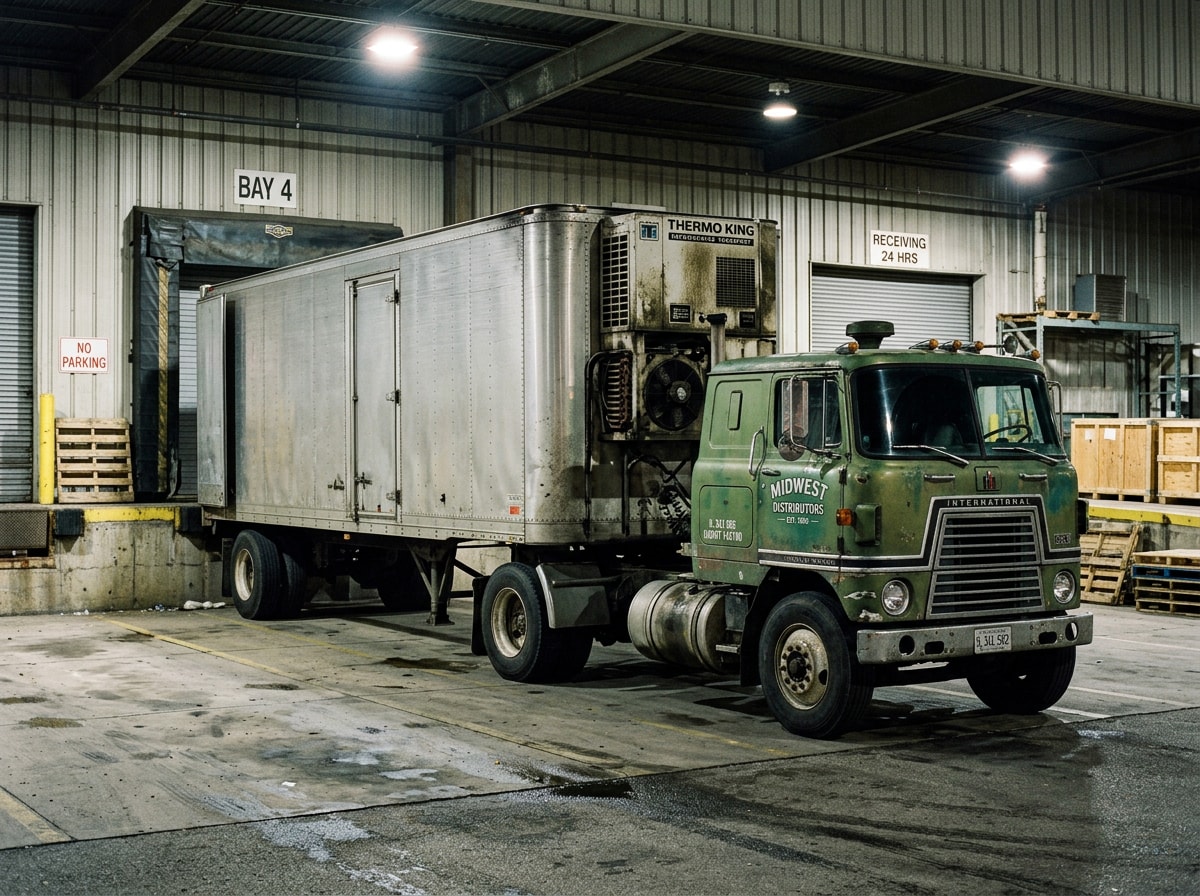
Frederick McKinley Jones didn't invent the air conditioner, but he revolutionized refrigerated transport. In 1938, Jones developed a practical portable cooling system for food-transport trucks, and he co-founded Thermo King with Joseph A. Numero that same year. He earned a patent for the invention in July 1940, and the company he helped build grew into a multi-million-dollar refrigeration business within a decade. In 1991, Jones became the first Black inventor awarded the National Medal of Technology, posthumously.
Jones's work centered on cargo, not home comfort, but the engineering problem was nearly identical: moving heat out of a sealed space reliably, in motion, without a fixed power source.
Alice H. Parker (1895–1920)
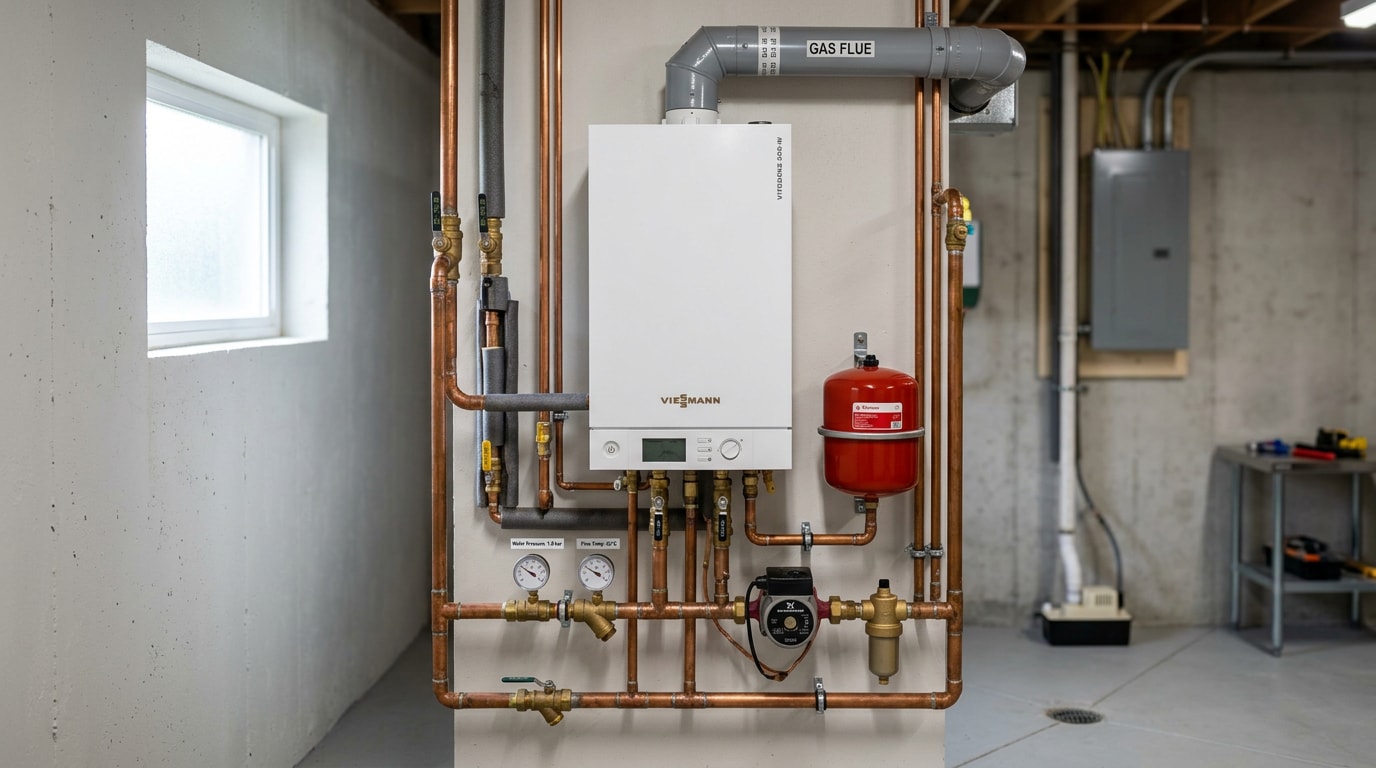
Alice H. Parker filed for a patent on a gas-powered central heating furnace in 1918, and it was granted in December 1919. Her design pulled cool air into a furnace, passed it through a heat exchanger, and pushed warm air through ducts into individual rooms, replacing the fireplace-per-room setup that was standard at the time.
Parker's furnace was never mass-produced, partly over safety concerns about piping natural gas through homes. But the underlying concept, central combustion feeding a ducted distribution system, is the same basic principle behind the central heating and cooling systems running in most homes today. That shift from room-by-room heat sources to one connected system is the real bridge between her patent and modern HVAC.
Lewis Howard Latimer (1848–1928)
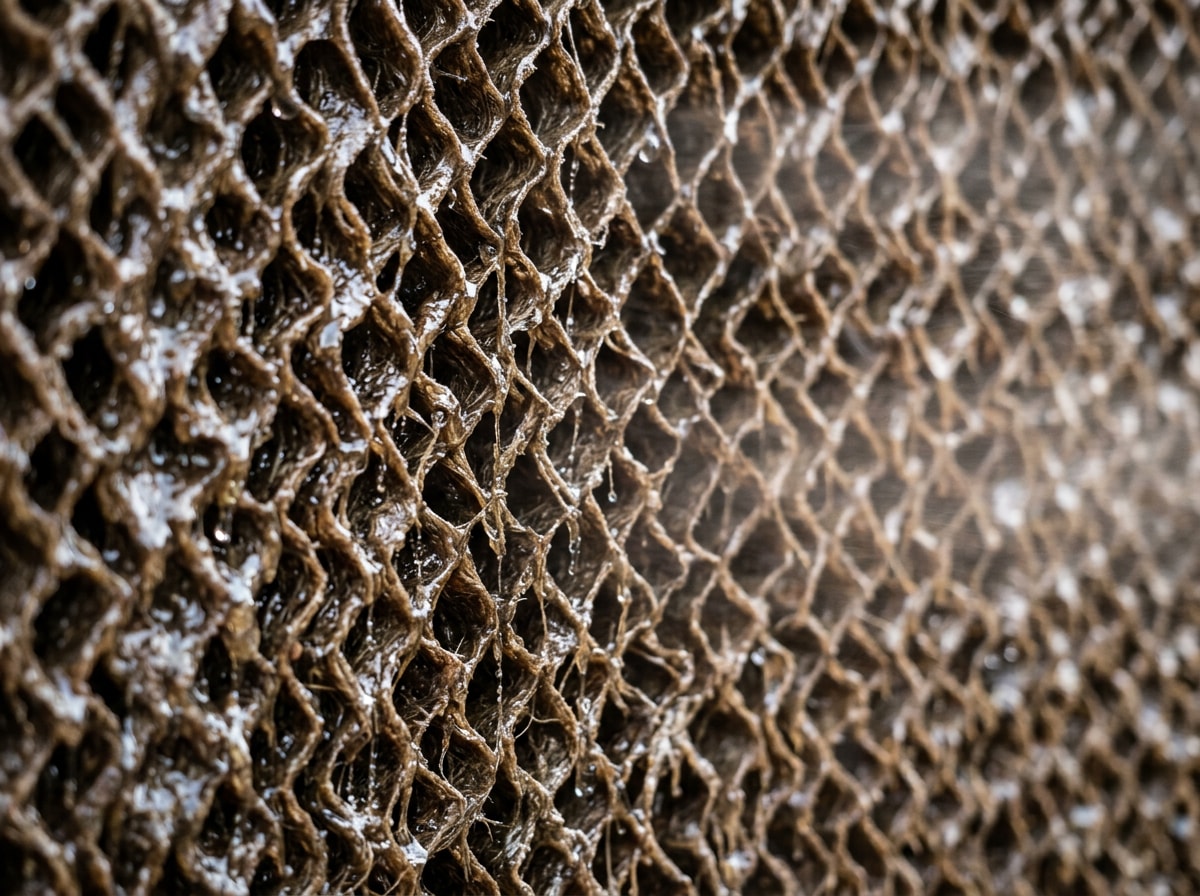
In January 1886, Lewis Latimer patented an "apparatus for cooling and disinfecting," an evaporative device that pulled warm air across a water-saturated webbing to cool and purify it. It wasn't a precursor to compressor-based air conditioning like Carrier's later system, but it reflected early engineering interest in controlling indoor air quality and temperature, decades before mechanical refrigeration existed for buildings.
Latimer is better known for his draftsman work alongside Thomas Edison and Alexander Graham Bell, where he helped refine patent drawings for the inventions that shaped modern electricity and communication. The U.S. Department of Energy still cites his contributions when recognizing Black innovators in American energy history.
David Nelson Crosthwait Jr. (1898–1976)
David Crosthwait was a Nashville-born engineer who studied at Purdue University, earning a bachelor's degree in mechanical engineering in 1913 and a master's degree in 1920. Over his career he held 39 U.S. patents and roughly 80 foreign patents in heating, ventilation, and refrigeration engineering. In 1971, he became the first Black engineer elected a fellow of ASHRAE (the American Society of Heating, Refrigerating and Air-Conditioning Engineers), the profession's top technical body.
Crosthwait's most cited project is the heating and climate control design for Rockefeller Center and Radio City Music Hall in the 1930s, a technical achievement that demonstrated large-scale HVAC engineering decades before today's design software existed. He also wrote instruction manuals and technical standards still referenced in HVAC engineering history.
Quick facts on Crosthwait's path:
- Grew up in Kansas City, where his father was principal of the city's first Black high school
- Earned a full academic scholarship to Purdue University
- Worked as technical advisor to Dunham-Bush (formerly C.A. Dunham Company) from 1930 to 1971
- Received an honorary doctorate from Purdue in 1975, a year before his death
Norbert Rillieux (1806–1894)
Norbert Rillieux was a 19th-century engineer best known for inventing the multiple-effect evaporator, a thermal-processing innovation originally built for sugar refining. His work on controlled heat transfer and fluid systems influenced the broader engineering principles later applied to refrigeration, plumbing, and industrial-scale HVAC design. Rillieux isn't a direct air conditioning inventor, but the heat-exchange math behind his evaporator shows up in refrigeration cycles that came long after him.
Inventor Comparison Table
| Inventor | Years Active | Actual Contribution | Verified Record | Common Misattribution |
|---|---|---|---|---|
| Frederick Jones | 1930s–1940s | Portable truck refrigeration, Thermo King | 1940 patent; 1991 Medal of Technology | "Invented air conditioning" |
| Alice Parker | 1918–1919 | Gas furnace, central heating concept | 1919 patent | "Invented the furnace" outright |
| Lewis Latimer | 1886 | Evaporative cooling/disinfecting device | 1886 patent | "Invented modern AC" |
| David Crosthwait | 1913–1971 | Large-scale HVAC engineering | 39 U.S. patents, first Black ASHRAE fellow (1971) | Sole designer of all modern HVAC |
| Norbert Rillieux | 1830s–1840s | Multiple-effect evaporator, thermal engineering | Patented evaporator design | "Invented refrigeration" |
What This History Means for Emerald Isle, NC Homeowners Today
Here's the part most "Black inventors" roundups skip: the climate these inventors were fighting against is the same one Carteret County homeowners fight every summer.
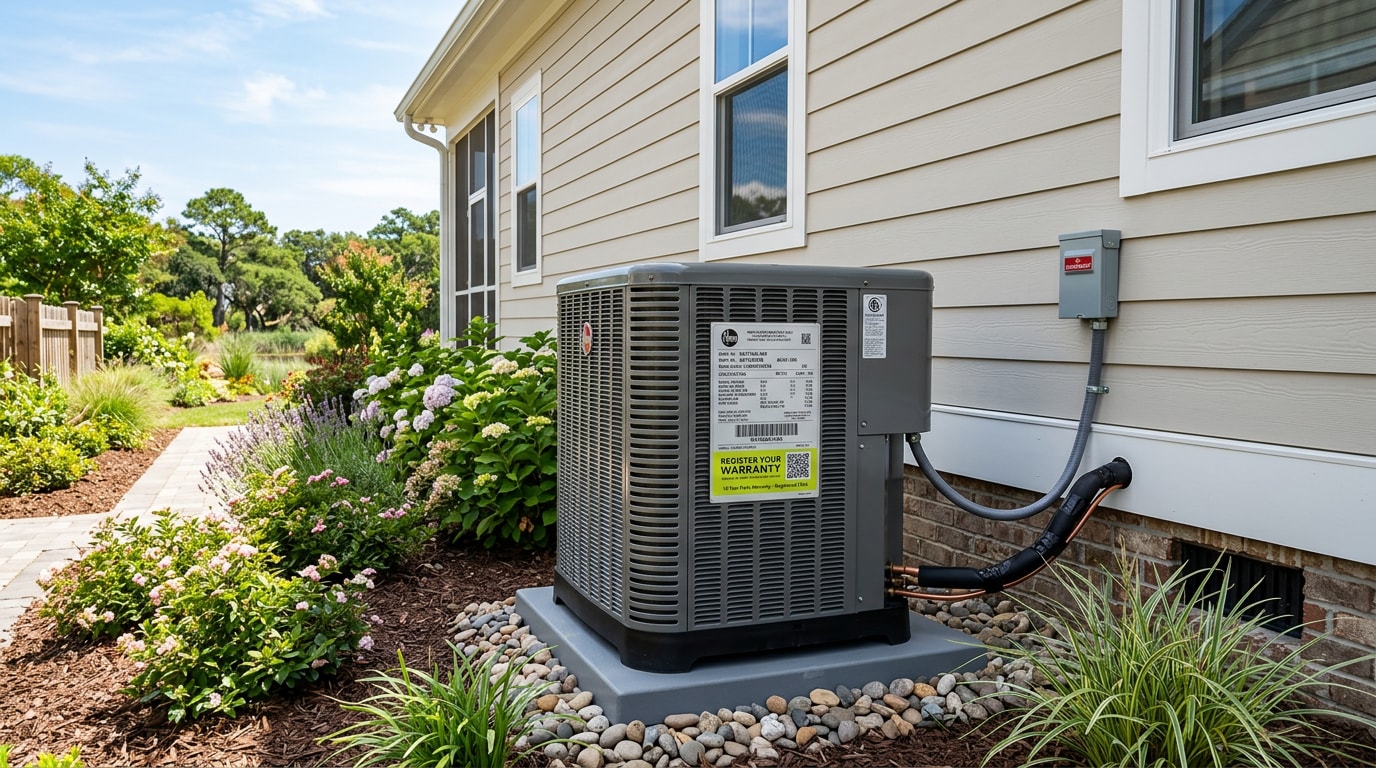
Coastal North Carolina sits in the Department of Energy's Southeast efficiency region, which has carried a higher minimum cooling-efficiency standard than the rest of the country since January 2023. Under current federal rules, most split-system air conditioners installed here must meet at least 14.3 SEER2, a higher bar than the 13.4 SEER2 minimum used in northern states. That's not a trivia point. It directly affects what equipment is legal to install in an Emerald Isle home and how much it costs to run through a humid Bogue Sound summer.
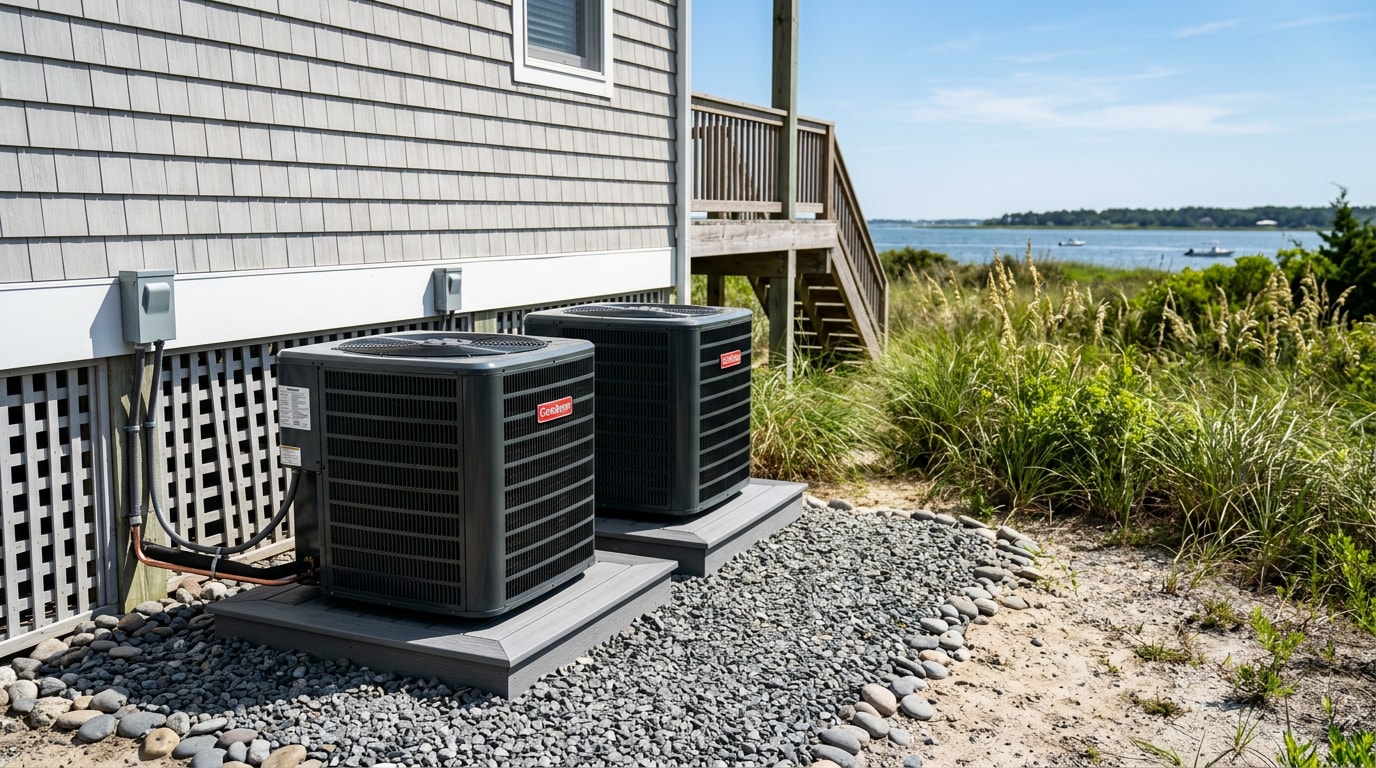
In our service calls across Carteret County, the number one reason coastal systems short-cycle or freeze up isn't the compressor. It's humidity load the system was never sized to handle, often made worse by salt-air corrosion on outdoor coils that homeowners don't think to check until the unit is already struggling. Latimer and Crosthwait were solving a version of this same problem a century ago with the tools available to them: moving air across wet surfaces, balancing heat exchange at scale. The equipment is unrecognizable now, but the physics hasn't changed.
If your system is older than the 2023 efficiency update, it may still be legal to run, but replacing it with a correctly sized, SEER2-compliant unit usually pays for itself faster on the coast than inland, simply because the humidity load runs the compressor harder for more months of the year. For homeowners weighing that decision, our HVAC system replacement guide walks through sizing and cost, and our central air conditioning installation guide for Emerald Isle covers what installation actually looks like on the Crystal Coast.
For systems that just need attention rather than replacement, routine HVAC maintenance catches coil corrosion and refrigerant issues before they turn into a mid-July breakdown, and air conditioning repair is the right call once a system is already struggling.
FAQ
Did a Black inventor create the air conditioner?
Not the air conditioner as Willis Carrier defined it in 1902. Lewis Howard Latimer patented an early evaporative cooling and disinfecting device in 1886, which predates Carrier's mechanical system and worked on a different principle.
Who actually invented air conditioning?
Willis Haviland Carrier is widely credited with building the first modern mechanical air conditioning system in 1902 to control humidity at a Brooklyn printing plant.
When was air conditioning invented?
Modern mechanical air conditioning dates to 1902. Latimer's 1886 evaporative cooling device is an earlier, related milestone worth noting for context, since it tackled a similar problem decades earlier using water evaporation instead of refrigerant.
Did a Black person invent the refrigerator?
Not the household refrigerator. Frederick McKinley Jones is credited with portable refrigeration for food-transport trucks, a different invention aimed at cargo rather than kitchens.
Who was the first African American elected a fellow of ASHRAE?
David Nelson Crosthwait Jr. became the first Black engineer elected a fellow of ASHRAE in 1971, after a career that included designing the heating system for Radio City Music Hall and holding 39 U.S. patents.
Does any of this history affect my AC bill in Emerald Isle today?
Indirectly, yes. The central-duct and evaporative-cooling concepts these inventors pioneered are the foundation of the equipment running in your home now, and current federal efficiency rules (14.3 SEER2 minimum for this region) determine what a compliant replacement system costs and how it performs in coastal humidity.
Ready to see how a correctly sized, code-compliant system performs in your Emerald Isle home? Get a free estimate from Carolina Serviceworks and our licensed technicians will walk you through the right fit for your house, not just the cheapest box that fits the closet. You can also browse our full HVAC contractor services or see service details for Emerald Isle, NC directly. For general questions about our team, start at our homepage.