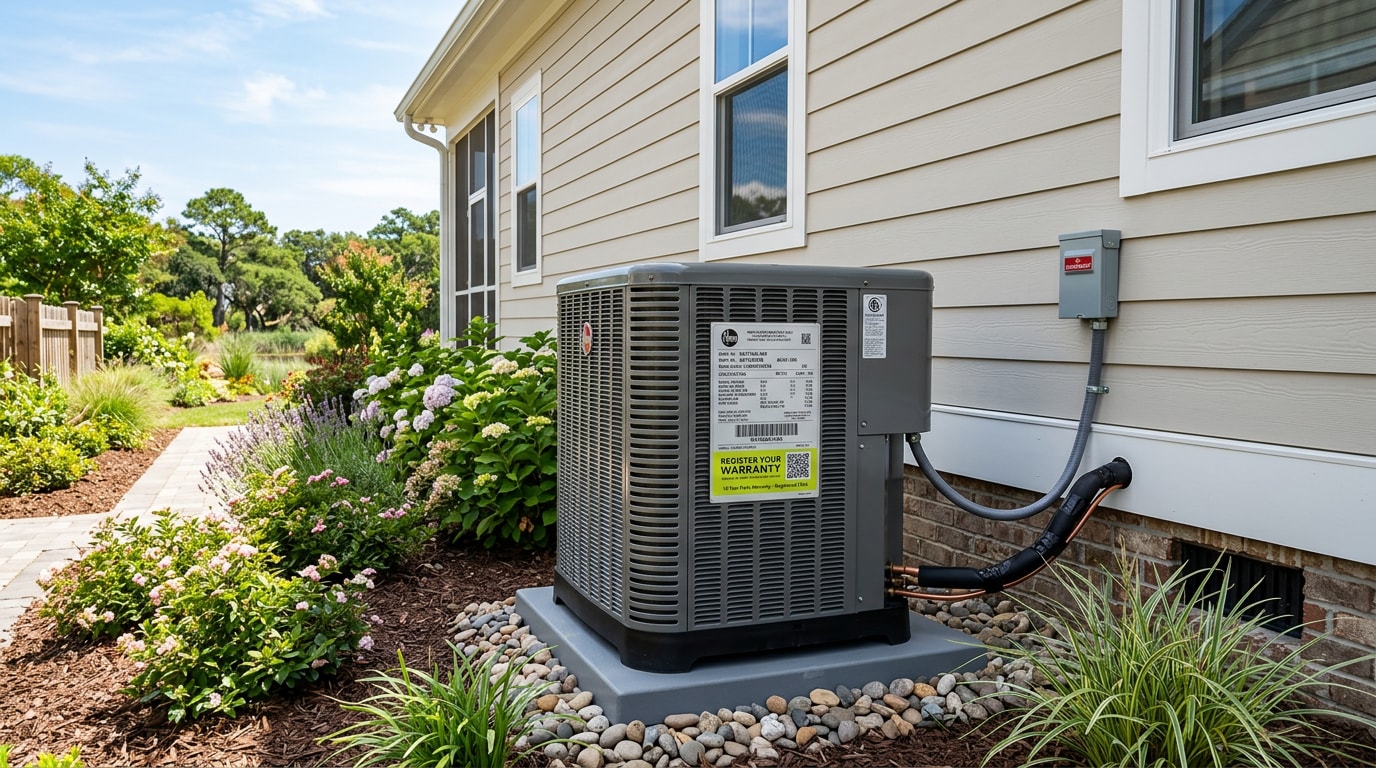
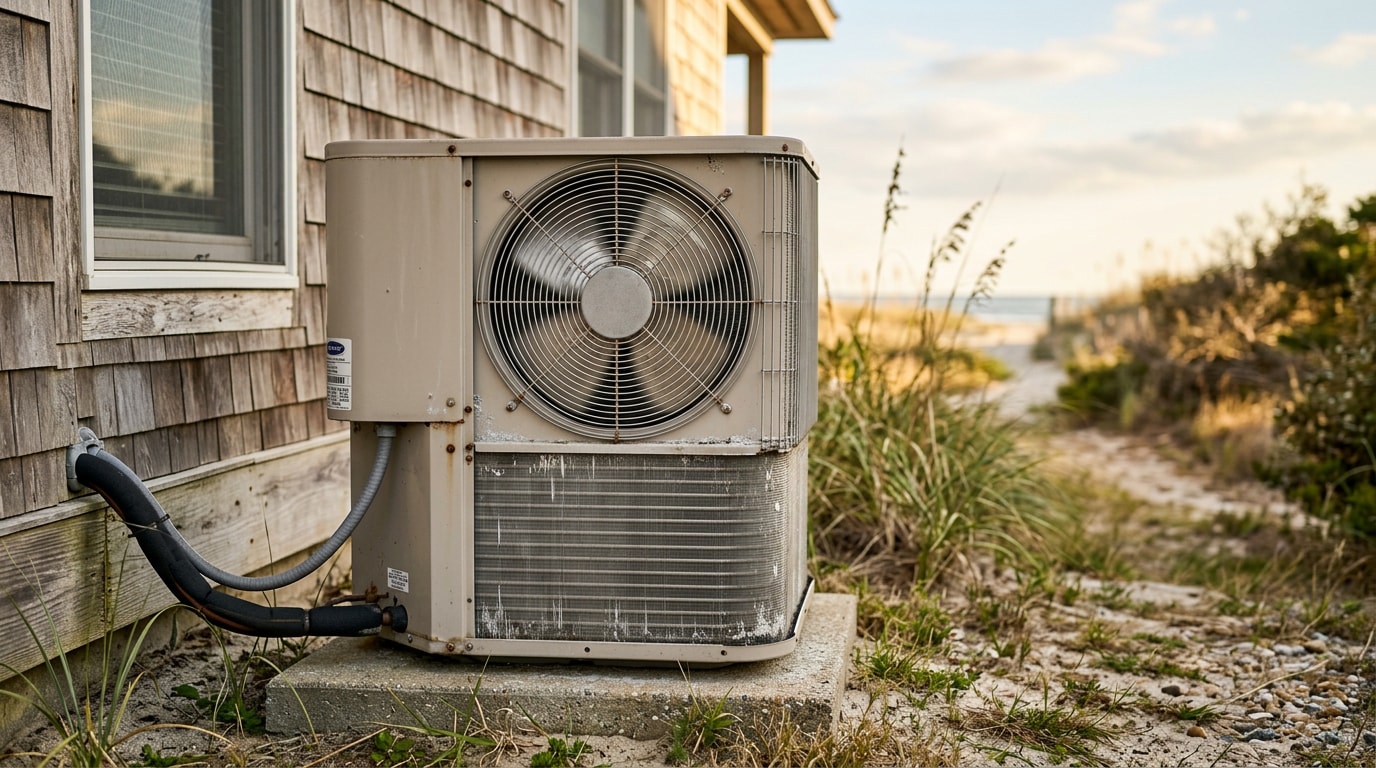
Air conditioning parts in Cape Carteret, NC wear out faster than in most of the state, thanks to a steady dose of salt air blowing off Bogue Sound and the White Oak River. This guide breaks down every major component, what it actually does, and which ones you should never try to fix yourself. By the end, you'll know exactly what your technician is talking about and when it's time to make the call.
Key Takeaways
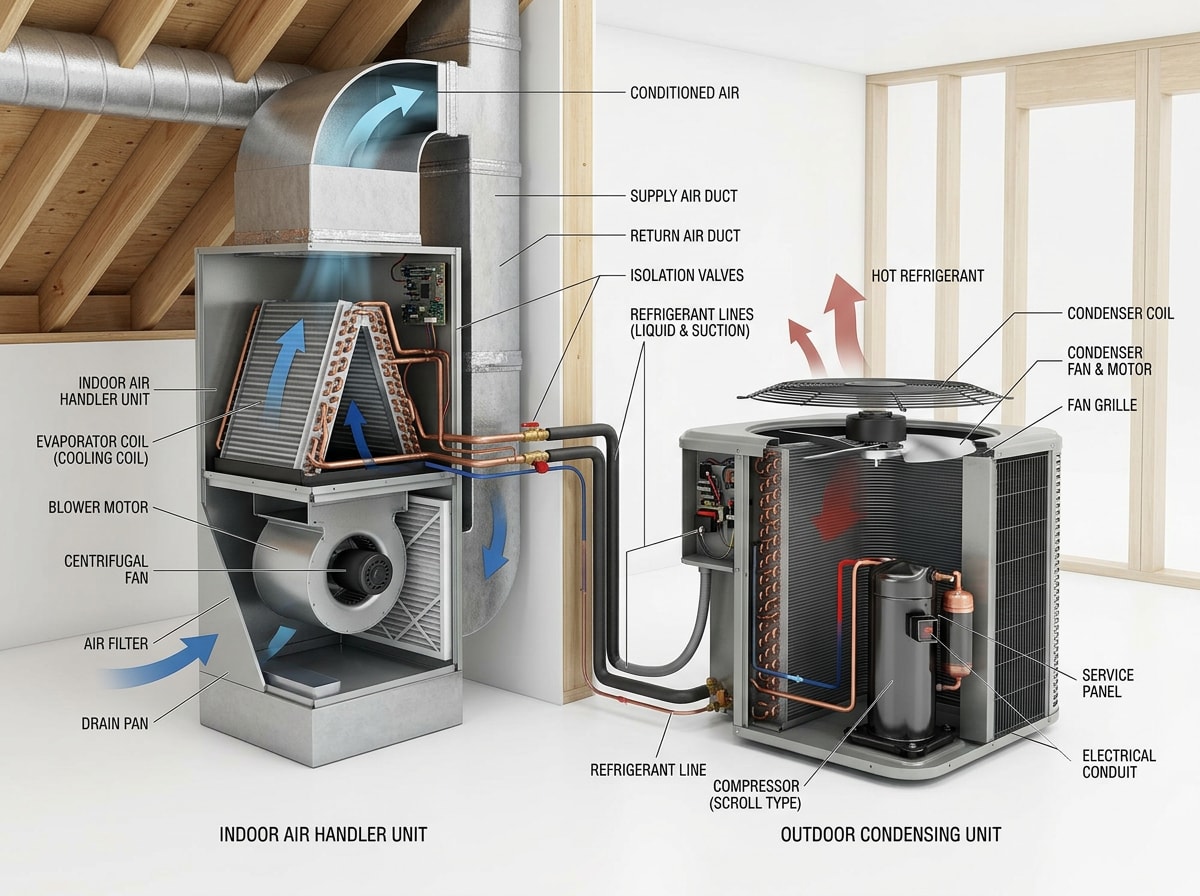
- A central air system splits into two groups: indoor parts (evaporator coil, blower motor, thermostat, air filter) and outdoor parts (compressor, condenser coil, condenser fan).
- The compressor, often called the system's "heart," and the refrigerant that flows through the coils are the core of the cooling process.
- Small electrical parts, the capacitor and contactor, cause a disproportionate share of "AC won't start" calls, and neither is a safe DIY repair.
- Coastal moisture and salt air in Cape Carteret accelerate wear on outdoor HVAC parts, so routine checks matter more here than inland.
Main Air Conditioner Parts and Their Functions
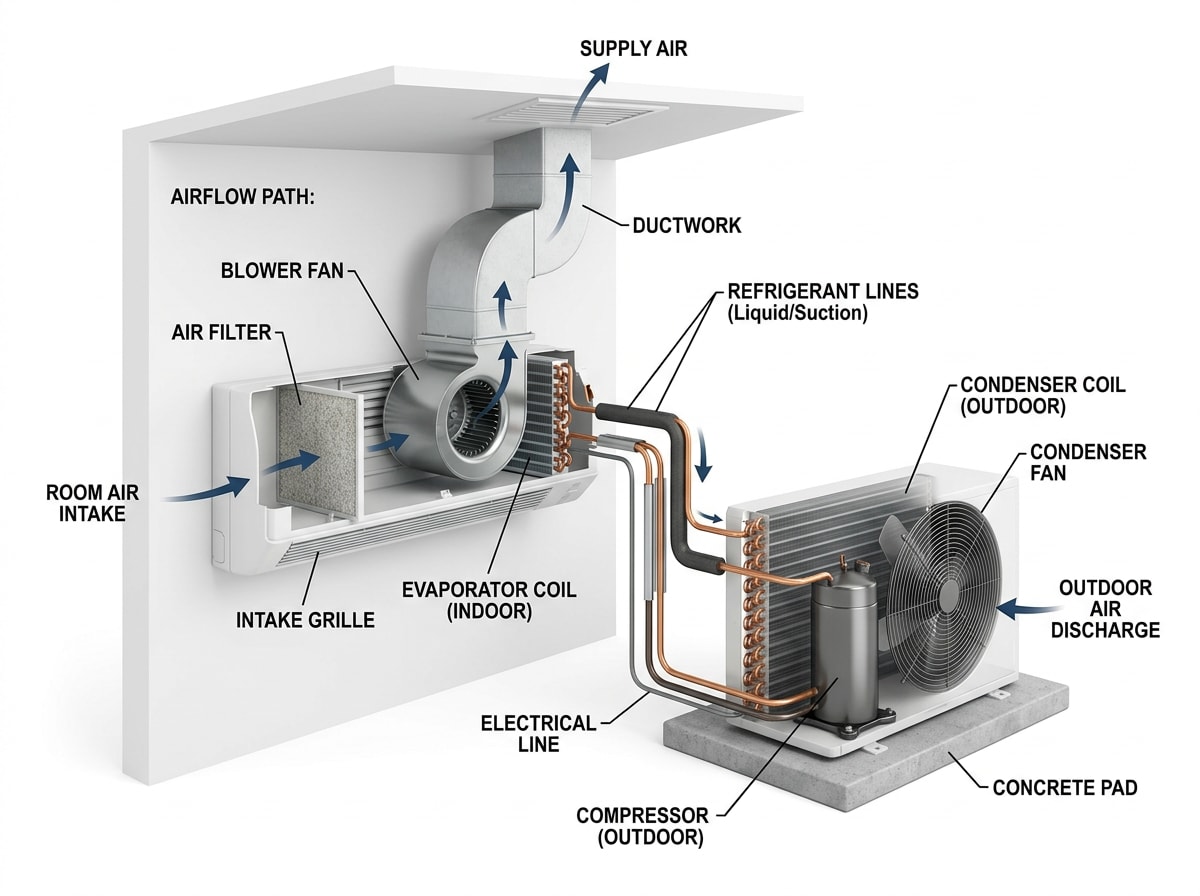
Every central AC system, whether in a waterfront cottage or a year-round home, relies on the same handful of components working in sequence. Below is a part-by-part breakdown covering the indoor unit and the outdoor unit, with Cape Carteret-specific wear notes where they matter. For repairs beyond a simple filter swap, our air conditioning repair team handles diagnosis and parts replacement.
Compressor
The compressor is the heart of the system. It sits inside the outdoor unit and pressurizes refrigerant, pushing it through the cooling cycle. Without it, nothing else in the system can function.
Because it does the heaviest mechanical work, the compressor is also the single costliest component to replace. A failing compressor often shows up as warm air blowing from vents or a system that runs constantly without cooling.
Condenser Coil and Condenser Fan
These two parts work as a pair and are almost always discussed together. The condenser coil handles heat release, dumping the heat absorbed from inside your home into the outdoor air. The condenser fan pulls air across that coil to speed the process along.
In Cape Carteret, salt-laden coastal air speeds up corrosion on condenser fins, which reduces heat transfer efficiency over time. Rinsing the outdoor unit periodically and keeping shrubs trimmed back helps the coil breathe and shed heat properly.
Evaporator Coil
The evaporator coil lives inside the indoor unit, usually mounted above or beside the furnace or air handler. As indoor air passes over it, the coil absorbs heat and humidity. This is what actually cools your home, not the outdoor unit itself.
Restricted airflow, often from a dirty filter, can cause the coil to ice over. That "frozen coil" symptom stops cooling entirely until it thaws and the root cause gets fixed.
Expansion Valve
The expansion valve sits between the condenser and evaporator coils. Its job is to control refrigerant flow by dropping pressure before the refrigerant enters the evaporator. That pressure drop lets the refrigerant absorb heat efficiently on the indoor side. A faulty valve can cause uneven cooling or ice formation even when every other part works fine.
Capacitor and Contactor
These two small electrical parts live in the outdoor unit and are responsible for a large share of "AC won't start" service calls, since either one failing can stop the compressor and fan from ever turning on. A failing capacitor typically causes a loud humming sound as the compressor tries and fails to start. A failing contactor more often produces a clicking noise or a breaker that trips repeatedly as the contacts arc and stick.
Neither part is a safe do-it-yourself repair. Capacitors store an electrical charge even after power is shut off, and general electrical safety guidance from university safety offices warns that people can be severely injured, even from relatively low voltages coupled with high current , which is why a licensed technician should always handle the discharge and swap.
Thermostat
The thermostat is the control center for the whole system, telling the compressor and blower when to start and stop based on your set temperature. Upgrading to a smart thermostat can meaningfully cut cooling costs. According to the ENERGY STAR program, on average, savings are approximately 8% of heating and cooling bills or $50 per year , with bigger savings possible depending on climate and usage habits.
Air Filter
The air filter traps dust, pollen, and debris before they reach the evaporator coil, protecting both airflow and indoor air quality. A clogged filter forces the system to work harder and can lead to the frozen-coil problem mentioned above. Most residential filters need replacing every 30 to 90 days, more often in homes with pets or during pollen season.
Blower Motor and Fan
The blower motor drives the blower fan, which pushes cooled air through the ductwork and into every room. If this motor weakens or fails, you'll often notice weak airflow at the vents even though the outdoor unit still runs normally.
Ductwork
Ductwork is the network of channels that carries conditioned air from the indoor unit throughout the house and pulls return air back. Leaky or poorly sealed ductwork is a common efficiency drain in older coastal homes, where humidity and settling can loosen joints over time, costing homeowners real money in air distribution losses even when every other part is healthy.
Refrigerant
Refrigerant is the chemical compound that cycles between the coils, absorbing and releasing heat to actually move warmth out of your home. Most modern systems use R-410A rather than older R-22, which has been phased out. Handling refrigerant requires certification because EPA regulations under Section 608 of the Clean Air Act require that technicians who maintain, service, repair, or dispose of equipment that could release ozone depleting refrigerants into the atmosphere must be certified . That's part of why low refrigerant or a suspected leak should always go to a licensed technician rather than a DIY fix.
How Does an Air Conditioner Work? (The Complete Cooling Cycle)
Seeing the parts individually only tells half the story. The real value is in how they interact.
The cycle starts when the thermostat calls for cooling, which energizes the capacitor and contactor to start the compressor. The compressor pressurizes refrigerant and sends it to the condenser coil, where the condenser fan helps release built-up heat outside.
The refrigerant then passes through the expansion valve, dropping in pressure before reaching the evaporator coil. There, it absorbs heat and humidity from indoor air, and the blower motor pushes that newly cooled air through the ductwork and into your living space. This cycle repeats continuously until the thermostat senses the target temperature and shuts the system off. For a broader look at how all these systems fit into whole-home comfort, visit our HVAC contractor services page.
Why Cape Carteret's Coastal Climate Hits AC Parts Harder
Cape Carteret sits right on the water, and that location changes how fast AC parts wear out compared to inland North Carolina homes. Eastern North Carolina's coastal location gives it a moist and humid climate with roughly even seasonal precipitation all year round , which keeps outdoor units damp far more often than a system fifty miles inland.
That constant moisture, combined with airborne salt, settles on condenser coils, electrical contacts, and fasteners. Over time it accelerates the same corrosion and pitting that cause capacitor failure, contactor arcing, and coil leaks elsewhere in this guide. Homes closer to the sound or the ICW typically need outdoor-unit rinses and a visual inspection more often than homes set back from the water.
A simple seasonal habit helps: rinse the outdoor cabinet with a garden hose (never a pressure washer), keep at least two feet of clearance around it, and have a technician check refrigerant pressures and electrical connections before peak summer season. Regular HVAC maintenance catches corrosion-related wear before it turns into a breakdown. If you want to see how a coastal cover and placement strategy helps protect the cabinet itself, our guide to air conditioning covers in Beaufort, NC covers that in more depth.
Common AC Issues Related to Components
Once you know the parts, it's easier to connect symptoms to likely causes. An AC that runs constantly but never cools the house often points to a failing compressor or a refrigerant leak. A system that short-cycles, turning on and off rapidly, frequently traces back to a bad capacitor or a dirty, iced-over evaporator coil. An outdoor unit that hums but won't actually start is the classic capacitor-or-contactor symptom described earlier.
Repair costs vary by brand, tonnage, and local labor rates, but the table below reflects typical 2026 ranges homeowners can expect to see on an estimate:
| Part | Typical Replacement Cost (2026) | Safe for DIY? |
|---|---|---|
| Air filter | $15–$40 | Yes |
| Capacitor | $150–$400 | No |
| Contactor | $150–$350 | No |
| Fan motor | $350–$700 | No |
| Compressor | $1,500–$3,500+ | No |
Capacitor pricing lines up with industry figures showing an average replacement cost of $150 to $400 including labor . Filter changes and basic cleaning are reasonable DIY-adjacent tasks, but anything involving refrigerant, electrical components, or the compressor should go to a licensed technician. Following nationally recognized contractor standards matters here too, since the Air Conditioning Contractors of America develops the industry standards for heating, ventilation, air conditioning and building performance under a consensus-based process that most manufacturer warranties reference. If you're noticing any of these symptoms, schedule AC repair with our team before a small part failure turns into a bigger bill.
FAQ
What Are the Main Parts of an Air Conditioner?
The main AC parts are the compressor, condenser coil, evaporator coil, and expansion valve, supported by the thermostat, blower motor, and electrical components like the capacitor and contactor. See the full breakdown above for how each one functions.
What Are the Basic AC Parts?
The basic AC parts, compressor, condenser coil, evaporator coil, and expansion valve, form the core refrigerant cycle. A full system also includes supporting parts like filters, ductwork, thermostats, and electrical controls.
What Is the Most Expensive Part of an AC Unit to Replace?
The compressor is the most expensive AC part to replace, since it's the most mechanically complex component. In 2026, compressor replacement typically runs $1,500 to $3,500 or more, depending on unit size and refrigerant type.
Are Air Conditioner Capacitors Safe to Replace Yourself?
No. Capacitors store electrical charge even when unplugged, creating a shock risk. DIY repair on electrical parts isn't recommended, contact a licensed technician through our Cape Carteret, NC service area page instead.
What Is the Most Common AC Repair in a Coastal Area Like Cape Carteret?
Capacitor and contactor replacement are the most common coastal repairs, since salt air and humidity speed up the corrosion and arcing that cause both parts to fail.
How Often Should Coastal AC Systems Be Inspected?
Twice a year is a reasonable baseline for Cape Carteret homes, once before cooling season and once before heating season, since salt exposure accelerates wear beyond what inland systems experience.
Can Salt Air Actually Damage My AC Unit?
Yes. Airborne salt settles on condenser coils, fasteners, and electrical contacts, and combined with coastal humidity, it accelerates corrosion that shortens the life of outdoor parts.
Ready to stop guessing which part is failing? Get a free estimate from the team at Carolina Service Works, and we'll diagnose it right the first time.