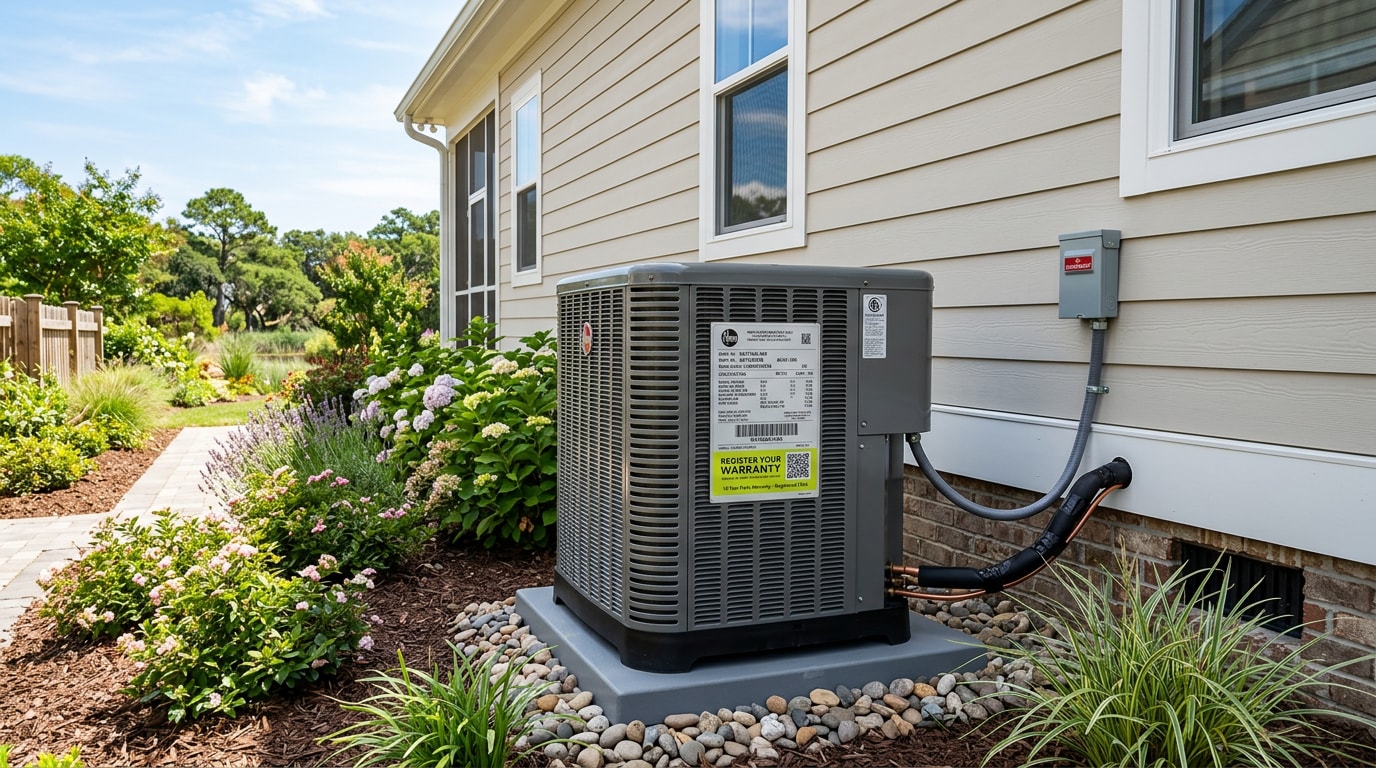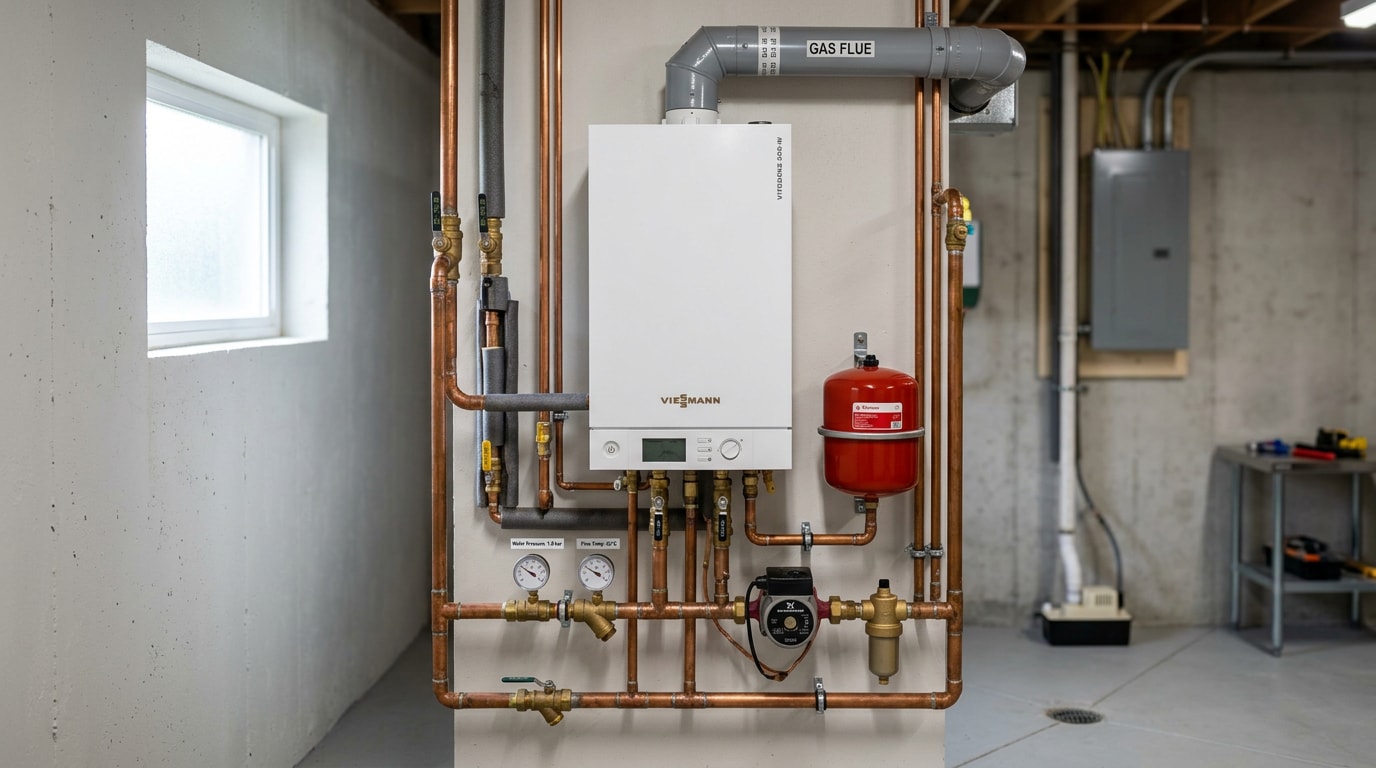
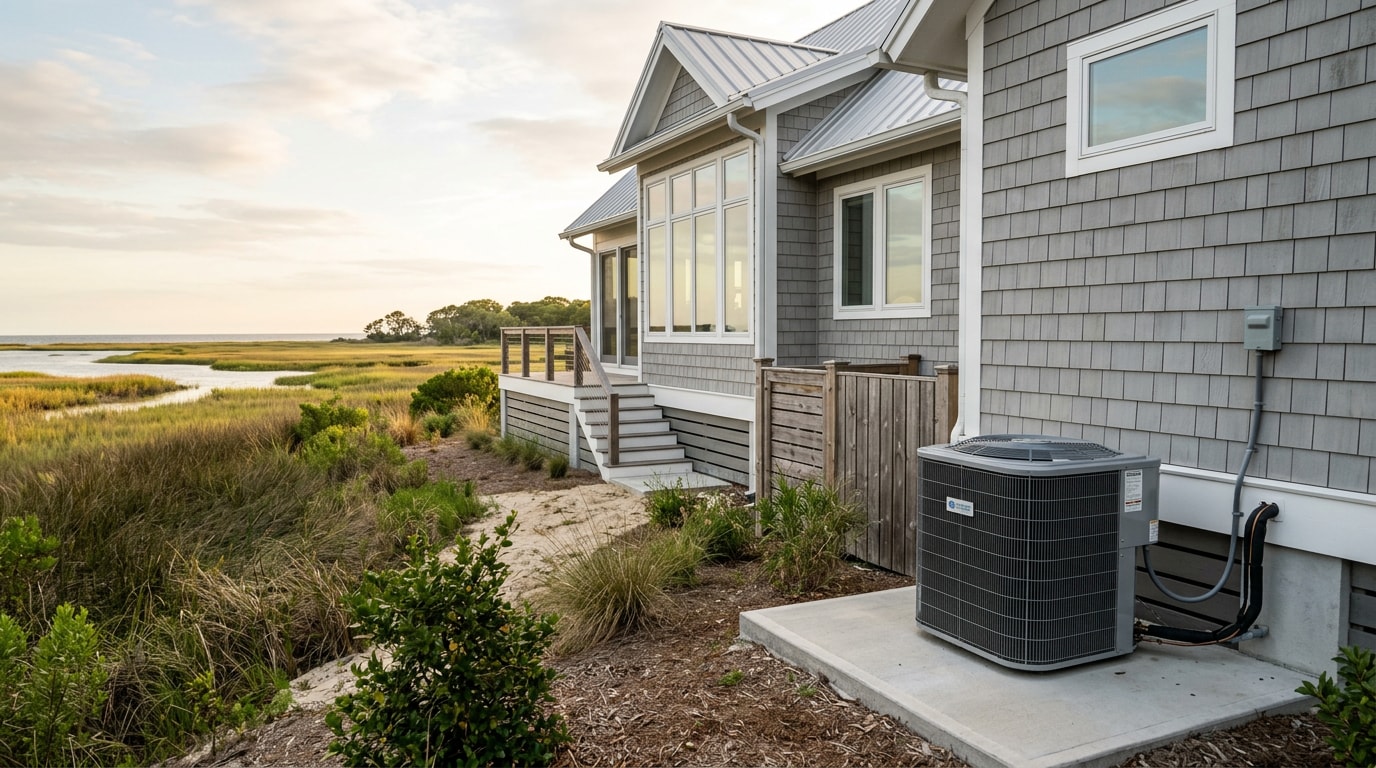
What is the best heating and air conditioning unit for a Pine Knoll Shores, NC home? It's whichever system is correctly sized, rated for the Southeast's SEER2 standards, and built to survive salt air, not just the biggest name on a showroom floor. Here's exactly what separates a unit that lasts 15 years on this barrier island from one that fails in five.
What Makes an HVAC System "Best" for Pine Knoll Shores
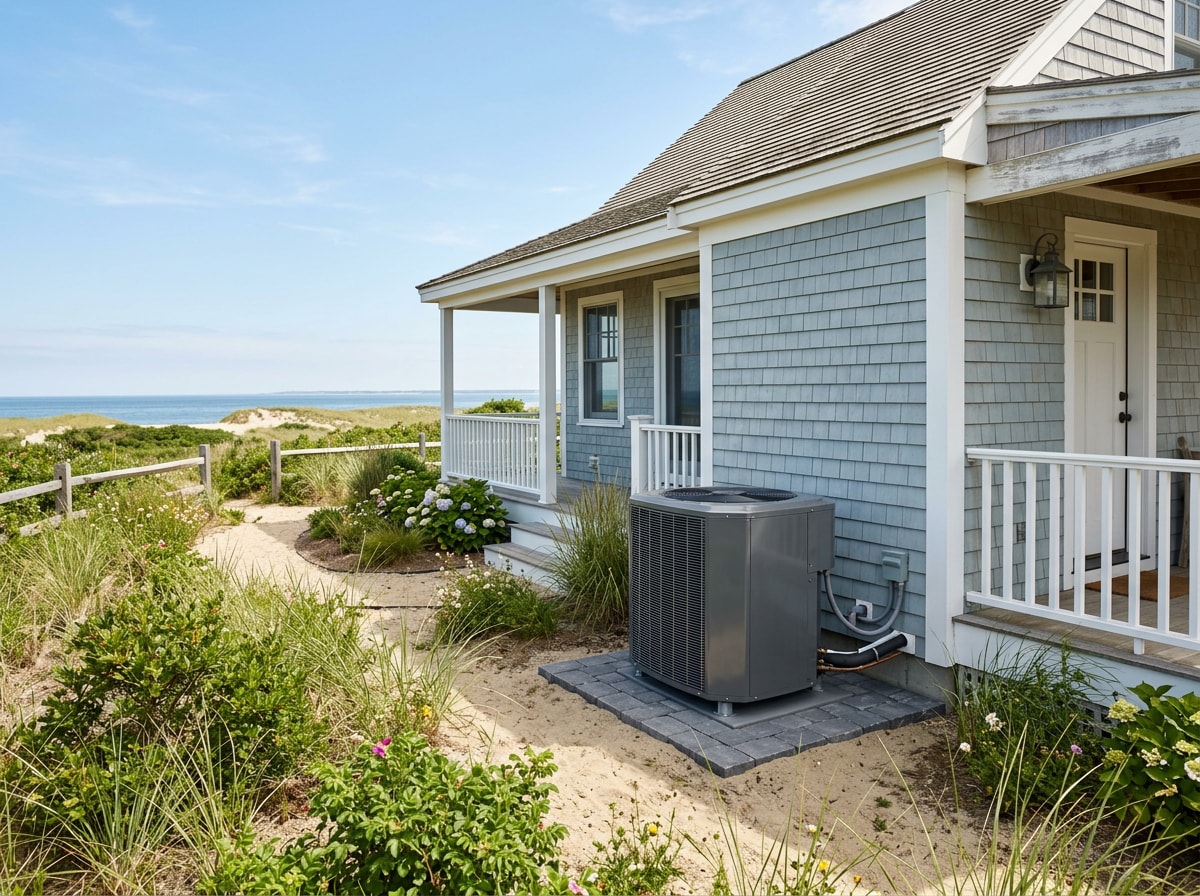
Sitting between the open Atlantic and Bogue Sound, Pine Knoll Shores homes deal with three stressors most inland buying guides never mention: constant salt-laden air, near-tropical summer humidity, and mild winters that behave nothing like the rest of North Carolina. The "best" unit for this address is really a short list of requirements, not a single product.
North Carolina is officially classified among the Hot-Humid/Southeast states for federal residential air conditioner efficiency guidance , which means local systems need to meet tougher minimum efficiency and moisture-removal standards than units sold in drier, milder climates. On top of that regional baseline, a Pine Knoll Shores system also needs:
- A SEER2 efficiency rating that meets or beats the Southeast regional minimum
- An accurate load calculation instead of a square-footage guess
- Corrosion-resistant coils and cabinet hardware rated for salt exposure
- Enough runtime to pull humidity out of the air, not just drop the temperature
Browse our full HVAC contractor services to see how we apply these standards on every Crystal Coast installation, or jump straight to your neighborhood page for HVAC services in Pine Knoll Shores.
Why Salt Air and Humidity Change Every Recommendation
Most AC buying advice assumes a dry attic and city water. Pine Knoll Shores has neither. Two separate problems stack on top of each other here, and a unit that only solves one of them will disappoint you.
The first problem is moisture. Humid coastal air carries a lot of "latent heat," the hidden moisture a system has to wring out, not just cool down. A short-cycling or oversized unit chills a room fast without running long enough to pull that moisture out, which leaves the house cold and clammy. The EPA recommends keeping indoor humidity below 60 percent, ideally between 30 and 50 percent , because anything higher creates conditions where mold can take hold.
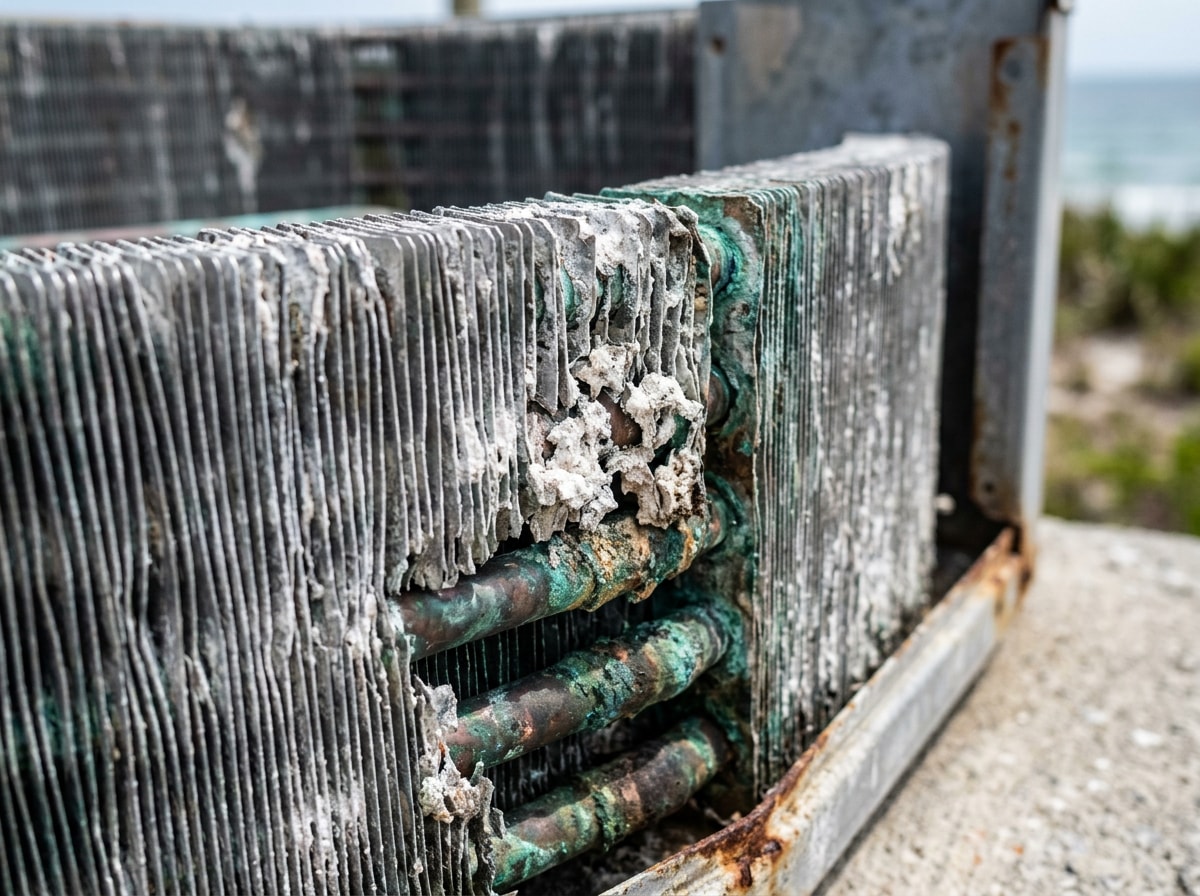
The second problem is the air itself. Standard condenser coils pair copper tubing with aluminum fins. When salty moisture bridges those two different metals, it sets off a slow electrochemical reaction that eats the aluminum fins first, long before the rest of the unit is due for retirement. We've opened up three-year-old condensers on barrier-island service calls and found fins already pitted and crumbling, on units that still looked fine from the street. That's why coastal-rated coil coatings and all-aluminum coil designs matter more here than almost anywhere else in the state.
Central Air, Heat Pump, or Mini-Split: Comparing Your Options
Coastal homeowners typically choose between three cooling paths: central air paired with a separate furnace, an all-in-one heat pump, or ductless mini-splits for specific rooms. High-SEER2 variable-speed equipment generally gives the best mix of comfort and long-term operating cost on this coastline, because it runs longer at lower output instead of blasting cold air and shutting off.
Under the Southeast region's updated efficiency rules, split-system air conditioners below 45,000 BTU must now carry a SEER2 rating of at least 14.3 , which works out to roughly the old 15 SEER rating. That's the floor, not the target. Here's how the common tiers compare for a 2026 replacement:
| Tier | SEER2 Rating | Typical Use Case |
|---|---|---|
| Code Minimum (Southeast) | 14.3 | Entry-level replacement, lowest upfront cost |
| ENERGY STAR Certified | 15.2+ | Better humidity control, solid mid-range choice |
| Premium Variable-Speed | 18–22+ | Best comfort and quietest operation, higher upfront cost |
Beyond the rating on the sticker, air conditioning repair) and replacement work on the coast also has to account for refrigerant leaks, corroded electrical connections, and short-cycling caused by oversizing, problems that show up faster here than inland.
Heating That Works With Mild Coastal Winters
Winters on the Crystal Coast rarely get brutal, which changes the heating math.
Heat pumps are usually the most efficient primary heat source here, since mild temperatures let them cover most of the heating load without leaning on expensive electric resistance backup strips. A correctly sized heat pump can run efficiently almost all winter long.
Furnaces, whether gas, electric, or oil, still make sense as backup or primary heat in specific homes, particularly older properties without existing heat pump infrastructure. If oil heat is part of your setup, our guide on oil furnace installation in Morehead City, NC covers what to expect before you commit to that route. For repairs on an existing system, see our heating system repair services.
Ductless Mini-Splits for Additions and Problem Rooms
Sunrooms, converted garages, and additions built after the original ductwork was installed are common on barrier islands, and they're exactly where mini-splits earn their keep. They deliver zoned heating and cooling with no ductwork required, which also means no duct leaks to fight in a humid attic. Many coastal-rated mini-split condensers also use corrosion-resistant coil coatings as standard equipment, which is worth asking about directly when comparing models.
Getting the Size Right: Why Bigger Isn't Better
Equipment specs only matter if the unit is sized correctly for the house. Square-footage rules of thumb can't account for insulation levels, window orientation, or ceiling height, which is why a real load calculation changes the outcome.
Manual J is the national ANSI-recognized standard for producing HVAC equipment sizing loads for homes, and a proper load calculation performed to that standard is required by national building codes and most state and local jurisdictions . An oversized system cycles on and off too quickly to pull humidity out of the air, undermining the exact moisture control a coastal home needs most. An undersized system just runs constantly and still can't keep up.
If your last quote was based on a quick walk-through and a guess, request a sizing consultation before signing anything. You can also explore HVAC system replacement options built around an accurate load calculation rather than a square-footage shortcut.
Humidity Control and Indoor Air Quality
A whole-home dehumidifier paired with your AC or heat pump handles the humidity load the main system can't fully manage on its own, especially during shoulder-season weeks when it's too mild to run cooling long enough to dry the air. Pairing dehumidification with filtration also helps control the dust mites and musty odors that come with coastal humidity. See our indoor air quality upgrade options for what fits a Pine Knoll Shores floor plan.
Why Installation Quality Decides Whether Your Unit Lasts
Equipment specs are only half the equation. The other half is whether the system was installed to account for this specific coastline.
Our technicians are licensed to work on HVAC systems across North Carolina, and on the Crystal Coast specifically, that means we size every system with a real load calculation, flag corrosion risk before it becomes a warranty dispute, and give homeowners honest repair-versus-replace numbers instead of a sales pitch. That includes helping with Carteret County mechanical permitting on replacements and pointing out available energy efficiency rebates where they apply.
If your current system is struggling to keep up, start with HVAC maintenance to see whether a repair buys you more time, or get a free estimate if it's time to talk replacement. You can see our full service area and how we support homes near the water on the Carolina Service Works homepage.
FAQ
What SEER rating should I look for in a new air conditioner?
For Pine Knoll Shores homes, look for a SEER2 rating of at least 15.2, the Southeast region's updated efficiency standard requires at least 14.3 SEER2 for systems under 45,000 BTU , so anything at the ENERGY STAR tier or above gives you a real margin above the legal floor. Higher SEER2 units also tend to run longer, gentler cycles, which helps pull humidity out of coastal air more effectively.
What size HVAC unit do I need for my home?
Square-footage rules of thumb can't replace a full Manual J load calculation, which accounts for insulation, window placement, and humidity. An undersized or oversized system causes both comfort and humidity problems. Request a sizing consultation for an accurate recommendation specific to your home.
How long does an HVAC system last on the coast?
Most AC and heat pump systems last 12 to 15 years inland, but salt exposure on barrier islands like Pine Knoll Shores can shorten that lifespan noticeably without regular maintenance or coastal-rated components designed to resist coil corrosion.
What is the best SEER rating for a heat pump in North Carolina?
Heat pumps carry separate cooling and heating ratings. Current Southeast regional standards call for SEER2 ratings of 14.3 or higher, alongside solid HSPF2 heating performance for mild winters. See our heat pump installation options to compare models.
Does brand matter more than SEER rating for coastal homes?
Not as much as coil protection does. Most major manufacturers, including Carrier, Trane, Lennox, and Daikin, offer coastal packages with coated or all-aluminum coils. A mid-tier unit with proper corrosion protection will often outlast a premium unit without it.
Do I need a permit to replace my HVAC system in Carteret County?
Generally, yes. Most HVAC replacements require a mechanical permit, and a licensed contractor should pull that permit as part of the installation rather than leaving it to the homeowner.