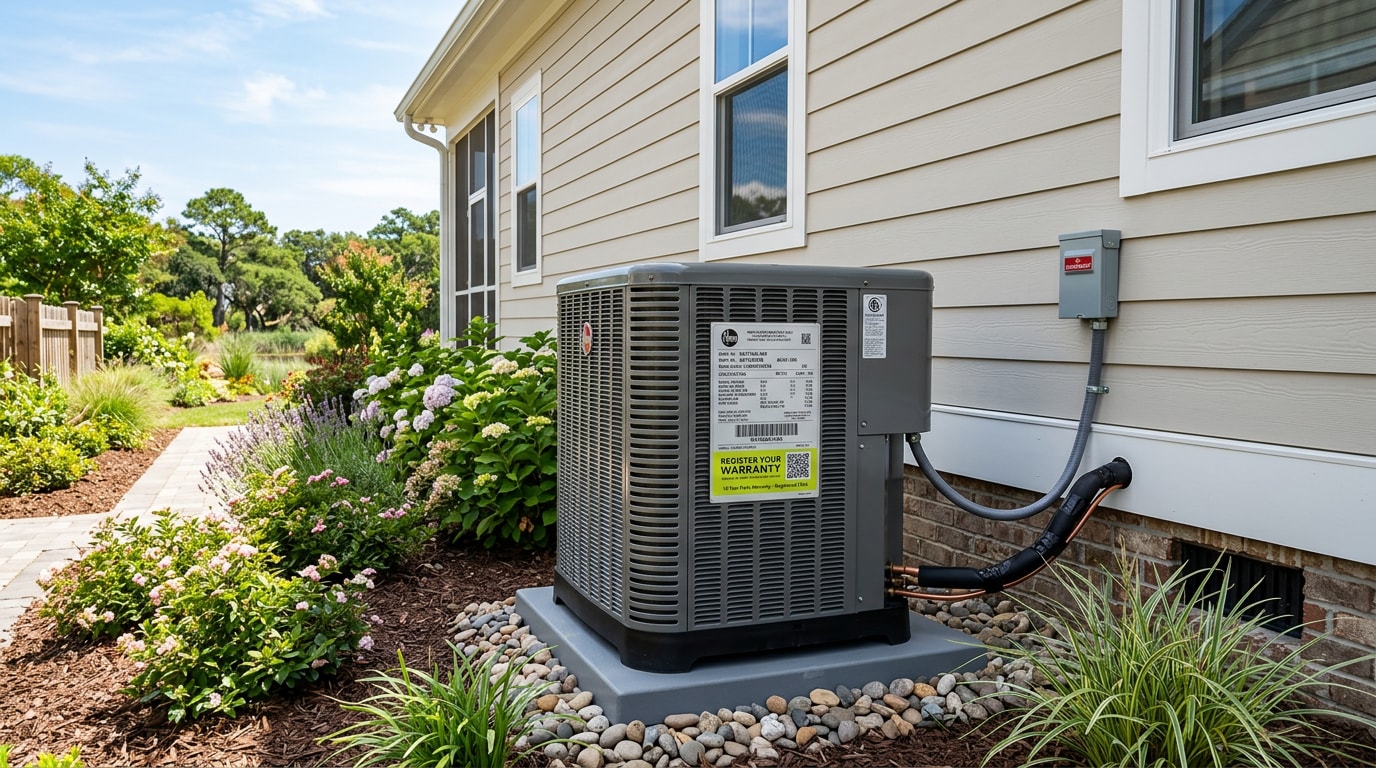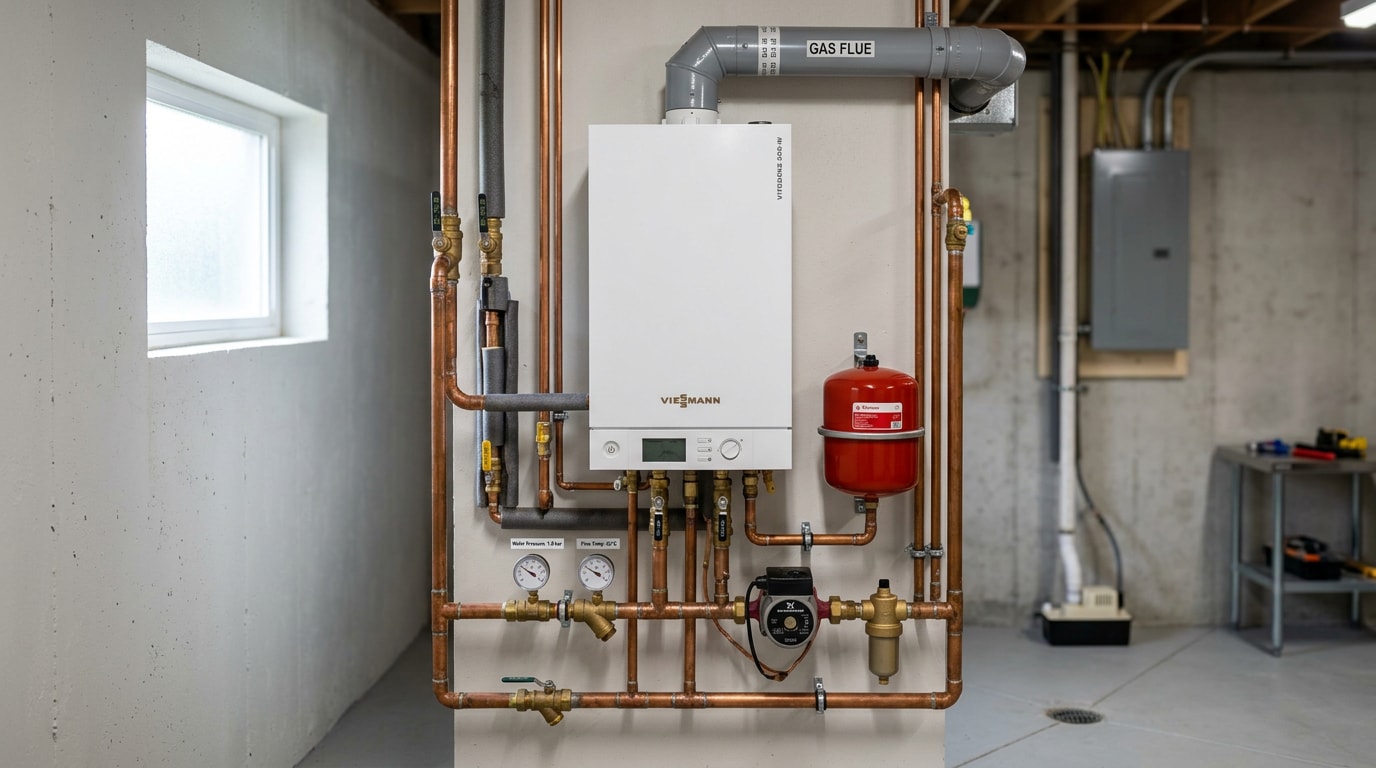
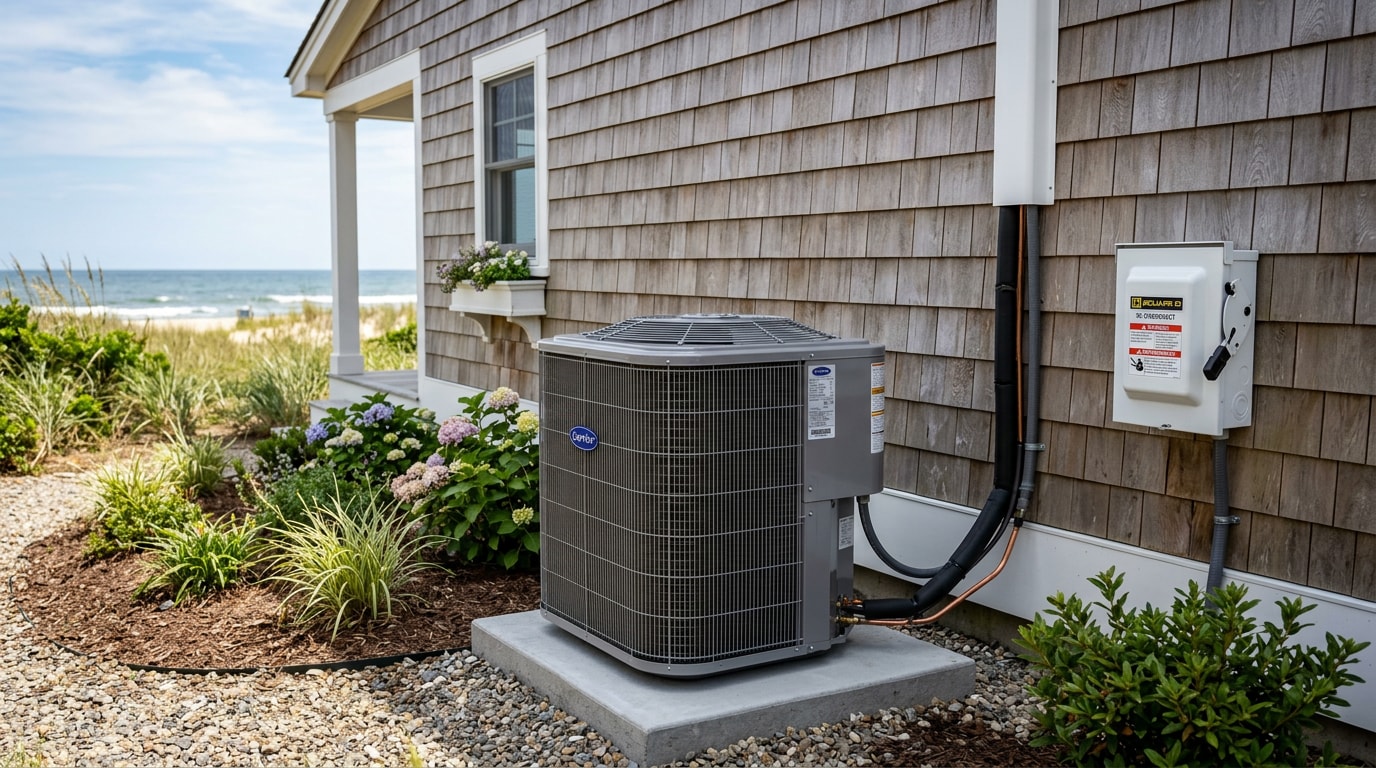
The cost to install central air conditioning in Beaufort, NC typically runs between $3,220 and $14,000, depending on whether your ductwork is reusable, the system size, and how much salt-air protection the installation needs. Homeowners on the Crystal Coast often start pricing this project after a muggy July afternoon exposes just how far behind an aging unit has fallen. Below is the full 2026 breakdown, including what inland cost guides leave out about installing AC near saltwater.
How Much Does It Cost to Install Central Air Conditioning in Beaufort, NC?
Three scenarios cover most Beaufort installs: a straight AC swap on ductwork that's already in good shape, a full system replacement, and a new install where ductwork has to be built from scratch.
| Scenario | Estimated Cost |
|---|---|
| AC-only swap (existing ductwork) | $3,220 – $7,500 |
| Full system replacement | $5,200 – $14,000 |
| New system, no existing ductwork | $8,000 – $16,000+ |
North Carolina homeowners replacing an HVAC system are looking at costs between $5,200 and $14,000 depending on system type, home size, and where in the state they live, though simple AC-only swaps on existing ductwork can land closer to $3,200–$7,500. Beaufort tracks close to that statewide range, with coastal labor and corrosion-resistant equipment options pushing some quotes toward the higher end.
System Types and Average Costs
Equipment choice moves the price as much as labor does. HVAC system types and average costs break down as: Central Air Conditioning System, $4,500 – $8,000; Heat Pump System, $5,000 – $10,000; Gas Furnace & AC Combination, $6,000 – $12,000; Ductless Mini-Split System, $4,000 – $7,000 per zone.
- Central air conditioning system: $4,500 – $8,000
- Heat pump system: $5,000 – $10,000
- Gas furnace & AC combination: $6,000 – $12,000
- Ductless mini-split system: $4,000 – $7,000 per zone
A heat pump handles both heating and cooling in one unit, while a standalone central air system only cools and pairs with an existing furnace. Mini-splits cost more per zone but skip ductwork entirely, which helps in additions or older Beaufort homes that were never ducted.
What Drives the Cost Up or Down in Beaufort
Pricing swings on three things: the efficiency rating code requires here, how big a system your home actually needs, and the labor and permitting scope. A fourth factor matters more on the coast than almost anywhere else inland: corrosion protection.
SEER2, Climate Zone, and a Number Most Guides Skip
Beaufort sits in North Carolina's Coastal Plain, part of climate zone 3A, a hot-humid zone where cooling load dominates energy use far more than heating ever does. That climate classification isn't just background information, it sets a hard legal minimum on the equipment you're allowed to install.
Under the 2023 M1 standards, the Southeast region's minimum efficiency standard for split-system ACs below 4.5 tons (45,000 BTU) is now 14.3 SEER2 (15 SEER), and the minimum for split-system ACs above 4.5 tons is 13.8 SEER2 (14.5 SEER). That's noticeably higher than the national minimum of 13.4 SEER2, and it's enforced by installation date rather than manufacture date in this region, according to the Air-Conditioning, Heating, and Refrigeration Institute. In plain terms: a contractor quoting a bare-minimum, builder-grade unit for your Beaufort home should still be quoting at least 14.3 SEER2, not the lower national baseline you'll see in guides written for northern states.
Beyond the legal floor, higher SEER2 ratings mean better efficiency and lower summer electric bills, though equipment cost rises with it. Part of your home may be served by Duke Energy Progress and part by Carteret-Craven Electric Cooperative depending on where in Beaufort you sit; Duke Energy customers installing a qualifying ENERGY STAR heat pump or AC can check current Smart $aver rebate amounts before signing a contract, since the rebate can shave a few hundred dollars off the final invoice.
System Size, Labor, and Permit Costs
Correct sizing affects cost directly, since larger systems cost more in both equipment and labor:
- 2-ton system (24,000 BTUs): $3,500 – $6,500
- 3-ton system (36,000 BTUs): $4,500 – $8,000
- 4-ton system (48,000 BTUs): $5,500 – $10,000
Standard installation labor runs $1,500 to $2,500, ductwork repairs or modifications add $2,000 to $5,000, and an electrical panel upgrade for a larger system adds another $1,000 to $3,000.
Don't skip the permit line either. Typical HVAC permit fees in North Carolina run $50 to $200, with $100 being the most common fee. Carteret County and its coastal towns handle mechanical permitting locally, and a project near the waterfront may also need a signed CAMA permit in addition to the standard mechanical permit paperwork if the outdoor unit placement falls inside the coastal management zone. That's a detail most statewide cost guides never mention, and it's worth asking your installer about before, not after, the condenser gets set.
The Installation Process: What to Expect
A proper central air installation follows a defined sequence: assessment, sizing, equipment placement, and testing. Skipping the load calculation step is exactly what drives up repair costs and shortens equipment life later.
A licensed contractor starts with a site assessment, evaluating square footage, insulation, window orientation, and the condition of any existing ductwork. From there, they perform a Manual J load calculation to determine exactly how many BTUs your home needs, no guessing based on square footage alone. ACCA's Manual J Residential Load Calculation is the ANSI standard for sizing HVAC systems, and a proper load calculation performed to this standard is required by national building codes and most state and local jurisdictions. You can see the official ACCA Manual J standard if you want to check what your contractor should be following.
Refrigerant handling during installation must also comply with federal law. EPA regulations under Section 608 of the Clean Air Act require that technicians who maintain, service, repair, or dispose of equipment that could release ozone-depleting refrigerants into the atmosphere must be certified. You can confirm the requirement directly on the EPA's Section 608 program page. A reputable installer will have certified technicians handle this step, protecting both your warranty and the environment.
In our service calls across Beaufort and the surrounding Crystal Coast, salt film on an outdoor coil is one of the first things our technicians check during any new installation walkthrough, well before the equipment is even unboxed. It's a five-minute look that tells us a lot about how the old system was maintained and what the new one will be up against.
Repair vs. Replace: When a New System Makes More Sense
A simple guideline cuts through most of the repair-or-replace debate: the 50% rule. If a repair estimate approaches half the cost of a new system, replacement is generally the smarter long-term move.
Refrigerant type matters too. Older systems still running on R-22, commonly called Freon, face a hard reality: R-22 production has been phased out, so a refrigerant leak now means tracking down increasingly scarce, expensive supply. Newer systems use R-410A, which remains widely available and far cheaper to service.
If your system is approaching that 50% threshold, a professional AC repair evaluation can confirm whether repair still makes financial sense before you commit either way. And if replacement is the right call, our HVAC system replacement team can walk you through equipment options sized correctly for your home.
Coastal Considerations: Salt, Humidity, and Protecting Your Investment
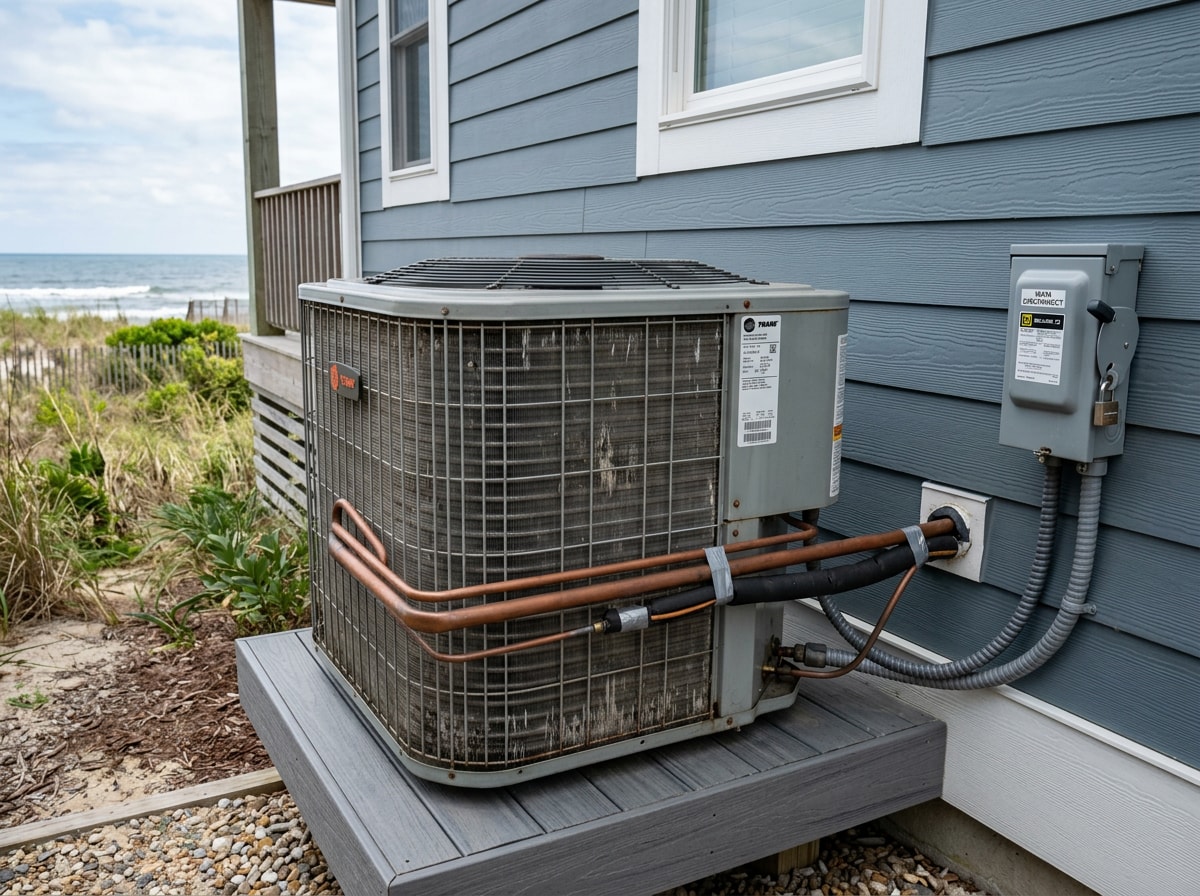
Running an HVAC system in Beaufort presents challenges inland North Carolina homes simply don't face. Airborne salt from the waterfront settles on condenser coils and cabinets, accelerating rust and metal breakdown far faster than in a Raleigh or Charlotte backyard. That's why many coastal installs spec corrosion-resistant coatings or coil treatments on the outdoor unit, an upcharge inland homeowners rarely budget for but one that extends equipment life in this zone 3A coastal environment.
Humidity control matters just as much as corrosion resistance. An undersized unit cools the air but leaves rooms clammy; an oversized one cycles too fast to dehumidify properly. Getting sizing right for this exact climate matters more here than in drier parts of the state, which is another reason the Manual J step above isn't optional.
Once a system is installed, a basic weatherproof cover during the off-season and regular coil rinses go a long way toward protecting that investment. We cover exactly what helps and what doesn't in our guide to air conditioning covers in Beaufort, NC, and our HVAC maintenance plans build salt-air checks into every visit.
A contractor familiar with the area will already account for these conditions when pricing your installation, rather than treating your Beaufort home like a standard inland job. The team at Carolina Service Works has priced and installed central air systems throughout Beaufort and the surrounding Carteret County coastline, so quotes already factor in salt exposure, CAMA zoning, and local permit requirements before you ever see a number.
Ready for a number specific to your home? Get a free estimate and we'll walk your property, run the load calculation, and give you a written quote the same visit.
FAQ
What is the average cost to replace an HVAC system in North Carolina?
Most North Carolina homeowners pay between $5,200 and $14,000 for a full system replacement, though simple AC-only swaps on existing ductwork can land closer to $3,200 to $7,500 depending on system size and local labor rates.
How long does it take to install central air conditioning?
A straightforward swap using existing ductwork usually wraps up in a single day. Installing new ductwork, upgrading an electrical panel, or retrofitting an older home pushes the timeline to two or three days.
Do I need new ductwork for central air?
Not always. If your home already has ductwork in good condition, it can often be reused, keeping costs on the lower end of the ranges above. Homes without ductwork, or with damaged or undersized ducts, need new duct installation, the single biggest factor pushing a project toward the higher-cost end.
How much does it cost to install central air in an older home?
Historic Beaufort homes often need extra work beyond the base installation: electrical panel upgrades ($1,000–$3,000) and retrofitting ductwork into walls or crawlspaces that weren't originally built for it. Budget toward the higher end of the full-replacement range, and request a free quote for a number specific to your home's construction.
What size air conditioner do I need for a home in Beaufort?
A central air conditioning system needs about 20 BTUs of energy per square foot of living space to adequately cool that space as a rough starting point, but a full Manual J load calculation accounts for insulation, window orientation, and coastal humidity too, which is why a guess based on square footage alone can leave a home undersized or clammy.
Is central air conditioning worth it on the NC coast?
For most Beaufort homes, yes. Humidity control is the main job cooling equipment does here, not just temperature, and a correctly sized, corrosion-protected system runs more efficiently and lasts longer than stretching an aging or undersized unit through another coastal summer.