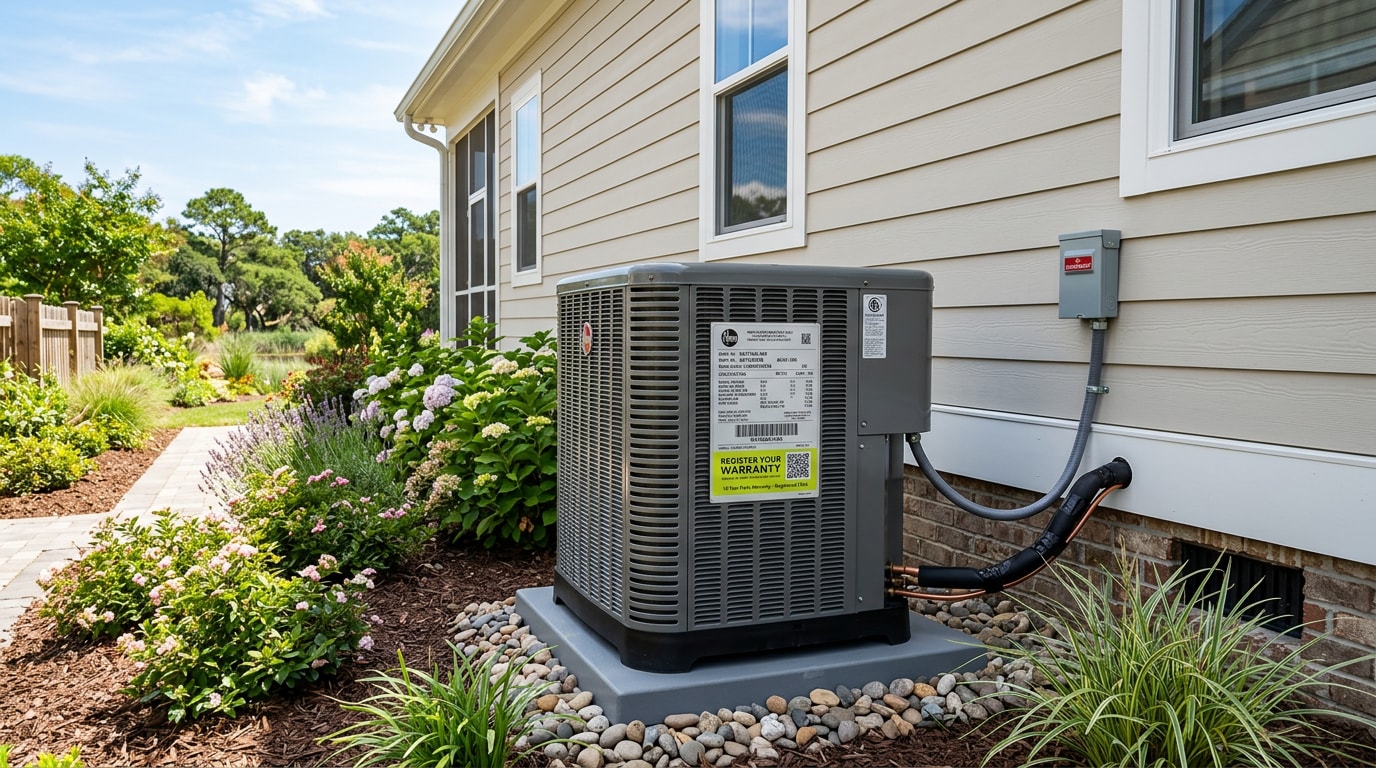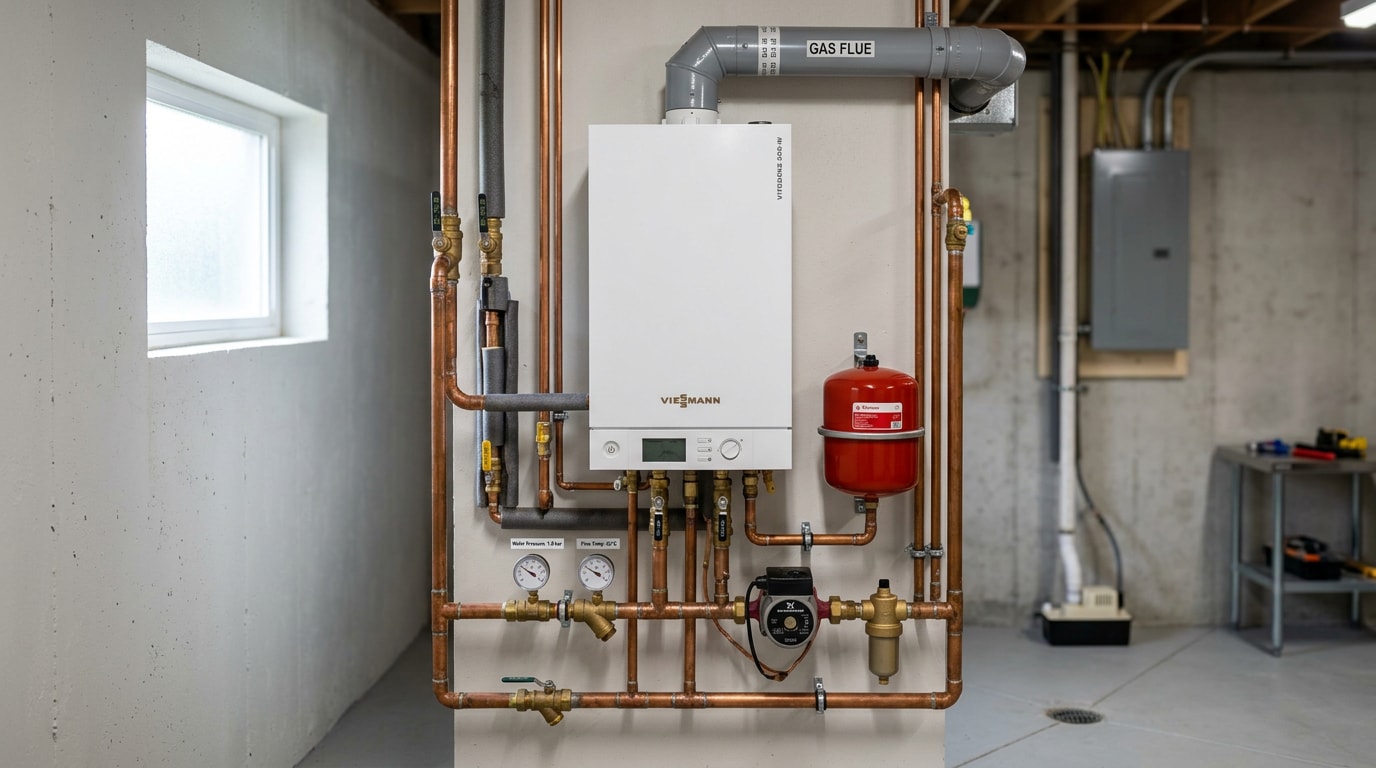
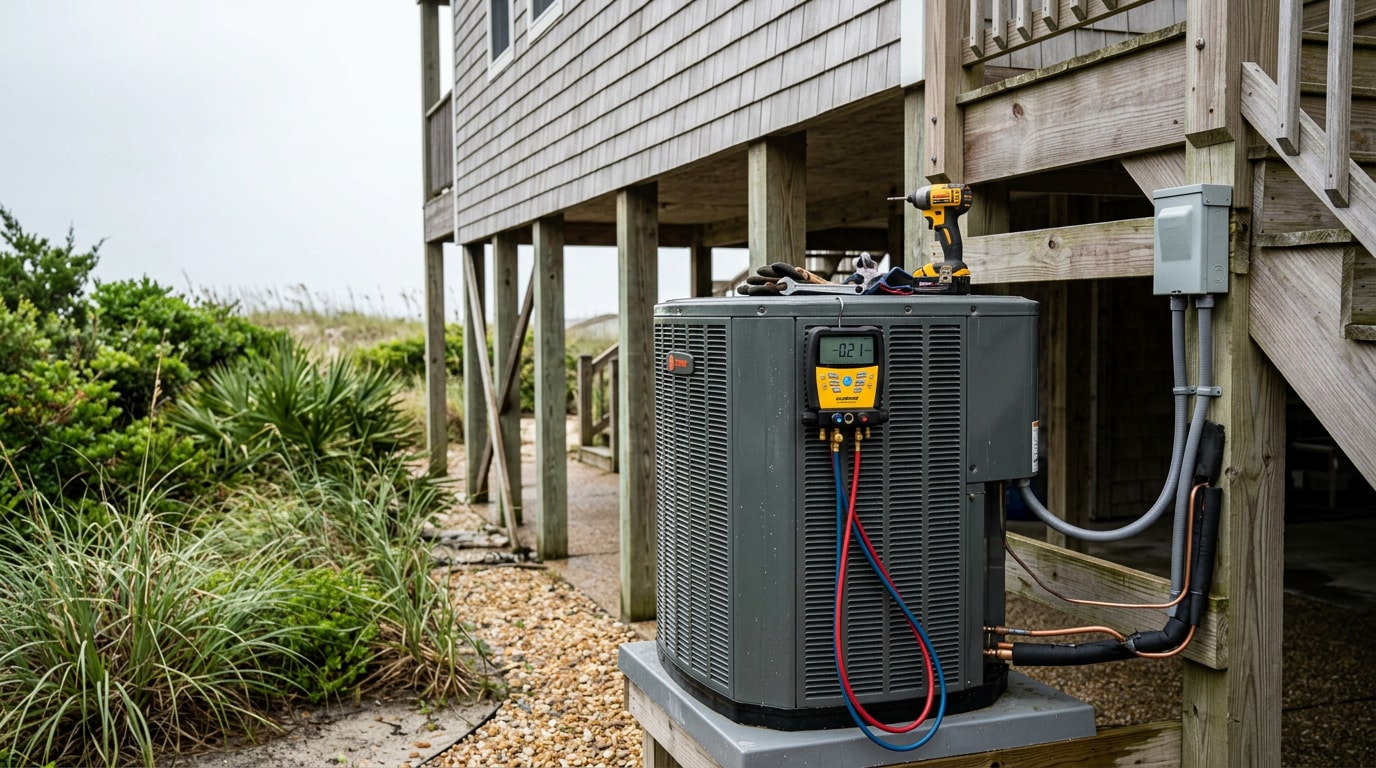
HVAC commissioning in Swansboro, NC is the step that separates a system that merely turns on from one that's verified to perform at its rated efficiency in our humid coastal climate. Skip it, and even a premium unit can run below its rating for years without anyone noticing, until the first brutal August utility bill arrives. This guide breaks down what commissioning actually involves, what a thorough local contractor checks, and how to tell real commissioning from a five-minute startup call.
What Is HVAC Commissioning and Why It Matters
HVAC commissioning is the formal process of verifying that a heating and cooling system is installed, tested, and operating according to its original design specifications. It confirms equipment, ductwork, and controls all perform together as intended, rather than simply switching the system on and hoping for the best.
In practical terms, commissioning is a structured verification process that applies to new construction and existing systems alike. A standard installation gets equipment running. Commissioning proves it's running correctly, with documentation to back it up.
Skipping this step doesn't make a system non-functional, but it often lets hidden inefficiencies hide in plain sight. Research from the U.S. Department of Energy found that commissioning in existing buildings offered reliable cost-effective savings with a median simple payback of 2.2 years , and the top reasons building owners pursue it have stayed consistent for over a decade: capturing energy savings, ensuring system performance, improving thermal comfort, and maintaining proper indoor air quality . For a Swansboro homeowner, that translates to real dollars: lower utility bills, fewer comfort complaints, and a system that actually delivers the performance its efficiency rating promises.
Why Commissioning Matters More on the Swansboro Coast
Modern HVAC equipment installed along the North Carolina coast has to do more than heat and cool. It has to manage moisture.
Swansboro's humid climate puts extra demand on a system's ability to pull water vapor out of the air, not just drop the temperature. Two-stage and variable-speed compressors are built for exactly this. They run longer cycles at lower speeds, which removes more humidity per cycle than a traditional single-stage unit cycling on and off.
Current efficiency rules set the floor for what new equipment must achieve. As of January 1, 2023, the DOE raised the minimum efficiency standards, and North Carolina falls under the region requiring 14.3 SEER2 for air conditioners and heat pumps . Most contractors in this market now install SEER2-compliant systems as a matter of course. But a high-efficiency, variable-speed unit only delivers on that rating if it's commissioned properly. Blower settings, refrigerant charge, and airflow all have to be dialed in to the specific ductwork and home, otherwise even a correctly sized HVAC system replacement underperforms its rated efficiency and struggles with humidity control. If you're still weighing equipment options, our breakdown of the best heating and air conditioning units for coastal homes covers how SEER2 ratings translate into real comfort along this stretch of coast.
Coastal installs add another layer. Salt air accelerates corrosion on outdoor condensing units, and many homes in Swansboro are elevated or pier-built, which changes duct routing and condensate drainage. Flood-zone considerations sometimes require equipment to sit above base flood elevation. None of this is exotic, but it does mean a commissioning process built for an inland climate doesn't automatically translate to the coast.
Local permitting also typically requires inspection sign-off before equipment is considered legally installed. Swansboro building codes follow the NC State Building Code adopted and amended by the NC Building Code Council for implementation across the state , which includes mechanical provisions relevant to HVAC work. A contractor who understands local permitting and coastal conditions accounts for these factors during installation and commissioning, not as an afterthought discovered later.
The HVAC Commissioning Process: Step-by-Step
Commissioning isn't a single inspection. It's a sequence of checkpoints that start before equipment ever gets powered on and continue through full-load testing. Each phase catches different categories of problems.
Standard Startup vs. Full Commissioning
Homeowners often assume these are the same service. They aren't.
| What Gets Checked | Standard Startup | Full Commissioning |
|---|---|---|
| System powers on and runs | Yes | Yes |
| Static pressure measured | Rarely | Yes |
| Airflow balanced room-to-room | Rarely | Yes |
| Refrigerant charge verified against spec | Sometimes | Yes |
| Safety interlocks tested | Rarely | Yes |
| Written performance report issued | No | Yes |
Construction Phase Verification
During the construction phase, the commissioning team checks that every component, equipment, ductwork, piping, is installed exactly per the design specs and manufacturer guidelines, before any functional testing begins.
This stage relies on a pre-functional checklist, a document confirming equipment is physically ready for power-on testing. It typically includes:
- Installation inspection of unit placement and ductwork connections
- Refrigerant line set and electrical rough-in review
- Contractor submittals checked against the original design package
Catching problems here is far cheaper than catching them after drywall goes up or after the system has run for months. A duct that's undersized or a unit installed out of level is much easier to fix before the walls close in.
Functional Performance Testing (FPT)
Functional performance testing is where the system proves itself under real, or simulated, operating conditions. Rather than checking that equipment is installed correctly, FPT confirms the system actually performs as designed, running through heating and cooling cycles, switching between stages, and interacting correctly with thermostats and other building controls.
This phase typically includes:
- System load testing to see how equipment responds as demand changes
- Airflow verification to confirm each room gets its designed share of conditioned air
- Electrical checks for voltage, amperage draw, and safe operation under load
- Refrigerant charge verification against manufacturer specs
Think of FPT as the stress test. A system can look perfect sitting in a showroom, but functional performance testing is what proves it will hold its rated capacity once it's connected to real ductwork, real electrical service, and a real house.
The Installation Procedure: Precision from Start to Finish
The final stretch of installation is where commissioning either happens or gets skipped. A thorough technician tests static pressure and airflow balancing across the duct system, then adjusts blower speed to match the specific resistance of that home's ductwork.
Done right, this produces quiet operation and even air delivery room to room. Done poorly, it produces a noisy system that short-cycles and leaves some rooms too warm or too cold.
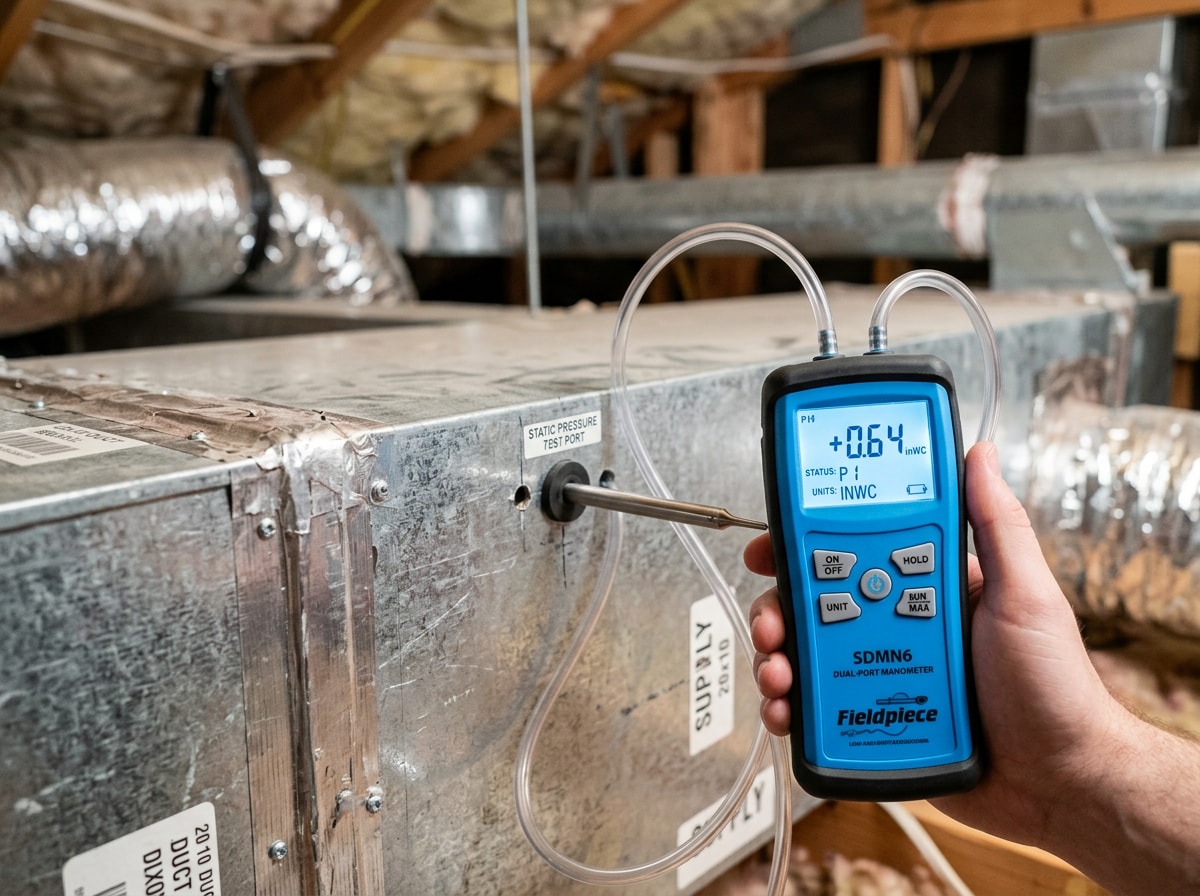
For reference, most residential systems target a total external static pressure under 0.8 inches of water column, and a temperature split of roughly 16 to 22 degrees Fahrenheit between return and supply air during cooling mode, though exact targets vary by equipment and duct design. A technician performing real commissioning in Swansboro measures these numbers and records them. Guessing isn't commissioning.
The difference shows up fast. A commissioned system typically runs quieter, holds a tighter temperature range, and generates fewer callbacks in its first year. An uncommissioned system often looks identical on install day but shows up again within months: higher bills, uneven comfort, or a compressor working harder than it should. In our own service calls across Swansboro's pier-built and waterfront homes, the two issues that show up most often on uncommissioned installs are duct leakage near crawlspace access points and refrigerant charge that's slightly off from the factory spec, both easy to catch during proper testing and expensive to ignore.
HVAC Commissioning Checklist
Homeowners don't need to become HVAC experts, but knowing what belongs on a commissioning checklist makes it easier to evaluate a contractor's proposal. A real checklist covers far more than "turn it on and check the temperature." It documents specific measurements, tests, and sign-offs at every stage.
What Does the Checklist Include?
A complete checklist includes:
- Balancing air flows at every supply and return to confirm design rates are met
- Safety interlock testing to verify correct shutoff behavior during smoke detection or emergency power-off events
- Full functional performance testing under load
- Final sign-off confirming the system is accepted for use
Safety interlock testing matters more than many homeowners realize. It confirms the system shuts down correctly if a smoke detector trips, protecting the home in exactly the moment it matters most. The checklist closes with final system acceptance: a formal sign-off stating the system has been tested, meets design intent, and is ready to hand over.
ASHRAE Guideline 0-2019, The Commissioning Process, presents best practices for applying whole-building commissioning to facilities, and can be applied to all phases of new construction and renovation . Many residential contractors use this framework as the technical basis for their own checklists, and a contractor performing genuine commissioning should be able to walk you through each line item.
Pre-Functional Checklists
Pre-functional checklists sit earlier in the process, before functional testing starts. They verify that components were installed correctly and in strict accordance with design specs, covering equipment installation verification, ductwork and piping inspection, and a review of contractor submittals against the original design package.
This stage also includes witnessing pressure testing on refrigerant lines and ductwork, confirming there are no leaks before the system gets charged and powered on. Skipping pre-functional checks doesn't always cause an immediate problem, but it means later functional tests are performed on a foundation nobody actually verified, which defeats much of the purpose of commissioning in the first place.
Commissioning Report for HVAC
Every commissioning process should end with paperwork, not just a verbal assurance that "it's working fine." A commissioning report documents exactly what was tested, what the results were, and what the system is expected to do going forward, information that matters well beyond installation day.
Key Components Include
A thorough report typically includes:
- An executive summary covering scope of work, systems covered, and key findings
- Detailed pre-functional and functional test results
- An issues log tracking any problems found and how they were resolved
- Recorded performance metrics for the system as installed
That performance baseline matters more than most homeowners expect. It gives future service technicians a reference point, so if efficiency drops two years later, there's a documented "normal" to compare against. It also serves as warranty documentation, proving the unit was installed to manufacturer specs, which many manufacturers require to keep full warranty coverage intact.
A contractor who can't produce this kind of report after installation likely isn't commissioning the system. They're just finishing the install. Companies that treat HVAC contractor work as a documented, standards-based trade, rather than a quick swap-and-go job, are the ones worth hiring for this.
Common Issues Identified During Commissioning
Commissioning exists largely because installations don't always go according to plan, even with experienced crews. The most common problems include:
- Improper installation details that don't match design specs
- Control system settings left at factory defaults instead of tuned to the home
- Unbalanced airflow, where some rooms get too much conditioned air and others too little
- Refrigerant charge that's slightly over or undercharged, which can shorten compressor life
- Duct leakage, especially in older homes or additions where ductwork was patched rather than sealed
- Missing or outdated documentation, leaving no baseline to measure against later
A system without records of its original design intent is much harder to service correctly years later. Keeping up with routine HVAC maintenance after commissioning is what keeps that documented baseline meaningful instead of a one-time formality.
If your current system is showing any of these symptoms, whether it's short-cycling, uneven rooms, or a bill that keeps climbing, it's worth having someone check whether it was ever properly commissioned in the first place. Get a free estimate and we'll walk through what a real inspection would look like for your home.
Frequently Asked Questions
What Is HVAC Commissioning?
HVAC commissioning is the process of testing and verifying that a heating and cooling system performs according to its original design, not just that it powers on. It involves inspecting installation quality, running functional performance tests under load, balancing airflow, and documenting results in a formal report.
How Much Does HVAC Commissioning Cost?
Professional commissioning is commonly bundled into the cost of a full installation rather than billed as a separate line item, though some contractors offer it as an add-on for existing systems. Costs vary by system size, number of zones, and how much testing and documentation is involved. The investment is usually modest compared with the energy savings and early-problem detection it provides over the system's lifespan.
How Long Does HVAC Commissioning Take?
For a typical single-family residential system, commissioning usually adds a few hours to a full day beyond standard installation time, depending on system complexity and how many zones need balancing. Larger homes or multi-system setups take longer.
What's the Difference Between Commissioning and a Regular HVAC Startup?
A standard startup checks that a system powers on and runs. Commissioning goes further: testing airflow, static pressure, electrical draw, and safety interlocks, then documenting results in a formal report that confirms the system meets its original design performance. See the comparison table above for a quick side-by-side.
Do I Need a Permit for HVAC Work in Swansboro, NC?
Yes. Most HVAC installations and system replacements in Swansboro require a mechanical permit and inspection sign-off under the NC State Building Code before the system is considered legally installed. A licensed contractor handles this as part of the job.
Can an Existing HVAC System Be Commissioned, Not Just a New One?
Yes. This is sometimes called retro-commissioning. A technician tests static pressure, airflow, refrigerant charge, and controls on an existing system the same way they would on a new install, then documents any gaps against the original design intent.
Proper commissioning is the difference between a system that technically works and one that was actually verified to perform. If you want that kind of documentation on your next installation or want an existing system checked, reach out to our team or visit Carolina Service Works to see our full range of HVAC, plumbing, and electrical services for the Crystal Coast.
About the Author
This guide was written by the technical team at Carolina Service Works, a licensed HVAC, plumbing, and electrical contractor serving Swansboro and the surrounding Crystal Coast. Our installers are trained on manufacturer commissioning standards and regularly test static pressure, airflow balance, and refrigerant charge on new and existing systems in Swansboro's waterfront and pier-built homes. Questions about your system? Contact us directly.