AC warranty coverage in Morehead City, NC rarely means what homeowners assume it means, and that gap is exactly why so many people end up with a surprise repair bill. Coverage is usually split across two or three separate agreements, each with its own issuer, timeline, and rules. This guide breaks down what's actually covered, what voids it, and exactly what to do when a part fails.
What Is an AC Warranty and Why Does It Matter?
An AC warranty is a guarantee from a manufacturer or installing contractor that specific components or workmanship will perform as promised for a set period.
It's not one blanket protection plan. It's actually several separate promises stacked on top of each other, each with its own issuer, timeline, and rules.
Most homeowners assume their HVAC warranty covers everything the day something breaks. In reality, a manufacturer typically only guarantees parts, while a contractor separately guarantees labor. Mixing these up is the leading reason people end up with an unexpected repair invoice.
Understanding this split from the start makes every other section of this guide easier to apply. If you're weighing repair, replacement, or new system installation, Carolina Service Works checks registration and warranty status on every unit we touch in Morehead City before we diagnose anything else.
The Main Types of AC Warranties
A single AC installation can carry three or four overlapping warranties at once. Each one below covers something different, and knowing which applies to your situation determines who pays for what.
Manufacturer Parts Warranty
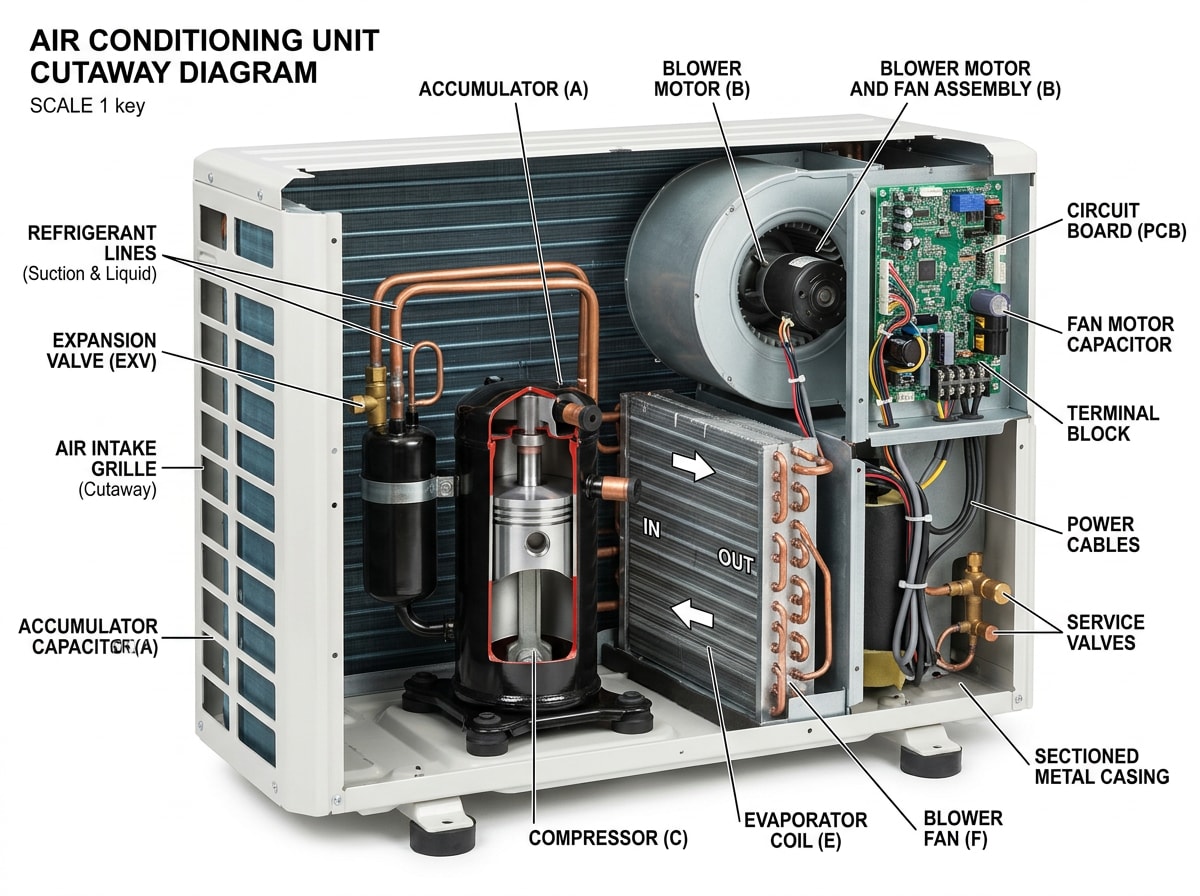
A manufacturer warranty covers the cost of replacement parts, including compressors, coils, circuit boards, and motors, if they fail due to a defect. Coverage typically runs 5 to 10 years depending on the brand and whether the unit was registered.
This is the coverage most homeowners think of when they hear "warranty." It's issued by the equipment manufacturer, not your installer, and it only reimburses the part itself. A failed compressor warranty claim, for example, gets you a free compressor, but installing it is a separate cost, which is exactly what the next section explains.
For help sorting out what's covered on your specific unit, our air conditioning repair team checks warranty status before starting any diagnostic work.
Labor (Contractor) Warranty
A labor warranty comes from the contractor who installed your system, not the manufacturer. It typically covers 1 to 2 years of free labor on that installation. Some established installers offer longer terms as a mark of confidence in their workmanship.
This is where the "free part, big labor bill" surprise happens. Once the labor warranty expires, a defective part might still be free under the manufacturer's coverage, but you'll pay full price for the technician's time to remove and install it.
Extended Warranty
An extended warranty, sometimes sold as a service agreement or protection plan, adds extra years of parts coverage, labor coverage, or both, beyond the standard terms. These are purchased separately, usually at the time of installation or shortly after.
Pricing and inclusions vary widely by provider, so it's worth comparing exactly what's added versus what you already get through standard manufacturer and labor coverage before paying extra.
Home Warranty vs. Manufacturer Warranty
A home warranty is a third-party annual service contract that covers a range of home systems and appliances, including HVAC equipment, for a yearly fee. It is completely separate from your AC's manufacturer warranty.
Home warranties often come with lower coverage caps per repair, service-call fees, and exclusions for pre-existing conditions. They can be useful once manufacturer coverage has expired, but they're rarely a substitute for registered equipment-specific protection while that coverage is still active.
Parts vs. Labor Warranty: What's Covered by Each
The gap between parts coverage and labor coverage is where most "I thought this was free" moments happen. Seeing them side by side makes it obvious where costs can appear even on a technically "covered" repair.
| Component | Parts Warranty | Labor Warranty | Typical Cost If Neither Applies* |
|---|---|---|---|
| Compressor | Covered, 5 to 10 yrs | Covered only during contractor's term (1 to 2 yrs) | $1,800 to $2,900 |
| Evaporator/Condenser Coil | Covered, 5 to 10 yrs | Same as above | $1,200 to $2,300 |
| Circuit/Control Board | Covered, 5 to 10 yrs | Same as above | $400 to $950 |
| Blower Motor | Covered, 5 to 10 yrs | Same as above | $550 to $1,100 |
*These are rough regional planning numbers for 2026, not quotes. Actual costs vary by system size, accessibility, and refrigerant type.
Even when a part is fully covered, labor, refrigerant, and diagnostic fees can still apply once the contractor's labor term has lapsed.
What the Manufacturer's Warranty Does NOT Cover
A manufacturer's warranty almost never includes labor, refrigerant, diagnostic or service-call fees, or routine consumables like filters and belts. These costs fall to the homeowner regardless of whether the failed part itself is covered.
This exclusion list is where most warranty frustration starts. Homeowners read "10-year parts warranty" and assume the whole repair is free, then get a bill for the labor, refrigerant recharge, and trip charge needed to actually complete the fix.
Warranty Terms by Manufacturer
Standard manufacturer warranty terms vary by brand, and registering your unit almost always extends coverage significantly compared to leaving it unregistered. In the Morehead City area, common residential brands include Trane, Carrier, Goodman, and Rheem.
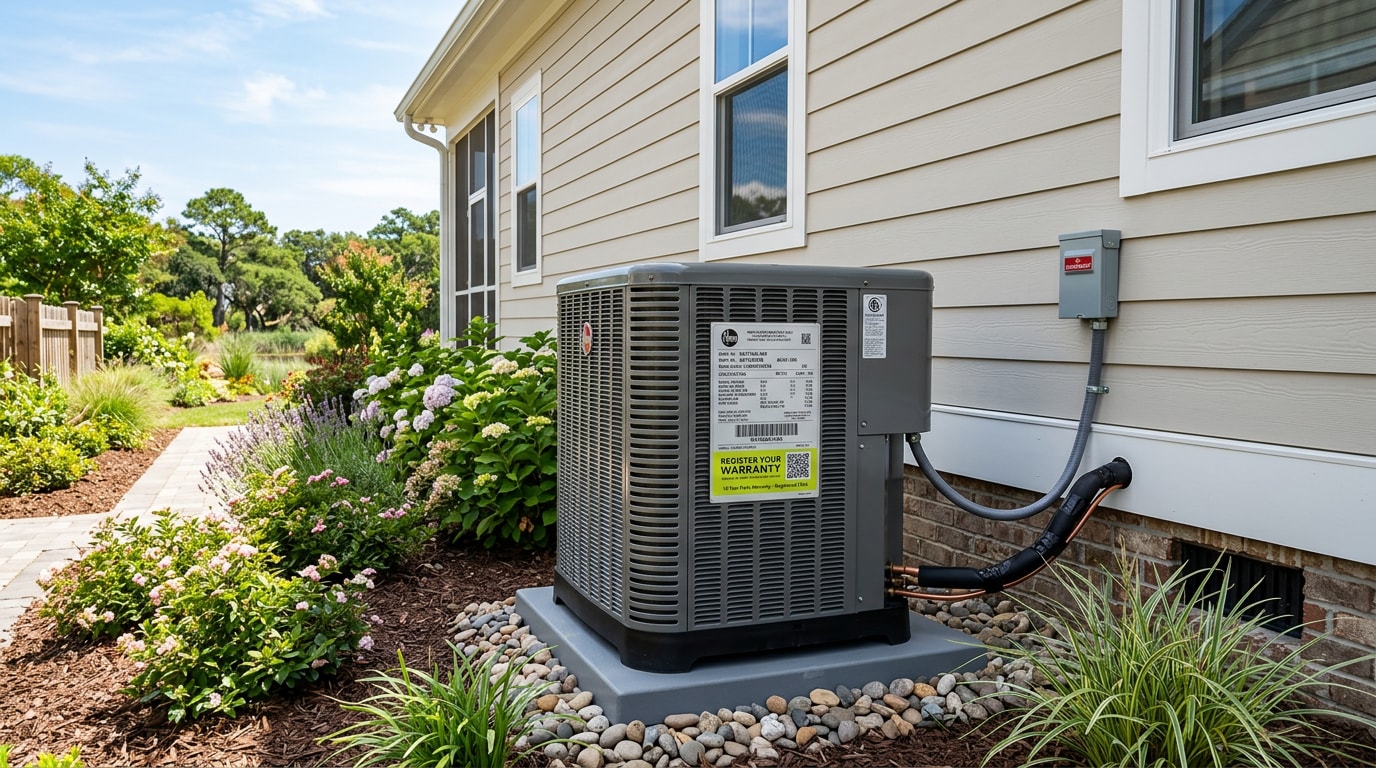
Most of these manufacturers offer a 10-year parts warranty when the unit is registered within the required window. For example, Registered Limited Warranty lengthens the term of your warranty if your product is registered within 60 days of installation, covering the cost of parts that might fail due to manufacturer defect, but not the labor to repair them.
Base Limited Warranty typically covers part replacement costs for five years, while Registered Limited Warranty typically covers part replacement costs for 10 years. Compressor coverage terms can differ slightly from the general parts warranty, so it's worth checking the specific unit's documentation. For exact current terms, see Trane's official warranty and registration page.
HVAC Warranty Registration: The Deadline You Can't Ignore
Registration is the single most-missed step that quietly cuts your coverage in half. Most manufacturers require it within 60 to 90 days of installation, or your AC warranty defaults from 10 years down to 5.
How to Activate Your Full Coverage
- Confirm with your installer, in writing, that the unit was registered with the manufacturer.
- Keep the registration confirmation or certificate somewhere accessible, not just in an email you might lose.
- Log into the manufacturer's warranty portal periodically to verify your unit's status and registered date.
Taking these three steps right after installation is far easier than trying to prove registration after a failure.
What Voids an HVAC Warranty
A few common mistakes can void an HVAC warranty entirely: missing the registration deadline, having unlicensed or DIY repairs performed on the system, skipping required annual maintenance, or using the unit in a non-owner-occupied rental without proper disclosure.
Skipped maintenance is probably the most overlooked trigger. Just as a tune-up for your car can improve your gas mileage, a yearly tune-up of your heating and cooling system can improve efficiency and comfort , and most manufacturers require that documented annual service to keep coverage valid. Without that paper trail, a manufacturer can legally deny a claim even if the failed part would otherwise be covered. A routine maintenance plan is the easiest way to keep that documentation on file.
Is a Home Warranty Worth It for Your AC in Morehead City, NC?
Generally, if your system is under about 8 years old and properly registered, your manufacturer AC warranty already outperforms what a home warranty would offer. Once a system ages past that point without coverage, a home warranty can help offset the cost of a major failure.
Coastal conditions add a wrinkle to this timeline. Salt air and high humidity common along the Morehead City coastline can accelerate wear on coils and electrical components compared to inland systems, which may shorten the window where manufacturer coverage alone feels sufficient. Pairing registered coverage with routine maintenance is often a more cost-effective way to protect an aging system than adding a home warranty prematurely. If you're unsure which option fits your system's age and condition, get a free estimate and we'll walk through your coverage with you.
How to File an HVAC Warranty Claim
Filing a claim starts with contacting a licensed contractor, and it doesn't have to be your original installer, who can pull the unit's serial number and check its registration and warranty status directly with the manufacturer or distributor.
From there, the contractor documents the failure, confirms which parts are covered, and files the claim on your behalf. You'll typically still owe for labor, diagnostic time, and any non-covered materials unless an active labor or extended warranty applies. In our experience servicing Morehead City homes, the most common holdup isn't the repair itself, it's tracking down registration details the homeowner never kept on file, which is why we pull that information first on every warranty call.
If your system needs attention now, our air conditioning repair page outlines how we handle warranty verification during a service call, and homeowners planning a full system swap can review our HVAC system replacement services for what's covered from day one. For a deeper look at one of the most common covered failures, see our guide on AC condenser vs. compressor issues in Morehead City.
This guide is maintained by the licensed HVAC technicians at Carolina Service Works, serving Morehead City, Atlantic Beach, and the surrounding Crystal Coast. Questions about your specific system's coverage? Contact us for a free warranty check.
FAQ
How Long Does an AC Warranty Last?
Most AC warranty coverage runs 5 years for unregistered units or 10 years for registered parts coverage, while labor warranties from the installing contractor typically last 1 to 2 years. Exact terms vary by manufacturer and model, so always check your specific unit's documentation.
Does an AC Warranty Cover Labor Costs?
Almost never. A standard manufacturer warranty covers the replacement part itself, not the technician's time to remove and install it. Labor is only covered if a separate labor warranty, extended warranty, or service agreement is still active on your system.
Does My AC Warranty Transfer If I Sell My Home?
Manufacturer parts warranties often do transfer to a new homeowner, provided the proper transfer paperwork is filed within the manufacturer's required window. Labor warranties, however, are typically tied to the original homeowner and contractor and usually don't carry over at resale.
What's the Difference Between a Home Warranty and an AC Warranty?
An AC warranty is equipment-specific coverage issued by the manufacturer that follows the unit itself. Matched systems are verified against the outdoor unit (condenser) and indoor unit (evaporator) combination certified as a matched system by the Air Conditioning, Heating and Refrigeration Institute (AHRI) , which you can confirm through the AHRI Directory of Certified Product Performance. A home warranty is a separate annual service contract from a third-party company covering multiple home systems, usually with lower per-repair caps and added service fees.
What Voids an AC Warranty?
The most common triggers are missing the registration deadline, DIY or unlicensed repairs, and skipping required annual maintenance. Using the unit in an undisclosed rental property can also void coverage. Keeping registration confirmation and service records on file is the simplest way to avoid a denied claim.
Is an Extended AC Warranty Worth the Extra Cost?
It depends on how long you plan to stay in the home and how old the system already is. If you're buying new equipment and plan to stay put for 10+ years, an extended warranty can make sense. If the system is already several years old or you're likely to sell soon, the standard manufacturer and labor coverage is often enough.